
Brazil soybean planting begins as global traders bet on crop prices
Brazilian farmers are starting their high-stakes soybean planting season as international commodity markets show heavy speculative activity amid volatile weather.
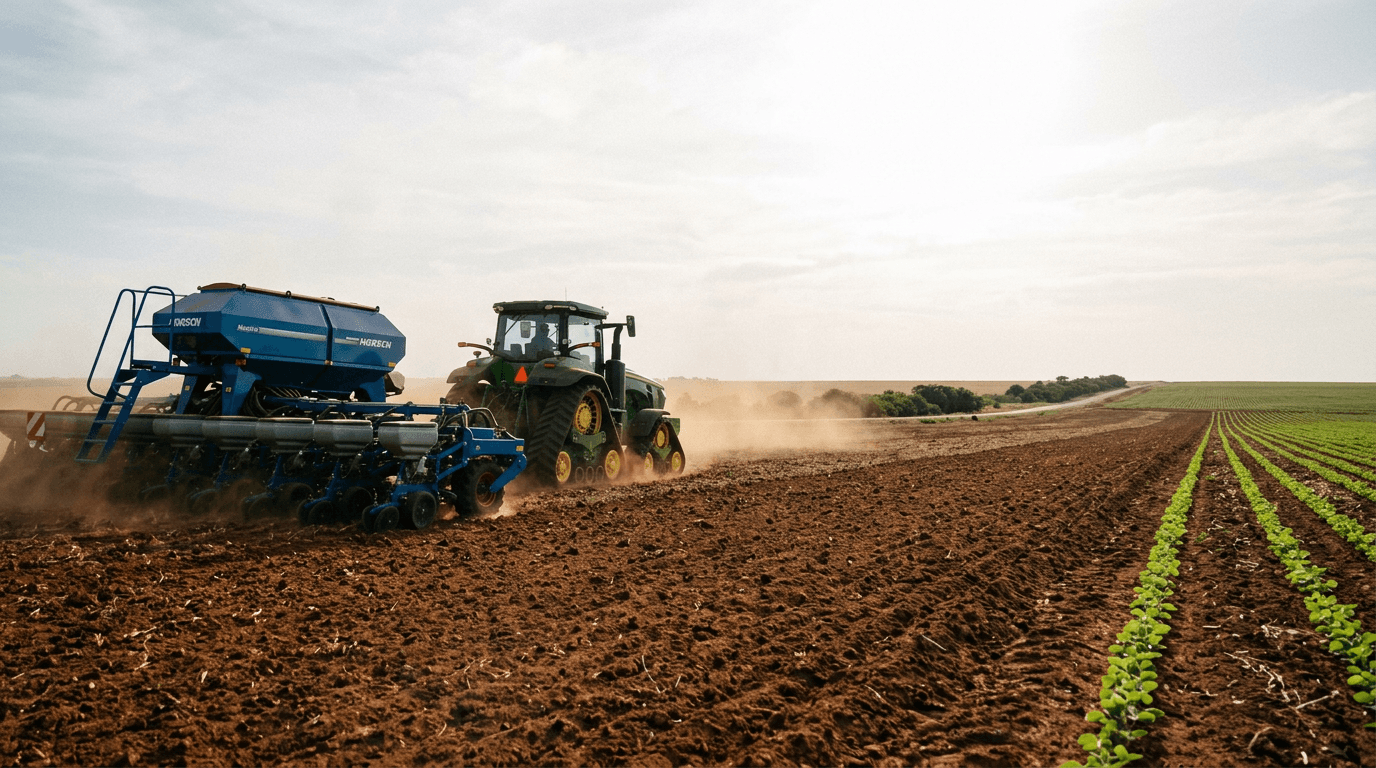
As tractor engines roar to life across the vast, red-dirt fields of central Brazil, global commodity traders are placing heavy bets on the future of the world’s most important oilseed. Weekly data from the U.S. government reveals that speculative investors are holding a massive positive exposure to soybean prices, reflecting a mix of weather anxiety in South America and shifting trade dynamics in North America.
According to the U.S. Commodity Futures Trading Commission, non-commercial traders—a category dominated by hedge funds and money managers—held 345,383 long contracts (bets that prices will rise) compared to just 88,511 short contracts (bets that prices will fall) in Chicago Board of Trade soybean futures as of September 29, 2026. This resulted in a substantial net-long position of 256,872 contracts, out of a total open interest of 1,090,227 contracts.
These figures offer a crucial snapshot of market sentiment rather than a definitive price forecast. The heavy concentration of bullish bets underscores how sensitive the global food supply chain remains to the early stages of the South American agricultural cycle. Brazil is the world's largest exporter of soybeans, and what happens in its agricultural heartland dictates the cost of animal feed, cooking oil, and biofuels from Beijing to Chicago.
Weather and planting windows in focus
The timing of these financial bets coincides with the opening of Brazil's complex, state-by-state planting calendar. For Brazilian farmers, the transition from September to October is a high-stakes race against the elements. In the center-west powerhouse of Mato Grosso, the mandatory "soybean-free" sanitary period—designed to prevent the spread of crop diseases—has ended, allowing planters to hit the fields.
However, weather patterns are keeping producers on edge. While southern states like Paraná have experienced heavy, sometimes waterlogging rainfall, parts of the central-west have faced a dry end to the winter, leaving farmers waiting for consistent seasonal rains to ensure proper seed germination. Any prolonged delay in Brazil’s primary soybean crop also threatens the subsequent "safrinha" corn crop, which is planted immediately after the soybean harvest on the same acreage.
At the same time, international trade policy continues to inject volatility into the market. A recent bilateral summit between the U.S. and China yielded minor tariff reductions but notably left agricultural products like soybeans off the table. This policy gridlock keeps Chinese state buyers heavily reliant on South American supply, further elevating the strategic importance of the ongoing Brazilian planting season.
What it touches
The heavy speculative positioning in Chicago grain futures directly influences the hedging strategies of major multinational agricultural processors and landholders operating in South America. Companies with large-scale farming and logistics exposure in the region, such as Adecoagro S.A. (NYSE: AGRO) and global protein giant JBS N.V. (NYSE: JBS), monitor these CBOT trends closely to price their physical inventories and manage currency risk against the Brazilian real.