
Lula Opens UN Assembly with Call for Urgent Security Council Reform, Citing Low Credibility
Brazilian President Luiz Inácio Lula da Silva opened the UN General Assembly by fiercely criticizing the Security Council's inaction, calling for its urgent reform, and reasserting a foreign policy centered on multilateralism and the Global South.
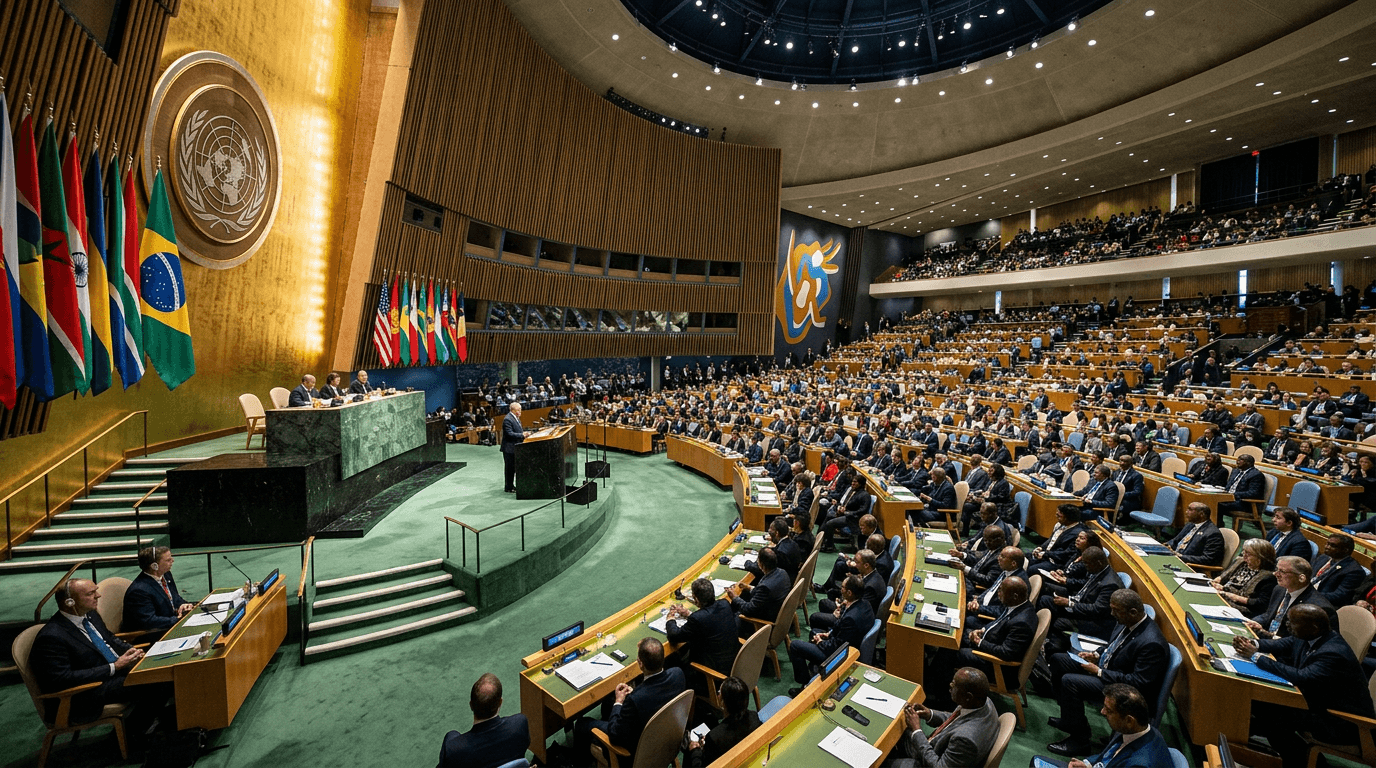
Brazilian President Luiz Inácio Lula da Silva opened the United Nations General Assembly (UNGA) in New York today by mounting a sharp critique of the international body, demanding urgent reform of the Security Council (UNSC) and arguing that its credibility has never been lower. In his address on Tuesday, September 22, the Brazilian leader framed the world's most powerful institution as "hostage" to inaction, directly challenging the post-World War II global power structure.
"The UN is failing in one of its most important missions: to rid humanity of the scourge of war," Lula said during the opening of the 81st session of the UNGA. "We are all held hostage by the inaction of the Security Council for failing to fulfill its role." He warned that geopolitical tensions are threatening to turn regional conflicts into a "conflagration of global proportions," making the need to choose between "multilateralism or unilateralism, democracy or extremism, sovereignty or subordination" all the more critical.
The Brazilian president traditionally delivers the first address by a member state at the annual General Debate, a diplomatic custom that dates back to the 1950s. This platform allows the Brazilian leader to set a tone for the week, which Lula used to reiterate his long-standing foreign policy of non-alignment and championing the Global South. The call for Security Council reform—an expansion to include more permanent members from regions like Latin America and Africa—is a core tenet of Brazilian diplomacy, which has sought a permanent seat for decades.
Lula's speech reaffirmed a foreign policy vision that seeks to balance traditional alliances with a greater emphasis on non-Western partnerships, such as the BRICS bloc (Brazil, Russia, India, China, South Africa). His push for a reformed UN reflects a desire to move away from a global system defined by a few major powers holding veto rights, which he argued leads to paralysis in the face of global crises. Lula's foreign policy doctrine emphasizes national sovereignty, rejecting the idea that Brazil belongs "in anyone's backyard" and advocating for respectful engagement among nations.
The speech also served as an opportunity for the Brazilian President to address domestic political issues on the world stage, warning against foreign interference just weeks ahead of a crucial election. He asserted that Brazil's democracy is "modern and robust" and would not allow "enemies of democracy" to undermine the popular will, a reference to ongoing disputes with Washington and allegations of external influence in the country's political process.
The challenge for Brazil's diplomatic corps now lies in turning the call for UNSC reform into meaningful action, a goal that has eluded the international community for decades due to the veto power held by the five permanent members. What observers will watch next is how Lula leverages Brazil’s upcoming presidency of the G20, along with its strengthened role in BRICS and other forums, to push this agenda of a more multipolar, reformed global governance structure.
Related coverage
Politics
Lula and Flávio Bolsonaro Tied in Critical Bellwether State of Minas Gerais, Quaest Poll Finds
Published
Politics
Brazil Judicial Oversight Body Cancels R$4.7 Billion in Government Debt Tied to Master Group
Published
Politics
Brazil’s Illegal Gold Rush Fuels Amazon Crime and Widespread Mercury Contamination
Published