
Why soybean traders are placing heavy bets on Chicago futures
CFTC data reveals net-long soybean positions as Brazil's massive 2026/27 planting season faces early weather delays.
Global grain markets are quietly shifting as institutional traders build significant exposure in Chicago agricultural contracts. For retail investors watching commodity-driven sectors, these shifting positions reflect a delicate balance between North American supply and the southern hemisphere's upcoming harvest.
According to the U.S. Commodity Futures Trading Commission (CFTC), non-commercial traders held a substantial net-long position in Chicago Board of Trade (CBOT) soybean futures (contract 005602) as of October 6, 2026. The weekly Commitments of Traders report showed non-commercial long positions at 360,967 contracts compared to 87,071 short positions, resulting in a net-long posture of 273,896 contracts. Total open interest for the contract stood at 1,121,298 contracts for the weekly observation period.
The Brazilian planting bottleneck
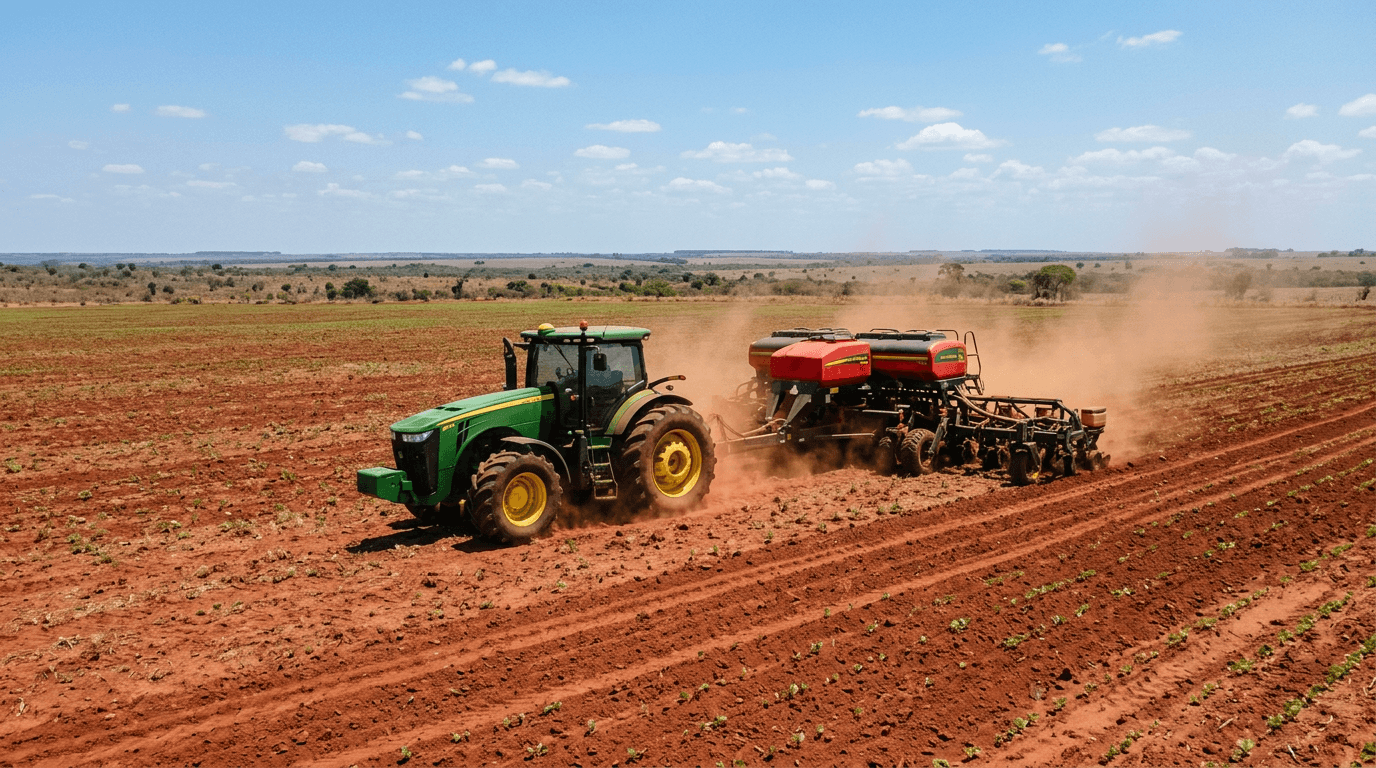
This concentration of long positions comes at a critical seasonal juncture for Brazil, the world's largest exporter of soybeans. Brazilian farmers are currently planting their massive 2026/27 crop, which local and international agencies expect to reach a baseline of 180 million metric tons. However, early progress has been uneven, creating localized supply anxieties that directly influence Chicago trading desks.
According to data from agricultural consultancy AgRural, Brazil's national soybean planting progress reached 7.3 percent in early October 2026, trailing the 9.0 percent pace recorded during the same period last year. In Mato Grosso, the country’s powerhouse agricultural state, planting stood at 10.2 percent compared to a historical average of 11.2 percent. While southern states like Paraná have advanced quickly, extreme heat in central Brazil and excessive moisture in other regions have forced many farmers to pause operations to wait for stable soil conditions.
Political and climate stakes in focus
For global investors, the progress of this harvest is deeply intertwined with broader economic and political dynamics. Brazil's agricultural sector is a primary driver of its foreign exchange inflows, meaning any threat to the projected 180-million-ton harvest directly impacts the strength of the Brazilian real and the country's fiscal balance.
Furthermore, as the country moves closer to its next major electoral cycle, the economic health of the agricultural center-west region remains a key political battleground. Government policies regarding agricultural credit, infrastructure spending, and export taxes are highly sensitive to the financial success of these massive farming operations. While the CFTC positioning data offers a snapshot of weekly trader sentiment rather than a long-term price forecast, it highlights how closely global capital is monitoring the early stages of South America's agricultural cycle.
In your brokerage app
For retail investors looking to track the financial side of global agriculture, Adecoagro S.A. is listed in New York and owns extensive farmland holdings across South America. Additionally, the Teucrium Soybean Fund is an exchange-traded product that directly tracks the performance of CBOT soybean futures contracts.