
Why soybean traders are betting big as South American planting begins
CFTC data reveals non-commercial traders held a heavy net-long position in CBOT soybeans as of October 6, 2026, amid critical planting delays in Brazil.
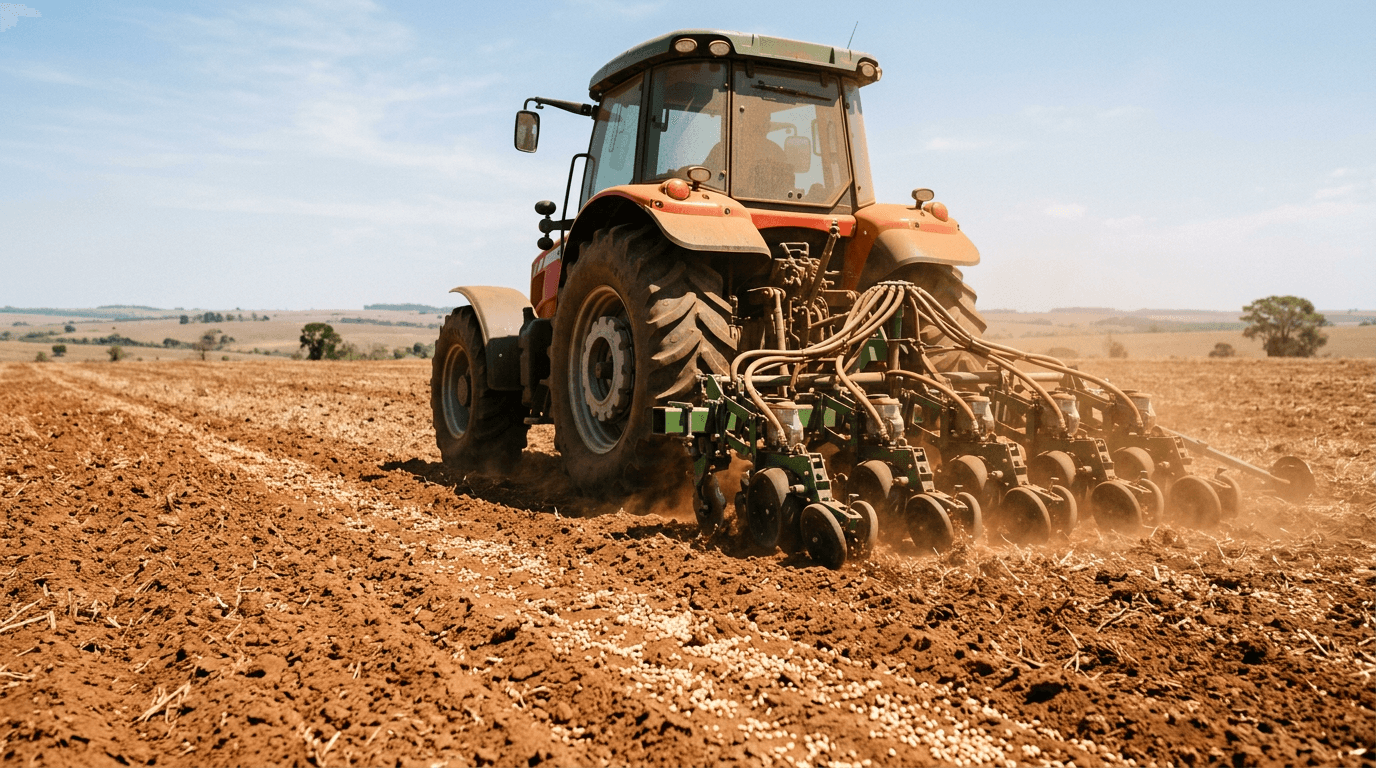
Global commodity investors are stepping up their exposure to agricultural markets as the autumn harvest collides with planting uncertainties in the Southern Hemisphere. According to the U.S. Commodity Futures Trading Commission (CFTC) report for the week ending October 6, 2026, non-commercial traders held a substantial net-long position of 273,896 contracts in Chicago Board of Trade (CBOT) soybeans. This positioning—comprising 360,967 long contracts against 87,071 short contracts—reflects a market closely watching supply dynamics, even as total open interest across the market reached 1,121,298 contracts.
This heavy speculative backing comes at a critical juncture for Brazil, the world's largest exporter of the oilseed. Brazilian farmers are currently sowing their 2026/27 crop, but early progress has faced localized weather challenges. According to data from agricultural consultancy AgRural, national soybean planting in Brazil stood at 7.3% completion as of early October 2026, trailing the 9.0% pace recorded at the same point in the previous year. While southern states like Paraná have advanced rapidly, key central producing regions like Mato Grosso have experienced intense heat and uneven moisture, forcing farmers to pace their sowing to ensure proper seed germination.
For global investors, these weekly positioning figures serve as a valuable temperature check on market sentiment rather than a direct price forecast. While the U.S. Department of Agriculture (USDA) recently raised its domestic soybean production forecast to 4.562 billion bushels in its October 2026 report, the international market remains highly sensitive to South American weather. Brazil’s national crop agency, Conab, still projects a massive baseline production of 180 million tonnes for the upcoming season. However, any prolonged dryness in central Brazil during the final quarter of 2026 could quickly squeeze global balance sheets and trigger volatility in agricultural portfolios.
In your brokerage app
For retail investors looking to track the agricultural sector, direct exposure to South American farmland and logistics is accessible through U.S. exchanges. Adecoagro S.A., listed in New York, owns and operates extensive agricultural land holdings across South America and is directly exposed to regional crop cycles. Additionally, the iShares MSCI Brazil ETF, an exchange-traded fund listed in New York, holds major Brazilian corporate players that depend heavily on the health of the country's broader export economy.