
Why soybean futures hold ground despite record South American crops
Speculative traders maintain net-long soybean positions as a USDA attaché report projects a record 184 million metric ton harvest in Brazil.
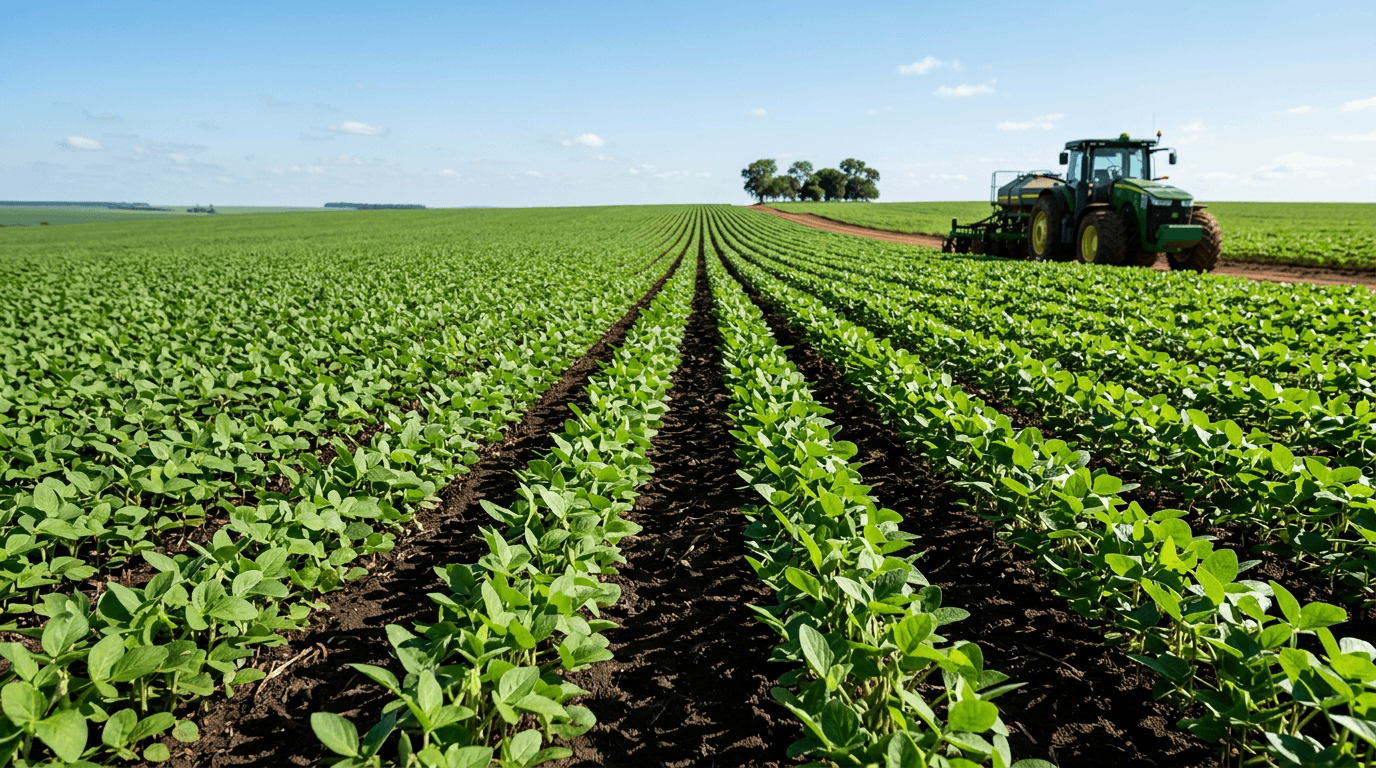
Global commodity markets are grappling with the reality of back-to-back record harvests, directly impacting the raw ingredient costs of everything from animal feed to household cooking oils. For retail investors tracking agricultural commodities or broad inflation trends, the weekly positioning of large financial players offers a vital pulse check on where institutional money is placing its bets.
According to the U.S. Commodity Futures Trading Commission (CFTC) Commitments of Traders report for the week ending October 20, 2026, non-commercial traders on the Chicago Board of Trade (CBOT) held a net-long position of 246,596 contracts for soybeans. This positioning consisted of 330,528 long contracts against 83,932 short contracts, within a total market open interest of 1,093,612 contracts. While weekly trader positioning provides critical market sentiment context rather than a direct price forecast, the net-long stance reveals that speculative money is still finding reasons to hold exposure despite heavy supply pressure.
The South American Supply Engine
The primary counterweight to this speculative optimism is Brazil, the world's dominant soybean exporter. What happens in the fields of Mato Grosso—Brazil's primary agricultural powerhouse state—directly dictates the pricing power of American farmers. On October 22, 2026, an unofficial report from the U.S. Department of Agriculture's (USDA) attaché in Brasilia projected Brazil's 2026–27 soybean harvest at a record 184 million metric tons.
This attaché forecast represents a nearly 2% increase from the previous season's 180.5 million tons, even as early-season planting faced localized weather concerns. Because Brazil's planting progress has advanced steadily, the massive physical supply of South American beans continues to cap aggressive upward price runs on the Chicago Board of Trade. However, the attaché noted that persistent rains in southern states like Rio Grande do Sul could disrupt the upcoming harvest operations more than the initial planting phase.
Political Risk and Infrastructure Bottlenecks
For foreign investors, the agricultural boom in South America is inseparable from Brazil's shifting regulatory and political landscape. As the country prepares for its upcoming electoral cycles, the main risks to agricultural profitability do not lie in the soil, but in the fiscal and logistical rules of the game.
The Brazilian agricultural lobby, represented heavily in the National Congress, is constantly navigating battles over infrastructure spending, diesel subsidies, and state-level tax reforms. Any sudden changes to export taxes or transport regulations can instantly shift the cost of shipping a ton of soybeans from the interior state of Mato Grosso to the ports of Paranaguá or Santos, altering the competitiveness of Brazilian beans against US exports.
In your brokerage app
If you hold broad-market international funds or targeted agricultural equities in your portfolio, you are already exposed to this global supply dynamic. Investors looking for direct corporate exposure to South American farmland and agricultural logistics can look to Adecoagro S.A., which is listed in New York and operates extensive farming operations across South America. Additionally, the iShares MSCI Brazil ETF, a prominent exchange-traded fund holding large-cap Brazilian equities, is heavily influenced by the macroeconomic health of the country's dominant agricultural export sector.