
Brazil Election Runoff Paused After Supreme Court Voting Extension
An unprecedented last-minute Supreme Court ruling extending voting hours has halted the official count in Brazil's tight presidential runoff, stoking legal risks.
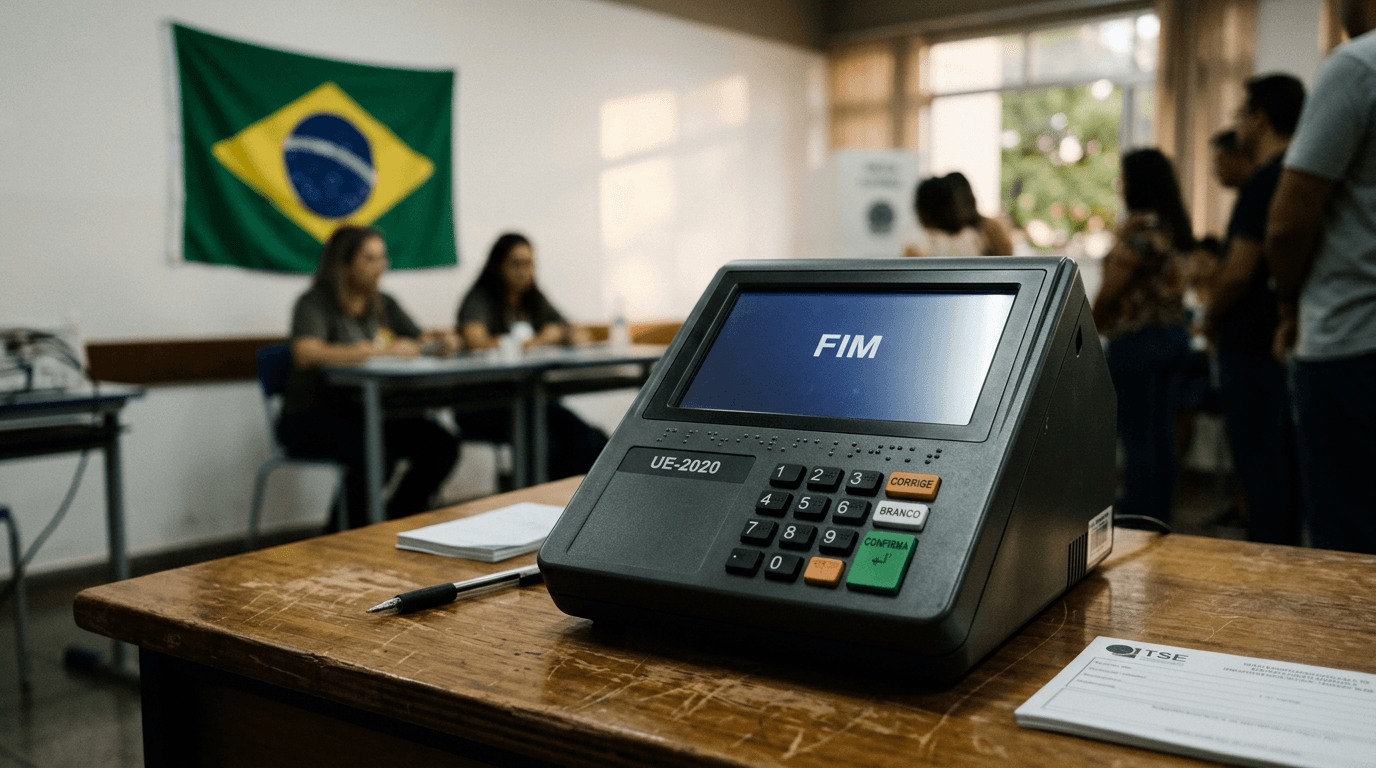
U.S. retail investors holding broad emerging market funds or direct Brazilian equities face a sudden wave of political and legal volatility. On October 25, 2026, a dramatic, last-minute judicial intervention paused the official vote count of Brazil's highly anticipated presidential runoff, throwing the immediate outcome into uncertainty and laying the groundwork for post-election court battles.
The disruption began when Brazilian Supreme Court Justice Cristiano Zanin issued an unprecedented ruling extending voting hours nationwide by two hours. The decision, delivered just minutes before the scheduled 5:00 p.m. Brasília close, came in response to petitions from both major campaigns. Incumbent left-wing President Luiz Inácio Lula da Silva's campaign cited severe public transport failures in his urban strongholds, while right-wing challenger Senator Flávio Bolsonaro pointed to heavy rains in the southern regions.
The sudden extension triggered widespread logistical confusion across the country's vast electronic voting network. In some municipalities, local election workers had already shut down voting machines and printed final tallies before receiving the court's order. To preserve the integrity of the process, the Superior Electoral Court (TSE) temporarily suspended the publication of national results. Once counting resumed, early partial tallies showed a razor-thin margin, with Lula holding a narrow lead of 50.41% to Flávio Bolsonaro’s 49.59%, highlighting the highly polarized nature of the race.
This neck-and-neck battle follows a surprise first-round result on October 4, 2026, when Flávio Bolsonaro—the eldest son of former President Jair Bolsonaro—bested Lula by winning 47% of the vote. For global investors, the immediate concern is not just who wins, but the institutional mechanism of the transition. With both campaigns already raising formal complaints over voter access and the late-stage extension, analysts warn that the losing side is highly likely to challenge the legitimacy of the final count in the courts.
For American portfolios, this legal gridlock introduces acute political risk. Rather than a clean transition, the country faces a prolonged period of institutional friction that could delay key economic reforms, fiscal adjustments, and central bank decisions.
In your brokerage app
If you hold the iShares MSCI Brazil ETF (the primary exchange-traded fund tracking large Brazilian companies), you are directly exposed to the market's reaction to this electoral pause. The fund holds major New York-listed Brazilian giants such as state-run oil company Petrobras and mining multinational Vale, both of which are highly sensitive to shifting regulatory and political environments in Brasília.