
US Soybean Bets Hold Net-Long as Brazil Planting Accelerates
Weekly CFTC data shows non-commercial traders holding a net-long position in Chicago soybeans as of October 20, 2026, amid a fast-moving South American planting season.
Speculative traders in the US agricultural markets are holding onto a net-long position in soybeans, even as seasonal harvest supplies and international competition begin to weigh on the Chicago Board of Trade. For retail investors holding broad commodity funds or agricultural equities, these shifting speculative balances serve as a crucial barometer of global supply expectations rather than a direct price forecast.
The weekly Commitments of Traders report released by the U.S. Commodity Futures Trading Commission (CFTC) for the observation date of October 20, 2026, revealed that non-commercial traders held 330,528 long contracts against 83,932 short contracts in Chicago Board of Trade soybeans (contract 005602). This resulted in a net-long position of 246,596 contracts. Total open interest across the market stood at 1,093,612 contracts as of the same Tuesday reporting deadline.
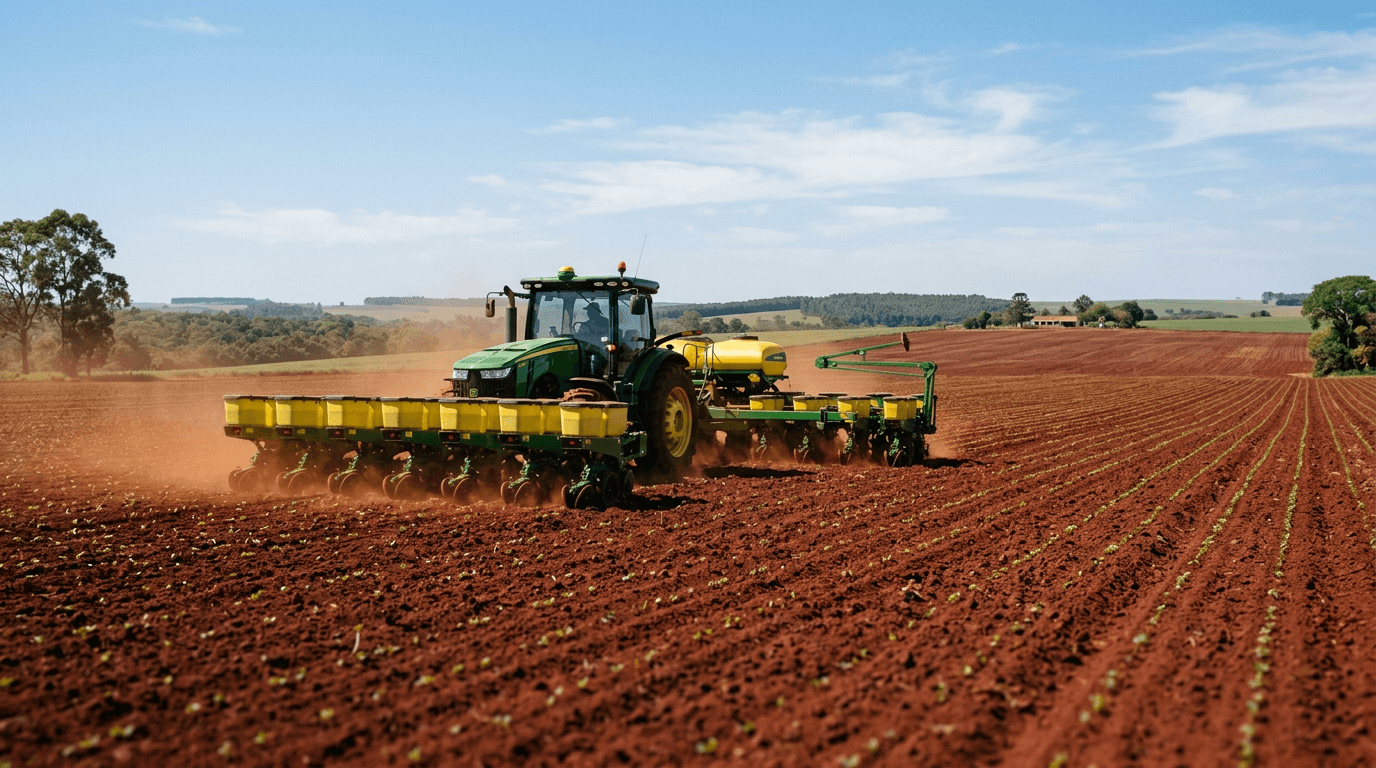
While these figures show that speculative money remains net-positive on the oilseed, the broader context is heavily influenced by the rapid pace of the South American planting season. Brazil, the world's largest exporter of soybeans, is currently advancing its crop planting under favorable weather conditions. This seasonal progress in the Southern Hemisphere directly competes with the ongoing US harvest, historically putting pressure on global cash prices and forcing speculative funds to adjust their exposure.
For international investors, the health of the Brazilian soybean crop is heavily tied to the country's broader economic outlook and currency stability. Agricultural exports are a primary driver of foreign exchange inflows into Brazil, which in turn influences the performance of large domestic conglomerates and the broader Brazilian equity market.
In your brokerage app
US retail investors can track this agricultural exposure through specialized equities listed in New York. For direct exposure to South American farmland and agricultural production, investors often look at Adecoagro S.A., which is listed in New York and owns extensive farming operations across South America. Broad agricultural exposure can also be accessed via the Teucrium Soybean Fund, an exchange-traded fund designed to track the performance of soybean futures.