

US soybean speculative bets reveal shifting global market dynamics
The latest CFTC report shows net-long soybean positions as of September 29, 2026, highlighting the global supply-and-demand tension felt by Brazilian farmers.
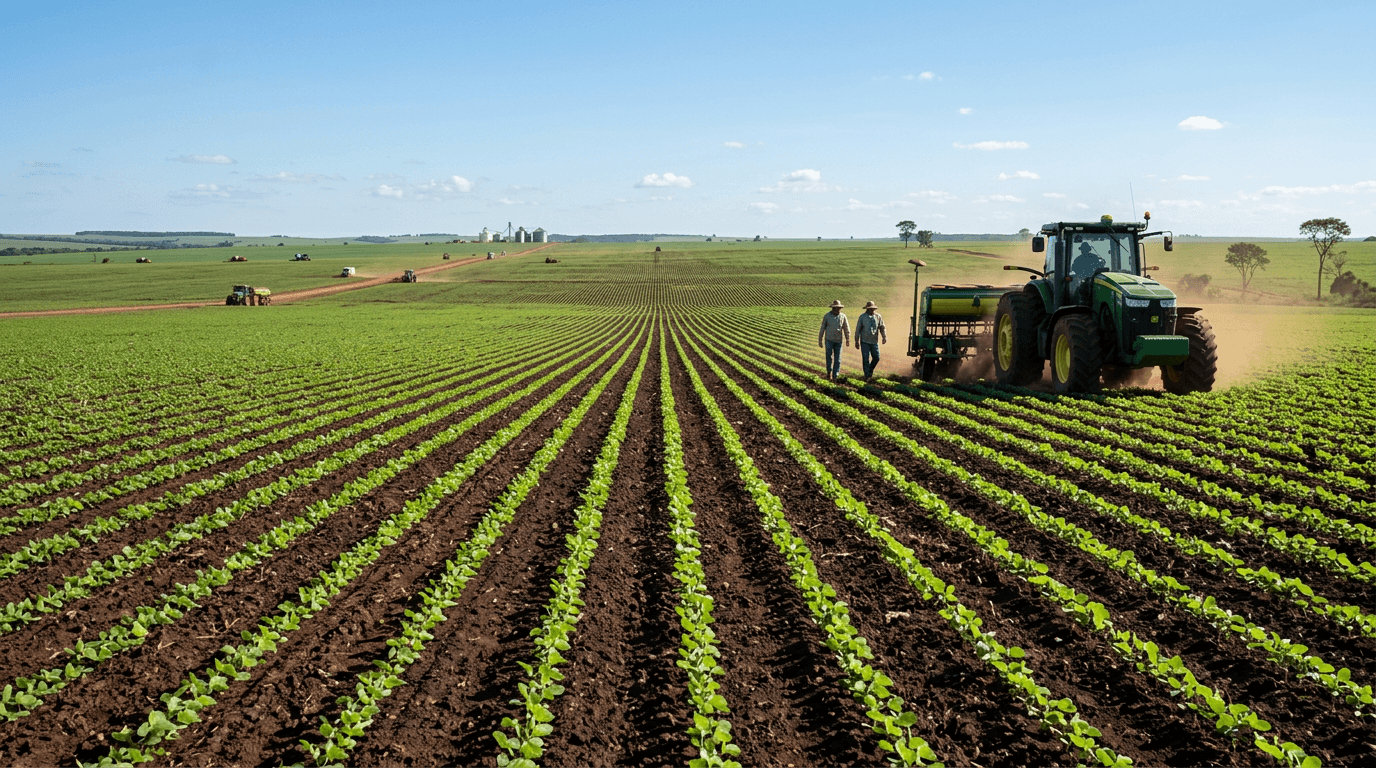
The global battle for dominance in the agricultural markets is playing out across the trading desks of Chicago, with massive implications for the fields of Brazil. According to the latest Commitments of Traders report released by the U.S. Commodity Futures Trading Commission (CFTC), financial speculators held a significant net-long position in soybean futures as of September 29, 2026.
For the benchmark Chicago Board of Trade (CBOT) soybean contract (code 005602), non-commercial traders—a category dominated by hedge funds and large speculative managers—held 345,383 long contracts compared to 88,111 short contracts. This resulted in a net-long position of 256,872 contracts, amid a total market open interest of 1,090,227 contracts. Rather than serving as a direct price forecast, these weekly snapshots offer critical context on how global capital is positioning itself relative to physical supply.
This speculative appetite directly impacts Brazil, the world's largest producer and exporter of soybeans. When Chicago speculators lean heavily long, it often reflects underlying concerns about global supply tightness, weather disruptions, or surging demand for biofuels. For Brazilian farmers currently planting their next crop, these international pricing signals dictate whether they will expand their acreage, lock in export contracts, or hold onto their harvests in anticipation of higher prices.
However, heavy speculative positioning also introduces volatility. Because these financial players do not intend to take physical delivery of the beans, sudden shifts in their sentiment can trigger rapid sell-offs on the Chicago exchange, catching South American producers off guard. Brazilian agricultural cooperatives and exporters monitor these CFTC reports closely to hedge their currency and crop exposures against sudden swings in the global market.
What it touches
The shifting dynamics of the global grain trade directly expose major South American agribusiness players. On international exchanges, these positioning trends influence the valuation of Adecoagro S.A. (NYSE: AGRO), which manages vast farmland portfolios across South America, and global food processing giants like JBS N.V. (NYSE: JBS), whose feed costs and supply chains are highly sensitive to soybean price fluctuations.
Related coverage
 US-Listed Brazil ETF Braced for New 25% Dividend Tax ProposalLeft-wing lawmakers in Brasília proposed progressive dividend taxes up to 25% as US-listed Brazilian equities navigate fiscal reforms and corporate shocks.
 Petrobras Prepares to Raise Capital Spending Up to $120 BillionAmerican investors holding Petrobras certificates face a potential dividend squeeze as the energy giant prepares to unveil a capital-heavy business plan.
 Klabin Boiler Explosion Threatens Dividends for US ADR HoldersA suspension at Klabin's Otacílio Costa mill following a boiler explosion could cut annual EBITDA by 7%, posing a risk to ADR holder dividends.