

Trump Philippines Deal Threatens $1.2B in Brazil Meat Exports
Donald Trump announced that the Philippines will buy 100% of agricultural imports from the US starting January 1, 2027, bypassing competitive Brazilian pork.
Key takeaways
- Donald Trump announced a mandate for the Philippines to purchase 100% of its agricultural imports from the US starting January 1, 2027, per White House remarks on November 20, 2026
- Brazil supplied 72.6% of Philippine pork imports between January and September 2026, per the Brazilian Ministry of Agriculture
- Brazil’s agricultural and animal exports to the Philippines reached 900,000 metric tons valued at $1.2 billion through November 2026, per MDIC on November 20, 2026
On November 20, 2026, U.S. President Donald Trump announced that the Philippines will source 100% of its agricultural imports from U.S. farmers starting January 1, 2027, in an effort to eliminate the U.S. trade deficit. This unilateral announcement, covered in a fact sheet published by the U.S. Embassy in the Philippines, represents a major geopolitical shift for global agriculture. It marks a significant escalation in the agricultural trade landscape, as the White House leverages economic and defense ties to displace South American commodities in key Southeast Asian markets.
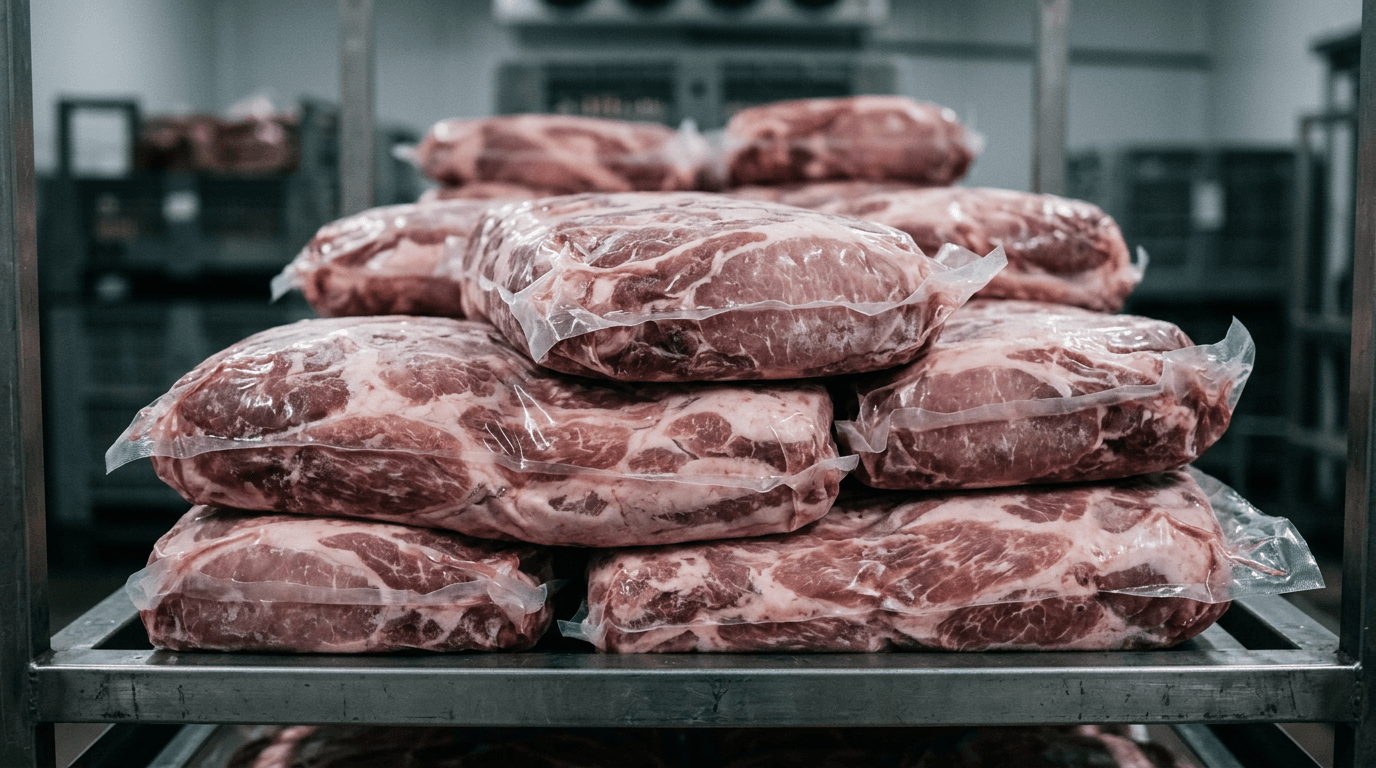
The deal strikes a direct blow to Brazil's agricultural sector, which has established the Philippines as its top global destination for pork. According to the Brazilian Ministry of Agriculture's Agrosat system, Brazil supplied 72.6% of all Philippine pork imports between January and September 2026. Data from the Brazilian Ministry of Development, Industry, Trade and Services (MDIC) on November 20, 2026, shows that Brazil's agricultural and animal exports to the Philippines through November 2026 totaled 900,000 metric tons valued at $1.2 billion, with pork alone accounting for 251,000 metric tons worth $587 million.
During a press conference at the White House on November 20, 2026, President Trump framed the arrangement as a quid pro quo for American defense support, asking rhetorically if Brazil would aid Manila in a South China Sea conflict. As reported by Estadão, President Trump leveraged this security dynamic to persuade Philippine President Ferdinand Marcos Jr. to transition away from Brazilian agricultural products.
This development complicates recent commercial dynamics. Bilateral discussions on the sidelines of the ASEAN summit in mid-November 2026 showed that Philippine Agriculture Secretary Francisco Tiu Laurel Jr. had been coordinating with Brazilian officials regarding a temporary, domestic 60-day restriction on certain pork imports aimed at protecting local producers from African Swine Fever. Despite those localized negotiations, Trump's sudden sweeping mandate introduces an unprecedented challenge for Brazil’s agricultural exporters, who had been actively looking to sustain and grow long-term trade relations, as reported by Folha de S.Paulo's C-Level portal.
The critical variable moving forward is how strictly the agreement will be enforced. Philippine officials have approached the announcement with diplomatic caution, framing the bilateral discussions as an understanding on economic cooperation rather than a binding, exclusive purchasing mandate. Observers are watching January 1, 2027, when the U.S. purchase mandate is slated to begin, to see if Philippine buyers can successfully swap competitive Brazilian meat imports for potentially higher-priced American alternatives.
In your brokerage app
American investors can track these developments through shares of JBS S.A. (listed in New York as JBS N.V., ticker JBS) and BRF S.A. (listed in New York as BRFS). These global food giants operate extensive protein export networks, and their shipments to Southeast Asian trade corridors represent a significant component of their overall export volumes.
Analysis · NWX analysis desk
Which Brazil assets this touches
- JBS, BRFS, JBSS3, BRFS3, USDBRL, CATTLE — Named in this story.
Technical picture · JBSS3 (JBSS3)
JBSS3 (JBSS3) closed at R$70.32 on Nov 19, 2026, up 6.2% from five sessions earlier. The last close is above its 20-day average of R$67.74 and above its 50-day average of R$64.45. Since May 25, 2026 it has traded between R$55.44 (low, Oct 1, 2026) and R$73.85 (high, Aug 19, 2026).
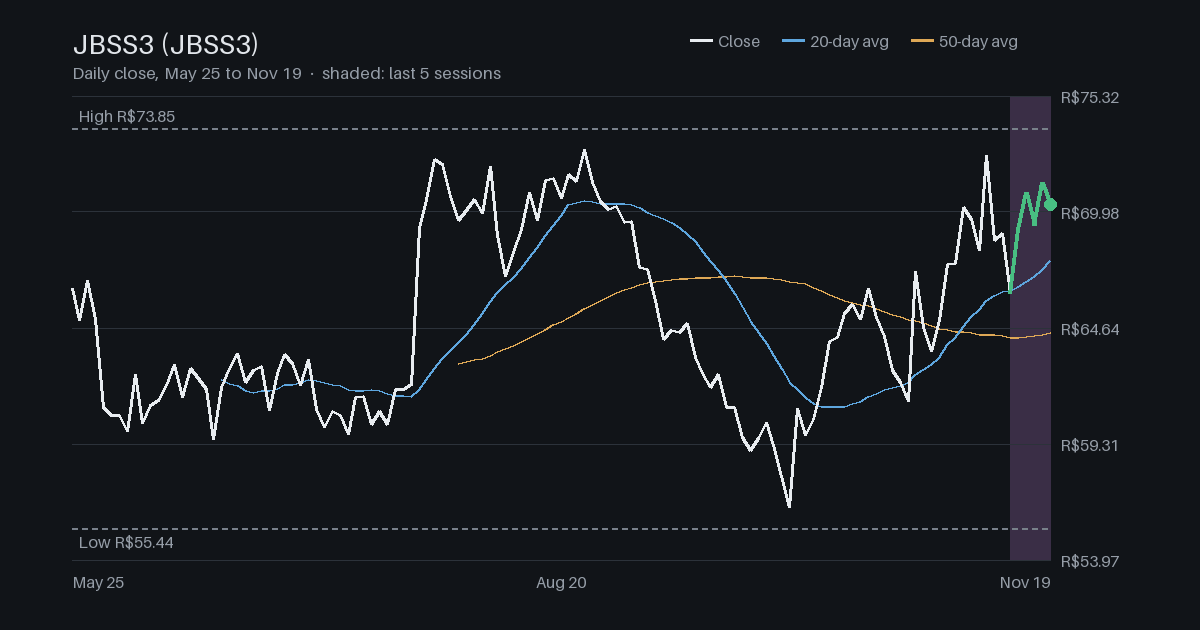
| Last close | R$70.32 | Closing price on Nov 19, 2026. |
|---|---|---|
| 5-session move | +6.2% | Change in the closing price over the last five trading days. |
| 20-day average | R$67.74 | The average closing price of the last 20 trading days. |
| 50-day average | R$64.45 | The average closing price of the last 50 trading days. |
| Period high | R$73.85 | Highest price since May 25, 2026. |
| Period low | R$55.44 | Lowest price since May 25, 2026. |
Related coverage
 Screwworm Surge Squeezes Cattle Supply, Pressuring JBS Packer MarginsA sharp rise in flesh-eating New World screwworm cases in the US Southwest threatens tight cattle supplies, raising processing costs for meatpacker JBS.
 Hidden Corporate Overhead in Brazil Reaches R$3.5 Trillion, Study FindsA new study by Movimento Brasil Competitivo and Monitor Deloitte pegs Brazil's systemic business overhead at 27.5% of GDP, driven by massive logistics deficits.
 Bradesco Flags 2027 Economic Slowdown, Vows Strict Loan PrudenceBanco Bradesco CEO Marcelo Noronha has warned of credit prudence over riskier expansion due to high consumer debt and a projected 0.4% GDP growth rate for Brazil in 2027.