

Screwworm Surge Squeezes Cattle Supply, Pressuring JBS Packer Margins
A sharp rise in flesh-eating New World screwworm cases in the US Southwest threatens tight cattle supplies, raising processing costs for meatpacker JBS.
Key takeaways
- Southwest New World screwworm cases in domestic animals rose to 64 in November 2026, per USDA on November 20, 2026
- Total domestic animal infestations reached 149 cases since the outbreak crossed from Mexico, per USDA on November 20, 2026
- The US domestic cattle herd dropped to 86.2 million head, the lowest since 1951, per USDA on January 1, 2026
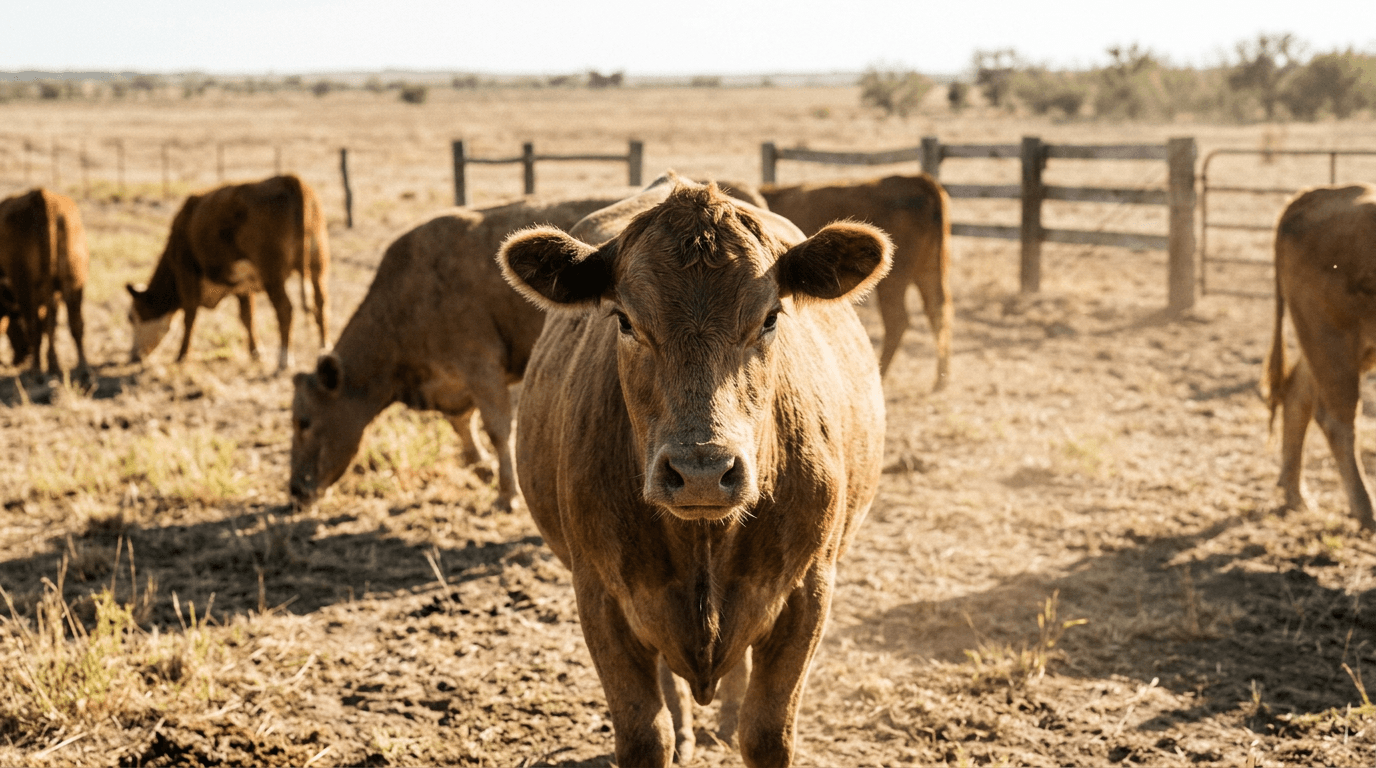
A rapid escalation of flesh-eating New World screwworm cases across the US Southwest is threatening to drive already record-high live cattle costs even higher, directly squeezing profit margins for global meatpackers like JBS. According to a joint report by the USDA and state veterinarians on November 20, 2026, domestic animal infestations of the parasite jumped to 64 confirmed cases in November 2026, up from 34 in October and just three in September.
The return of the Cochliomyia hominivorax fly—which lays eggs in open wounds where larvae devour living, healthy tissue—represents a critical sanitary challenge. Since the outbreak first crossed over from Mexico in June 2026, a total of 149 domestic animal cases have been recorded across Texas, New Mexico, and Arizona, according to data detailed by G1 Globo on November 20, 2026. Federal and state authorities have put strict quarantines in place, currently covering 21 Texas counties in a bid to prevent the parasite from establishing itself. For global meatpackers rooted in South America, where the brazil screwworm history and ongoing eradication efforts serve as an industry blueprint, managing the pest in North America is a familiar but costly task.
This biological disruption hits the US beef industry at its most vulnerable cyclical point in decades. According to the USDA’s inventory report on January 1, 2026, the domestic cattle herd is already at a 75-year low of 86.2 million head, the tightest supply seen since 1951. An analysis by Beef Magazine notes that the sharp increase in screwworm cases risks further curtailing herd sizes through direct animal deaths and severe weight loss, compounding the supply squeeze and driving US domestic live cattle prices to record highs.
For multi-species meatpackers like JBS, which has massive beef slaughtering operations in North America, this supply contraction severely compresses margins. High live cattle costs cannot be easily passed on to US consumers, who are already facing elevated retail prices. As outlined in a report by InfoMoney on October 22, 2026, the economic risk of a full-scale outbreak could cost billions in containment, herd losses, and animal transit restrictions, which directly harms packers' operational efficiencies and negative-to-flat profit margins.
Going forward, the agricultural sector will watch whether the USDA's ongoing sterile-fly program, which breeds and drops non-fertile male insects to disrupt the reproductive cycle, can successfully check the parasite’s northward migration. If federal containment efforts fall short during the upcoming winter months, beef processors may face further plant slowdowns or temporary closures to cope with the severe lack of slaughter-ready cattle.
In your brokerage app
For retail investors holding JBS N.V., which is listed in New York, the worsening sanitary situation in the US Southwest emphasizes the company's high exposure to the volatile North American beef cycle. Worsening livestock supply dynamics could keep packer margins depressed, though JBS's global diversification in South American beef, poultry, and pork often acts as a hedge against localized domestic shocks.
Related coverage
 Trump Philippines Deal Threatens $1.2B in Brazil Meat ExportsDonald Trump announced that the Philippines will buy 100% of agricultural imports from the US starting January 1, 2027, bypassing competitive Brazilian pork.
 Hidden Corporate Overhead in Brazil Reaches R$3.5 Trillion, Study FindsA new study by Movimento Brasil Competitivo and Monitor Deloitte pegs Brazil's systemic business overhead at 27.5% of GDP, driven by massive logistics deficits.
 Bradesco Flags 2027 Economic Slowdown, Vows Strict Loan PrudenceBanco Bradesco CEO Marcelo Noronha has warned of credit prudence over riskier expansion due to high consumer debt and a projected 0.4% GDP growth rate for Brazil in 2027.