

Speculators Maintain Strong Net-Long Position in Soybean Futures
CFTC data as of November 17, 2026, shows large speculators holding 145,816 net-long contracts in Chicago Board of Trade soybeans.
Key takeaways
- Large speculators held a net-long position of 145,816 soybean contracts, per CFTC data on November 17, 2026
- Total soybean open interest on the Chicago Board of Trade reached 997,948 contracts, per CFTC data on November 17, 2026
- Brazil planting reached 66.8% completion on track for a record 181.6 million tonnes, per CONAB on November 17, 2026
Large speculative traders in the U.S. futures market maintained a heavy net-long position in soybean contracts as of November 17, 2026, providing critical context for retail investors tracking global crop sentiment. According to the CFTC Public Reporting database, non-commercial market participants held 227,439 long contracts against 81,623 short contracts on the Chicago Board of Trade, resulting in a net-long position of 145,816 contracts. This nearly three-to-one bullish ratio occurred amid a total open interest of 997,948 contracts, showing that while speculative appetite remains robust, position sizing is shifting slowly in response to global supply dynamics.
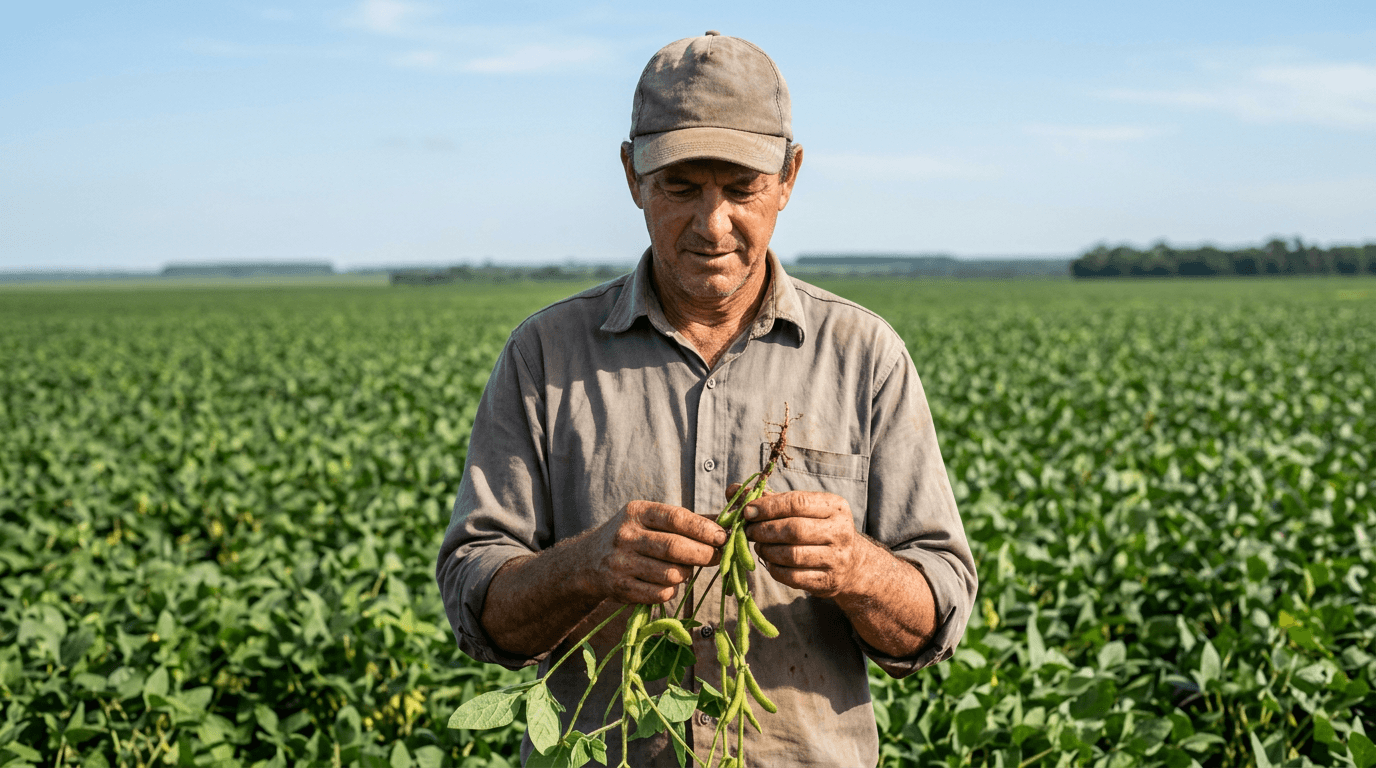
This heavy positioning on the Chicago Board of Trade directly impacts the agricultural engine of Brazil, the world's largest producer and exporter of soybeans. What happens on the Chicago exchange determines the pricing of crops from the plains of Mato Grosso to the ports of Paranaguá. In mid-November 2026, Brazil's national agricultural agency, CONAB, reported that local farmers had completed 66.8% of their soybean planting, on track toward an estimated record harvest of 181.6 million tonnes. The sheer scale of the South American crop means that any shift in U.S. speculative positioning reflects not just domestic U.S. conditions, but how global funds assess the risks of Brazilian weather and shipping logistics.
The mechanism behind these speculative flows is tied to a delicate balance between high domestic demand and international trade flows. For the week ending November 17, 2026, the market was digesting a record October U.S. soybean crush of 234.19 million bushels, which exceeded trade expectations, alongside steady but moderating export demand from China. While funds had trimmed their net-long exposure slightly by 734 contracts compared to the previous week, the prevailing net-long stance indicates that speculative money is not yet ready to capitulate to the massive crop coming out of the Southern Hemisphere.
Weekly trader positioning is a lagging indicator but serves as a useful diagnostic. When managed money is heavily net-long, the market is vulnerable to sharp downward corrections if weather patterns in South America turn out to be ideal. Conversely, if dry weather hits central Brazil during its critical pod-filling stage in December or January, these speculative longs can trigger rapid upward spikes. For the average investor, this makes tracking CFTC data a lesson in risk exposure rather than a timing tool.
Market participants will closely watch the next CFTC positioning updates, alongside December crop progress reports from both CONAB in Brazil and the USDA. Any unexpected weather disruptions in South America or shifts in Chinese import volumes are likely to trigger the next major reallocation of capital among these speculative funds.
In your brokerage app
For retail investors, this global agricultural flow is directly accessible through U.S. brokerage accounts. You can track this commodity exposure via the Teucrium Soybean Fund (NYSE Arca: SOYB), an exchange-traded fund that holds Chicago Board of Trade soybean futures contracts across various maturities to reflect market performance. Alternatively, equity investors often follow regional operators like Adecoagro S.A. (NYSE: AGRO), a Luxembourg-incorporated agribusiness listed in New York that manages vast farmland across South America, producing soybeans, corn, and sugarcane.
Related coverage
 USDA Forecasts Record 72.5 Million Bag Coffee Crop, Futures DropBrazil's 2026/27 coffee crop is forecast at a record 72.5 million bags, boosting exports by 25.8% and squeezing arabica futures despite port bottlenecks.
 JBS Faces Headwinds as Macron Attacks Brazilian Beef QualityEmmanuel Macron calls Brazilian beef 'doped' and celebrates EU import bans, complicating JBS’s push to restore access to the premium European market.