

Brazil soybean planting starts fast as paper market bets on supply
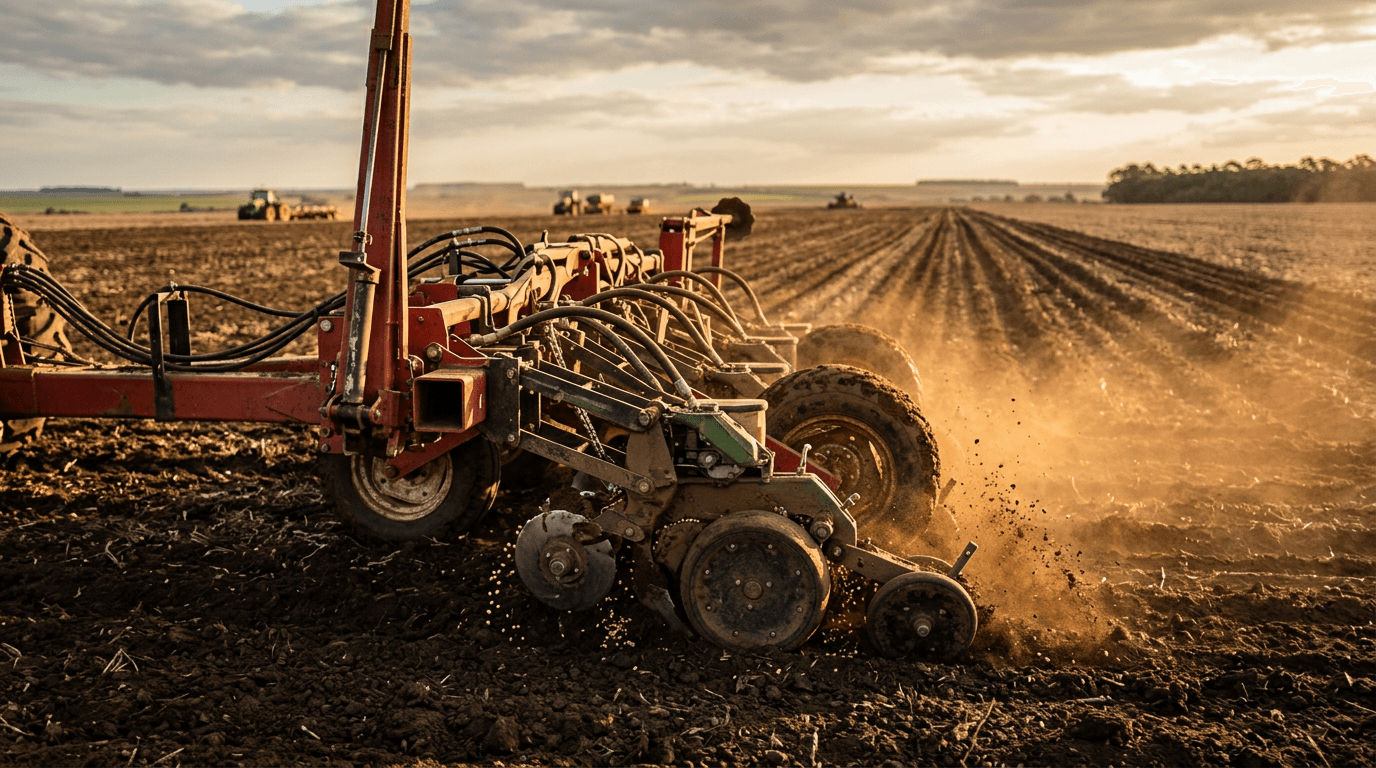
Brazilian farmers are seeding a projected 49 million hectares of soybeans at a record-setting pace, even as financial traders heavily back long positions.
Speculative financial players are holding a substantial net-long position in Chicago soybean futures, according to the latest government transactional data. This positioning comes at a critical moment for global food supplies, as farmers in Brazil—the world's largest soybean exporter—begin to plant what is projected to be another massive crop.
According to the U.S. Commodity Futures Trading Commission (CFTC), non-commercial traders held 345,383 long contracts compared to 88,511 short contracts for the Chicago Board of Trade (CBOT) soybean market as of the September 29, 2026 observation date. This resulted in a net-long position of 256,872 contracts, set against a total market open interest of 1,090,227 contracts. While weekly trader positioning provides crucial context regarding market sentiment and liquidity, analysts caution that it represents a snapshot of financial exposure rather than a reliable price forecast.
Brazil's Planting Season Gets Underway
For ordinary Brazilians and global agricultural observers, these financial bets are secondary to what is happening on the ground in South America. Brazil’s 2026/27 soybean planting season has officially opened, with initial progress outpacing historical averages. According to data from agricultural consultancy Pátria AgroNegócios, Brazilian soybean planting reached 4.39% of the estimated area by late September, ahead of the 4.15% recorded at the same time last year and well above the five-year average of 1.44%.
The early momentum is driven by the timely arrival of seasonal rains in key central and northern growing regions, including the agricultural powerhouse state of Mato Grosso. However, the weather outlook remains complex. Meteorologists warn that a strong El Niño pattern is threatening to bring irregular rainfall and high temperatures to central Brazil later in the growing cycle, which could limit crop development. Despite an estimated 0.77% increase in total planted area to 49 million hectares, early projections from Pátria AgroNegócios peg the upcoming national harvest at 173.75 million tons—a 3.3% decline from the prior season due to anticipated yield reductions.
Why the Paper Market Matters to the Field
The relationship between Chicago speculative positions and Brazilian farms is deeply intertwined. Brazilian farmers use CBOT prices as their primary benchmark to price their physical crops and secure financing for fertilizers and machinery. When speculative funds hold large net-long positions, it indicates that financial capital has heavily backed the prospect of stable or rising prices.
However, heavily one-sided positioning also introduces volatility. If favorable weather in South America or weakening import demand from China prompts these financial funds to suddenly liquidate their long holdings, it can trigger a sharp downward correction in Chicago futures. For Brazilian producers already dealing with compressed profit margins, such sudden price swings can dictate whether a harvest is profitable or deeply in the red.
What it touches
The intersection of speculative positioning and South American weather directly impacts major agribusiness players. On global stock exchanges, this exposure is felt by diversified agricultural giants like Adecoagro S.A. (NYSE: AGRO), which manages vast tracts of farmland across South America, and global protein powerhouse JBS N.V. (NYSE: JBS), whose livestock operations are highly sensitive to the cost of soybean meal feed.
Related coverage
 US-Listed Brazil ETF Braced for New 25% Dividend Tax ProposalLeft-wing lawmakers in Brasília proposed progressive dividend taxes up to 25% as US-listed Brazilian equities navigate fiscal reforms and corporate shocks.
 Petrobras Prepares to Raise Capital Spending Up to $120 BillionAmerican investors holding Petrobras certificates face a potential dividend squeeze as the energy giant prepares to unveil a capital-heavy business plan.
 Klabin Boiler Explosion Threatens Dividends for US ADR HoldersA suspension at Klabin's Otacílio Costa mill following a boiler explosion could cut annual EBITDA by 7%, posing a risk to ADR holder dividends.