
Brazil Tax Reform at Risk as Campaign Clash Targets Split Payment
A proposal by opposition candidate Flávio Bolsonaro to abolish the automated split-payment tax system has triggered a fierce clash with the Finance Ministry.
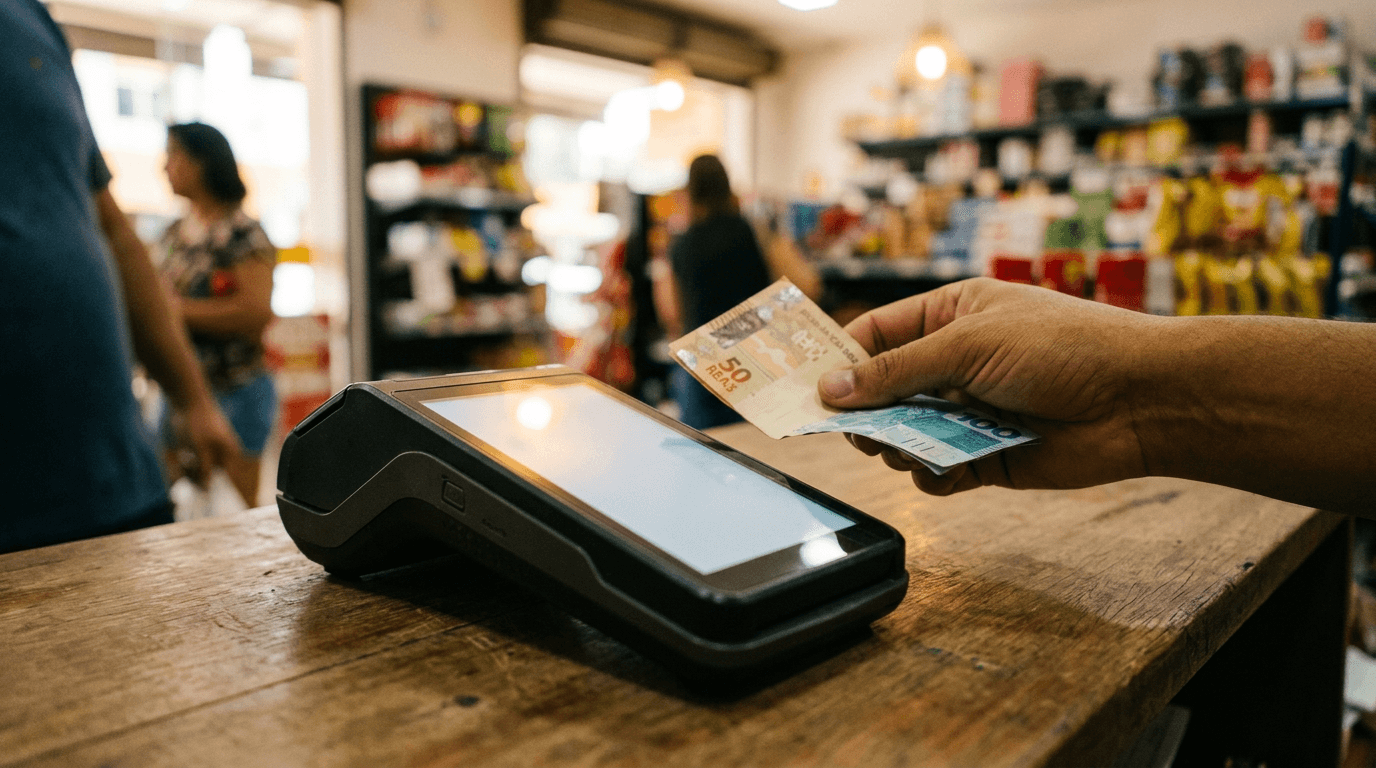
A central pillar of Brazil’s historic consumption tax reform has turned into a major battleground in the country's presidential campaign. The economic team of opposition candidate Senator Flávio Bolsonaro (PL) pledged to abolish the "split payment" system if elected, sparking a sharp response from the federal government. The dispute highlights the growing political risks surrounding the implementation of the country's new Value-Added Tax (VAT) framework, which is scheduled to begin its rollout in late 2027.
The split-payment mechanism is designed to automatically separate and route consumption taxes—the state-level IBS and federal CBS—to the government at the exact moment a transaction is financially settled. Under the current system, companies collect the full payment from a sale and remit the tax portion to the government at a later date, effectively using those funds as short-term cash. The new automated system aims to eliminate this lag, ensuring that tax credits are only generated for buyers once the underlying tax has actually been paid.
Daniella Marques, the economic coordinator for Flávio Bolsonaro's campaign, announced that their administration would eliminate the mechanism, arguing that it "asphyxiates" the working capital of small and medium-sized enterprises. Because businesses would no longer hold tax revenues in their cash flow before remittance, critics argue the system will choke liquidity. In response, Acting Finance Minister Dario Durigan strongly defended the tool on October 7, 2026, stating that opposing the split payment is equivalent to "favoring those who commit fraud".
According to Durigan, the automated system is crucial to shutting down noteiras—shell companies that issue fake invoices to generate tax credits for buyers without ever paying the corresponding taxes to the state. The government argues that curbing this tax evasion is the only way to lower the overall projected VAT rate for all taxpayers. Durigan also clarified that the system's rollout will be gradual, starting optionally in the second half of 2027 and becoming mandatory for business-to-business (B2B) transactions in 2028, while micro-enterprises and direct-to-consumer retail operations will remain exempt.
The escalating campaign rhetoric introduces significant uncertainty for businesses preparing for the transition. While the executive branch cannot unilaterally dismantle the system—as it is embedded in the tax reform legislation and requires approval from Congress and a joint state-municipal committee—a hostile administration could severely delay or dilute its enforcement.
What it touches
The political clash over tax implementation directly impacts large payment processors, banks, and software providers tasked with building the digital infrastructure for the split-payment system. Uncertainty surrounding the 2027–2028 rollout timeline could affect the long-term operational planning of major Brazilian financial and technology firms traded in New York, including StoneCo, PagSeguro (PAGS), and Inter & Co (INTR), as well as broad Brazilian market equities represented in the iShares MSCI Brazil ETF (EWZ).