
Brazil soybean exporters face shifting winds as Chicago specs turn net-long
The CFTC reports large speculators held a net-long position in CBOT soybeans as of late September, signaling shifting global market sentiment for Brazil's top export.
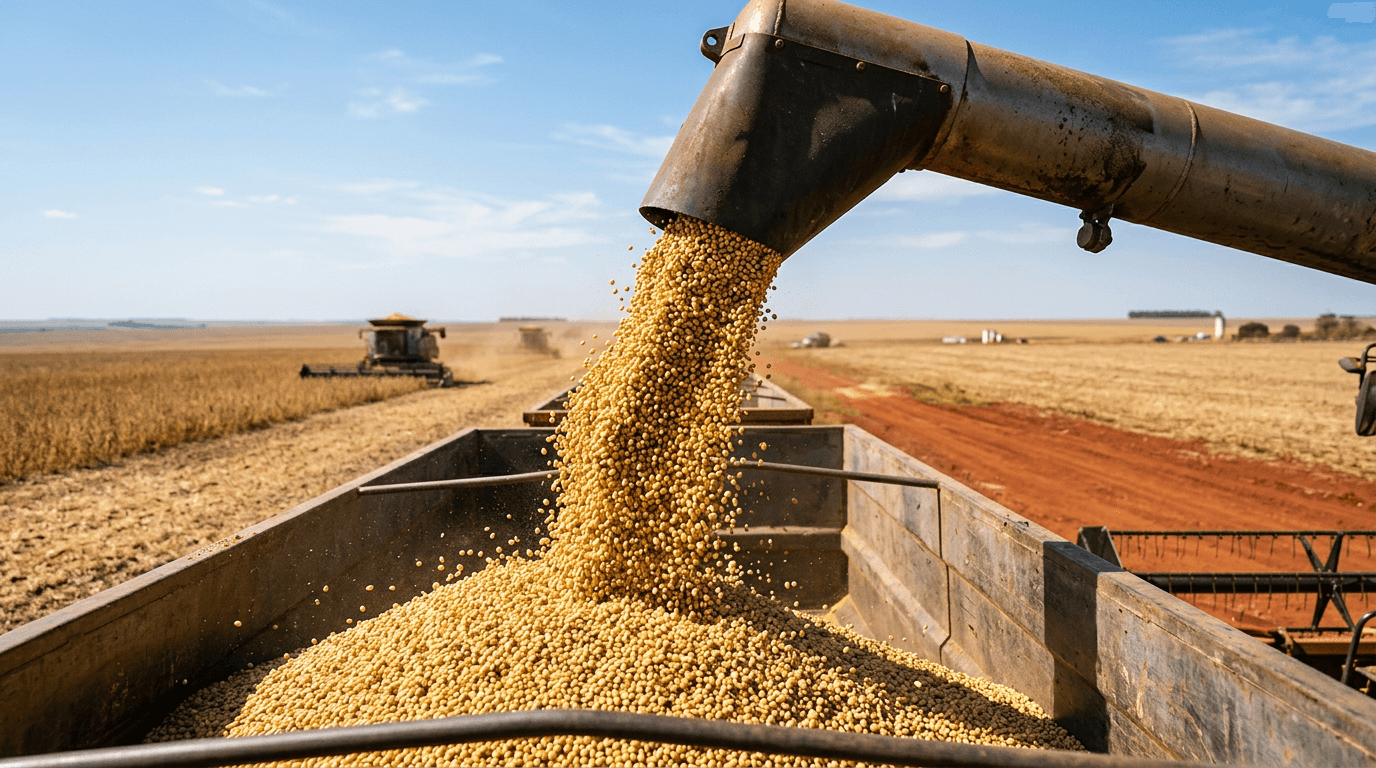
Global agricultural markets are signaling a shift in sentiment that directly impacts Brazil's economic engine. According to the weekly Commitments of Traders report released by the U.S. Commodity Futures Trading Commission (CFTC), large speculators and financial funds have turned net-long on soybean futures.
As of the September 29, 2026 observation date, non-commercial traders held 345,383 long contracts compared to 88,511 short contracts in the benchmark Chicago Board of Trade (CBOT) soybean market (contract code 005602). This resulted in a net-long position of 256,872 contracts, amid a total contract open interest of 1,090,227. While weekly trader positioning provides crucial market context rather than a direct price forecast, the data shows financial players are rebuilding positive exposure in the oilseed complex.
Why Chicago Matters in Mato Grosso
For the average foreign observer, Chicago futures might seem distant from the red dirt of Brazil’s center-west region. However, Brazil is the world's largest producer and exporter of soybeans, and local physical prices are directly pegged to the CBOT benchmark. When international funds buy or sell Chicago contracts, the financial ripples are felt immediately by farmers in Mato Grosso and across the Matopiba agricultural frontier.
The shifting speculative appetite comes at a critical juncture for Brazilian agribusiness. Farmers are currently planting the 2026/2027 crop under the watchful eye of erratic weather patterns. Agribusiness is the primary driver of Brazil's trade balance, and the administration of President Luiz Inácio Lula da Silva relies heavily on strong agricultural exports to sustain economic growth and support the local currency, the real.
The Limits of Speculative Bets
While a net-long position indicates that large funds are leaning toward higher prices, analysts warn that paper positions do not guarantee physical market trends. Global supply dynamics remain highly fluid. Brazilian exporters are closely monitoring competitive pressure from the ongoing U.S. harvest and import demand from China, which remains the primary destination for Brazilian soy.
Furthermore, speculative positioning can reverse rapidly. The high concentration of long contracts means that any sudden shift in global macroeconomic conditions or a sudden improvement in South American weather could trigger a wave of fund selling, placing downward pressure on physical export values.
What it touches
The shifting sentiment in global soybean markets directly exposes major South American agricultural operators traded on international exchanges. Investors track these positioning trends to gauge the revenue outlook for companies like Adecoagro S.A. (NYSE: AGRO), which manages vast farmland portfolios across South America, and global protein giant JBS N.V. (NYSE: JBS), whose feed costs are highly sensitive to fluctuations in the soybean complex.