
Brazil Prosecutor General Seeks to Annul Probe That Implicated Top Supreme Court Justice
The head of Brazil’s public ministry, Paulo Gonet, is challenging the legality of an investigation that exposed contacts between a jailed banker and a top STF Justice.
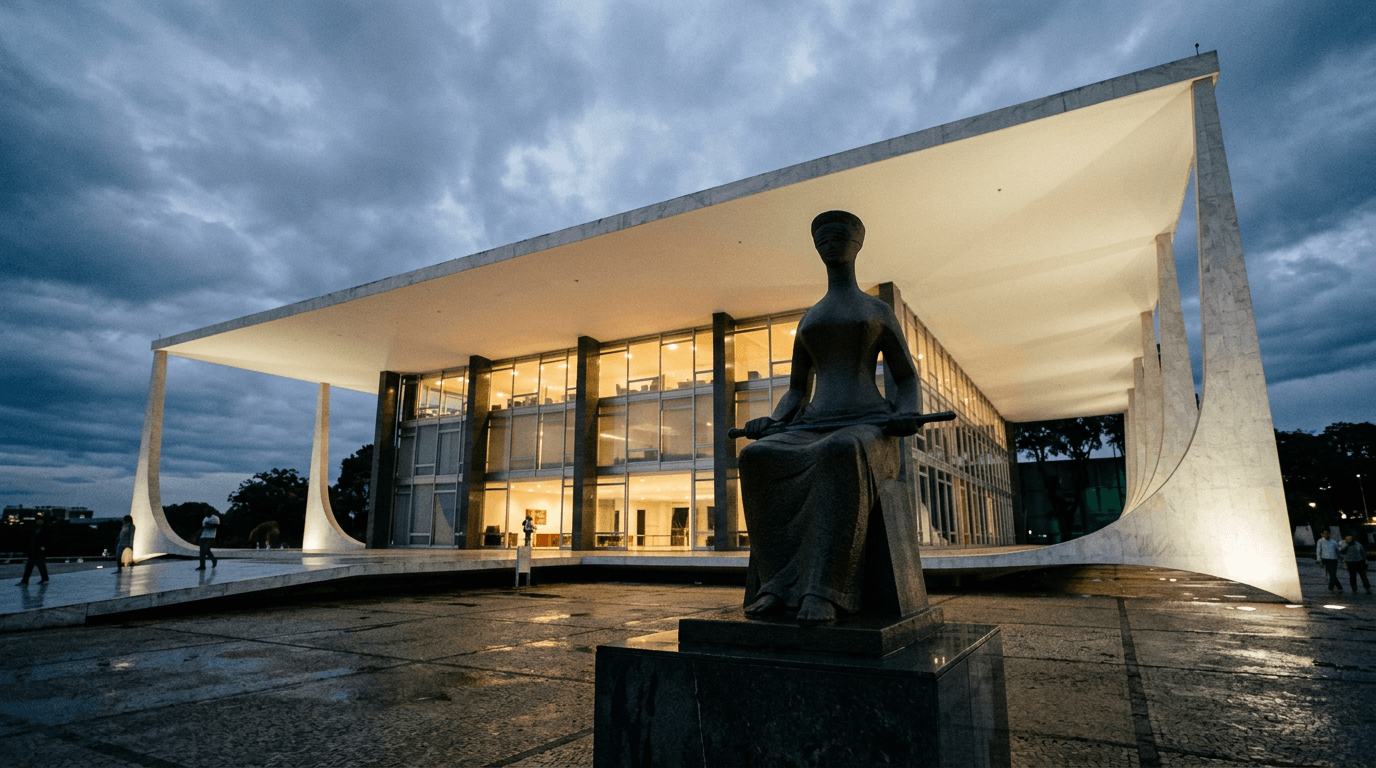
Brazil’s institutional rift deepened this week as Prosecutor General (PGR) Paulo Gonet moved to nullify a Federal Police (PF) report that exposed private contacts between a jailed banker accused of massive fraud and senior government officials, including a powerful Supreme Court Justice. Gonet, who heads the Federal Public Ministry, argued that the investigation, ordered by Supreme Court (STF) Justice André Mendonça, was conducted outside of the proper legal framework. This unprecedented maneuver pits the head of the country’s top judicial prosecutor against a Justice of the nation’s highest court, raising questions about judicial independence and escalating political risk.
The contested Federal Police report was the result of an investigation initiated by Justice Mendonça, the rapporteur for a case involving banker Daniel Vorcaro, the former head of Banco Master who is being investigated for financial fraud. Mendonça ordered a probe into private messages recovered from Vorcaro’s phone to determine who the banker was attempting to contact. The investigation quickly revealed text messages between Vorcaro and a contact identified as Justice Alexandre de Moraes—one of the STF’s most active and influential judges—in which the banker allegedly sought intervention and protection from his pending arrest.
The documents also implicated Gonet himself, revealing communications with the Prosecutor General through intermediaries of the banker, including messages where Gonet reportedly sent compliments and well-wishes to the former banking executive. Gonet’s decision to request the report be declared null is based on the argument that Justice Mendonça overstepped his judicial authority by attempting to investigate a fellow STF Justice, Moraes, without the prior authorization of the STF plenary or the Public Ministry. The argument is that a single judge cannot initiate an investigation into another authority with privileged forum in the highest court.
The Supreme Federal Court (STF) is Brazil’s final court of appeal and constitutional guardian, roughly equivalent to the U.S. Supreme Court. For an intelligent foreigner, the conflict is not merely procedural: it is a public and acrimonious battle between the two most critical institutions in the Brazilian legal system, the Public Ministry (PGR) and the Judiciary (STF), at a time of heightened political tension. The revelations, which stem from an investigation into Mr. Vorcaro’s alleged R$12 billion (approximately $2.1 billion) fraud scheme, expose a potentially compromising proximity between members of the judiciary and those they are supposed to be judging.
The institutional fight is now being managed by STF President Justice Edson Fachin, who has initiated a formal procedure to clarify the situation. Justice Fachin has given all key players—Justices Mendonça and Moraes, Prosecutor General Gonet, and the Director General of the Federal Police—five working days to provide written explanations regarding the controversial police report and the circumstances of its public release. This deadline sets the stage for a new public confrontation that will determine how far the Supreme Court is willing to let an investigation proceed when it implicates its own members.