Banco do Brasil Halves Profit Forecast as Agribusiness Defaults Surge
Brazil's state-controlled agricultural lending giant slashed its 2026 profit guidance by 50% after a spike in farm-sector defaults eroded third-quarter earnings.
The soaring cost of groceries and crop commodities on global supermarket shelves has finally broken the financial stamina of the farmers who produce them. In a stark signal of the mounting strain on global agriculture, Latin America's largest agricultural lender has experienced a dramatic earnings collapse. The financial fallout is forcing a major retrenchment at one of the region's most critical state-backed institutions.
On November 11, 2026, Brazil’s state-controlled financial giant, Banco do Brasil, reported that its adjusted net income for the third quarter of 2026 plummeted 66.5% year-on-year to R$1.27 billion ($220 million). The steep drop was driven by a massive spike in defaults across its massive agricultural loan portfolio. In response, the bank slashed its full-year 2026 adjusted net income guidance by half, lowering its forecast to a range of R$9 billion to R$11 billion, down from the previous projection of R$18 billion to R$22 billion.
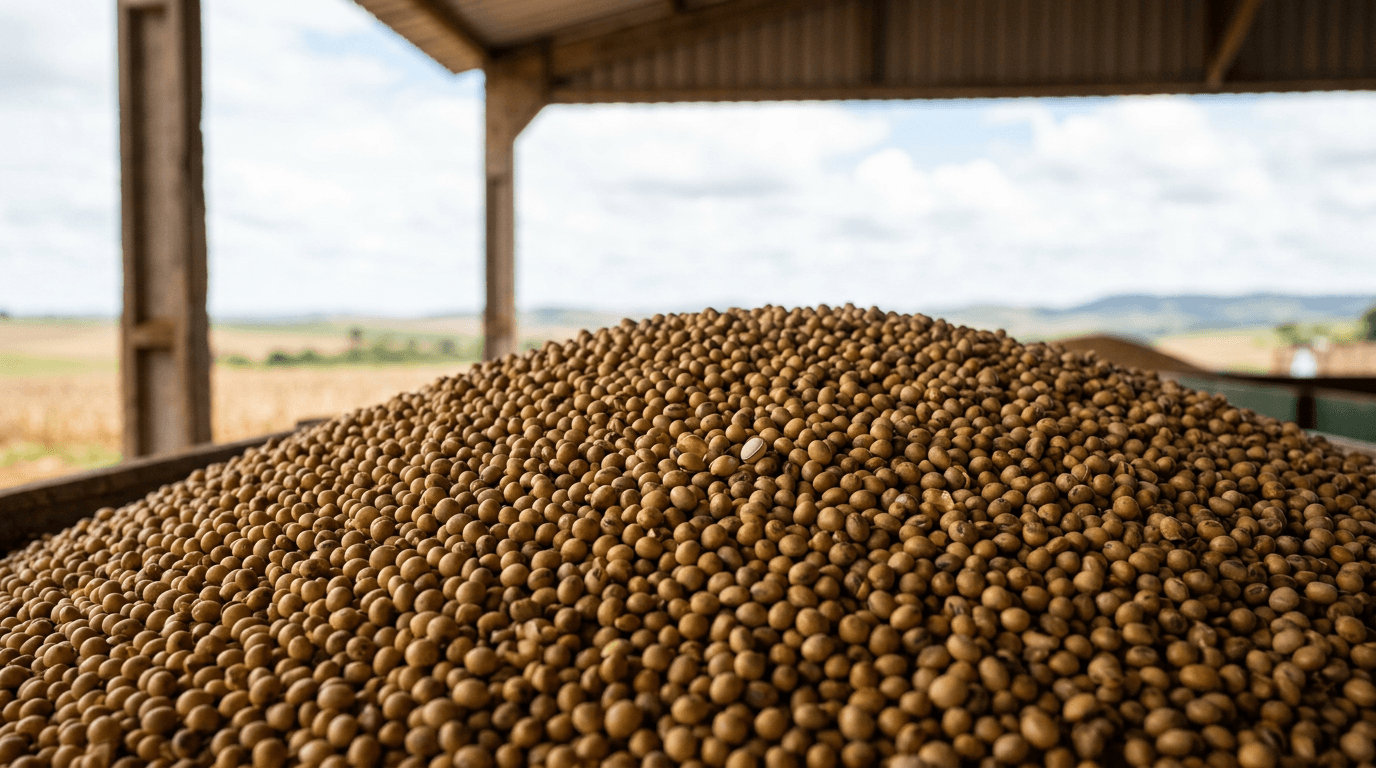
The financial distress is concentrated in Brazil’s Center-West and Southern agricultural heartlands, where soybean, corn, and cattle producers have been hit by a severe combination of climate disruptions, falling crop prices, and high interest rates. To cover these mounting bad loans, Banco do Brasil’s quarterly credit costs surged 18.4% year-on-year to R$21.2 billion. The bank also raised its projected full-year credit costs to between R$80 billion and R$83 billion, up from its earlier estimate of R$65 billion to R$70 billion.
The Policy Dilemma
This sudden deterioration highlights the political and operational risks inherent in Brazil's state-directed credit policies. Banco do Brasil, which is 50% owned by the federal government, controls roughly half of the country's agricultural credit market. Under Chief Executive Officer Tarciana Medeiros, the bank has been the primary vehicle for the government's subsidized farming credit program, known as Plano Safra.
However, state-backed debt-relief initiatives have failed to stem the tide. A federal debt-renegotiation program established under Provisional Measure No. 1,376/2026 has seen lower-than-expected participation from struggling farmers. With the bank's over-90-day delinquency rate climbing to 6.1% from 4.5% a year earlier, management has been forced to pivot from its historically lenient stance, increasingly taking defaulted borrowers to court to seize pledged collateral.
To protect its balance sheet, Banco do Brasil announced on November 11, 2026, that it is cutting its dividend payout ratio from 30% to the statutory minimum of 25% and canceling interim dividend distributions.
In your brokerage app
For retail investors holding diversified emerging market funds, Banco do Brasil is a major component of broad-market vehicles. The bank's American Depositary Receipts trade over-the-counter in New York under the name Banco do Brasil S.A.. It is also a significant holding in the iShares MSCI Brazil ETF, an exchange-traded fund managed by BlackRock that tracks large- and mid-sized Brazilian equities.