

Huge 9.75-Point Yield Gap Cushions the Brazil Real
The massive interest rate gap between the Federal Reserve and Brazil's central bank remains at 9.75 points, serving as a critical buffer for the real.
Key takeaways
- The Federal Reserve kept its upper interest rate target at 4.0%, per the St. Louis Fed on November 18, 2026
- The Banco Central do Brasil held its benchmark Selic rate at 13.75%, per the central bank's SGS system on November 18, 2026
- The resulting interest rate gap of 9.75 percentage points has remained unchanged over the last 30 days, per central bank and Fed records on November 18, 2026
American retail investors holding shares of the largest Brazil-focused exchange-traded fund are watching a massive interest rate gap that determines whether foreign capital flows into or out of South America's largest economy. The Federal Reserve's decision to maintain the upper limit of its fed funds target at 4.0%, according to Federal Reserve Bank of St. Louis FRED database (DFEDTARU) figures on November 18, 2026, has kept the yield spread between the United States and foreign benchmark rates wide, directly influencing the performance of international holdings in typical brokerage accounts.
In Brazil, the central bank’s Monetary Policy Committee, known as Copom, unanimously decided on November 4, 2026, to hold its benchmark Selic rate at 13.75%, halting a cycle of five consecutive cuts, according to the Banco Central do Brasil's SGS series 432. This leaves a dramatic gap of exactly 9.75 percentage points between the two central banks' policy rates—a spread that has remained completely unchanged over the last 30 days.
This 9.75-point spread represents the core driver of the "carry trade"—a financial strategy where global investors borrow funds in low-yield currencies like the U.S. dollar to purchase higher-yielding assets elsewhere. In theory, this enormous yield gap acts as a cushion for the brazil real, attracting foreign cash that seeks double-digit yields. However, even with Brazil offering what some analysts rank as the highest real interest rate in the world, the brazil real to dollar rate has faced persistent downward pressure, highlighting that high yields alone cannot entirely offset investor anxiety over the nation’s fiscal and political trajectory.
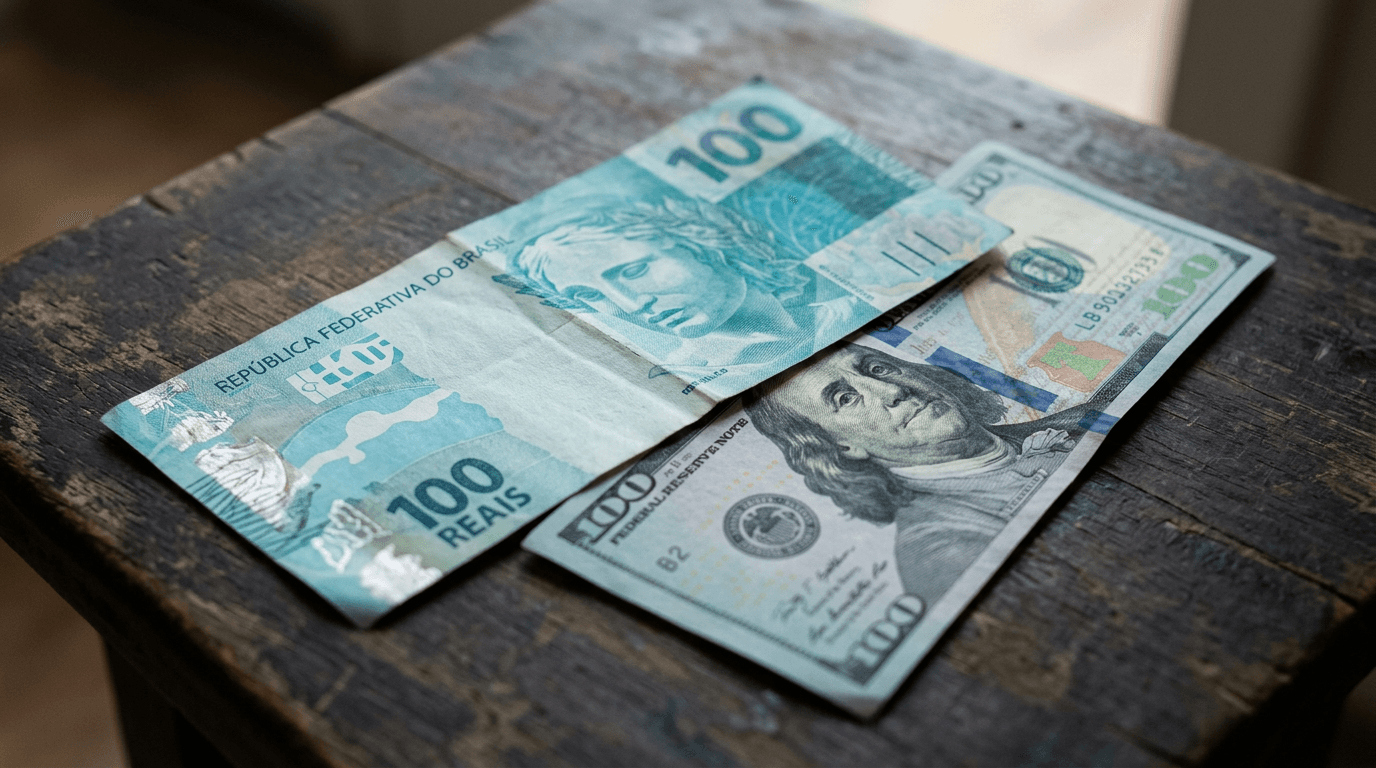
The currency’s vulnerability was on display as the brazil real to us dollar exchange rate hovered at 5.8226 reais per dollar on November 18, 2026, according to BRZ News reference data. Meanwhile, the real traded at 6.3854 per euro and 7.6543 per British pound. This weakness of the brazil real vs dollar persists despite the 13.75% Selic rate, demonstrating that political and fiscal uncertainties—intensified by the recent re-election of President Luiz Inácio Lula da Silva on October 25, 2026—have forced investors to demand a much higher risk premium to hold Brazilian assets.
Looking forward, market participants are focused on the central bank's next policy meeting scheduled for December 8 and 9, 2026. Whether Copom will keep rates at 13.75% or be forced into a defensive rate hike depends heavily on how inflation expectations behave. According to the central bank's Focus survey of private economists on November 4, 2026, inflation projections for 2026 have risen to 5.2%, well above the official inflation target's 4.5% ceiling, signaling that high borrowing costs are likely here to stay.
In your brokerage app
For retail investors holding the iShares MSCI Brazil ETF (EWZ), the country’s main exchange-traded fund listed in New York, the persistent 9.75-point rate gap means the underlying Brazilian companies in the fund are operating under highly restrictive domestic credit conditions. While these high interest rates support the currency via the carry trade, they also increase the cost of local corporate debt, making domestic growth more challenging for the equities that compose the fund.
Latest articles
 US-Listed Brazil ETF Braced for New 25% Dividend Tax ProposalLeft-wing lawmakers in Brasília proposed progressive dividend taxes up to 25% as US-listed Brazilian equities navigate fiscal reforms and corporate shocks.
 Retailers Restructure as Brazil Formally Bans Six-Day WorkweekBrazil's ban on the 6x1 workweek forces US-traded retailers to redesign shifts and invest in automation as formal hourly labor costs are projected to rise.
 Telefônica Brasil Confirms December Payout to New York InvestorsTelefônica Brasil confirmed the December payment date for a previously approved interest-on-capital distribution. Here is what ADS holders can expect.