Fed Rate Path Collides With Brazil's Halt to Interest Rate Cuts
Brazil's central bank paused its rate-cut cycle, holding its key rate at 13.75% as fiscal worries and a slumping real threaten US retail investor returns.
US retail investors holding diversified emerging market funds or international equities are facing a shifting landscape as global interest rate paths diverge. While the Federal Reserve continues to fine-tune its own monetary policy, the Central Bank of Brazil (BCB) has abruptly halted its easing cycle. The move preserves a wide yield differential that directly affects the dollar-denominated returns of anyone holding South American assets in their brokerage accounts.
On November 4, 2026, the BCB's monetary policy committee, known as Copom, unanimously voted to keep its benchmark Selic rate unchanged at 13.75%. The decision ended a cycle of five consecutive interest rate cuts that began in March 2026. By freezing borrowing costs at one of the highest levels in the world, the central bank signaled that it is prioritizing inflation defense over economic acceleration.
The policy pause was driven by deteriorating domestic inflation expectations and heightened fiscal uncertainty. Following the October 2026 presidential runoff, in which leftist President Luiz Inácio Lula da Silva was re-elected, investors have grown increasingly anxious over the government's public spending plans. These fiscal concerns have unanchored long-term inflation expectations, prompting the central bank to step in. Brazil's official consumer price index (IPCA) rose to 4.62% for the 12 months through October, breaching the upper limit of the central bank's target tolerance band of 4.5%.
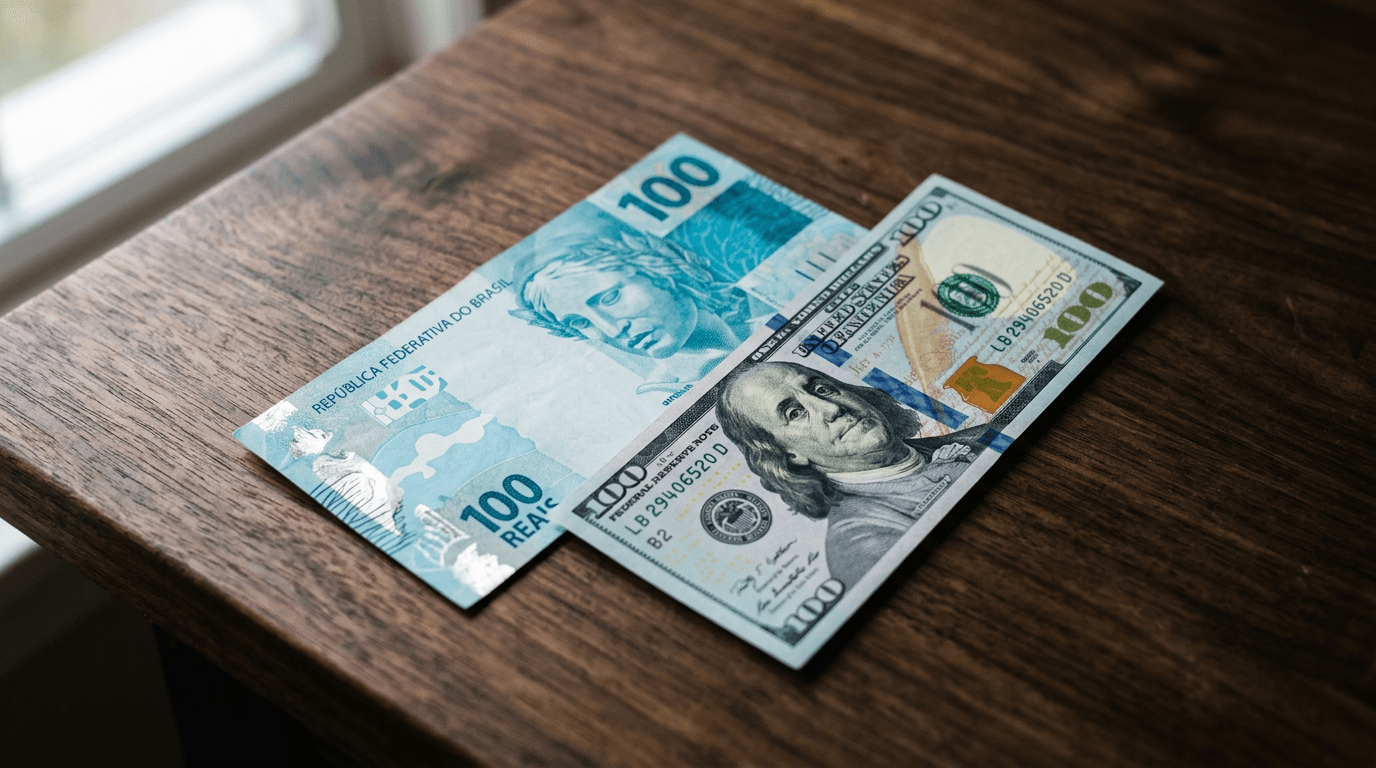
At the same time, the Brazilian real has faced intense downward pressure, slumping to around 5.50 per US dollar in early November 2026. This marked the currency's weakest level of the year. The depreciation has been fueled by investor concern over the country's rising gross public debt, which climbed to 82.9% of gross domestic product (GDP) in September. For US investors, a weaker real dilutes the value of Brazilian corporate earnings when translated back into dollars, even if the underlying companies perform well on the ground.
By maintaining the Selic rate at 13.75%, the central bank is attempting to anchor the currency and curb capital flight. The resulting wide interest rate gap between the US and Brazil typically supports the real by attracting foreign carry-trade capital. However, economists from Oxford Economics noted that a sustained recovery for Brazilian financial assets will ultimately depend on the Lula administration delivering credible fiscal measures to rein in public debt.
In your brokerage app
For US retail investors, this interest rate freeze directly impacts the iShares MSCI Brazil ETF, a prominent exchange-traded fund listed in New York that tracks large and mid-sized Brazilian equities. The pause in rate cuts keeps borrowing costs high for major holdings within the fund, such as state-controlled oil giant Petrobras and financial institution Itaú Unibanco, both of which are also listed in New York as individual equities. While high rates support the currency, they also increase debt-servicing costs for local businesses, creating a delicate balancing act for foreign portfolio returns.