
Zero Rainfall Puts Brazil's 2026/27 Soybean Planting Outlook at Risk in Key Central-West States
Extreme dryness in Mato Grosso and Goiás threatens soil moisture, potentially delaying the start of Brazil’s soybean planting season.
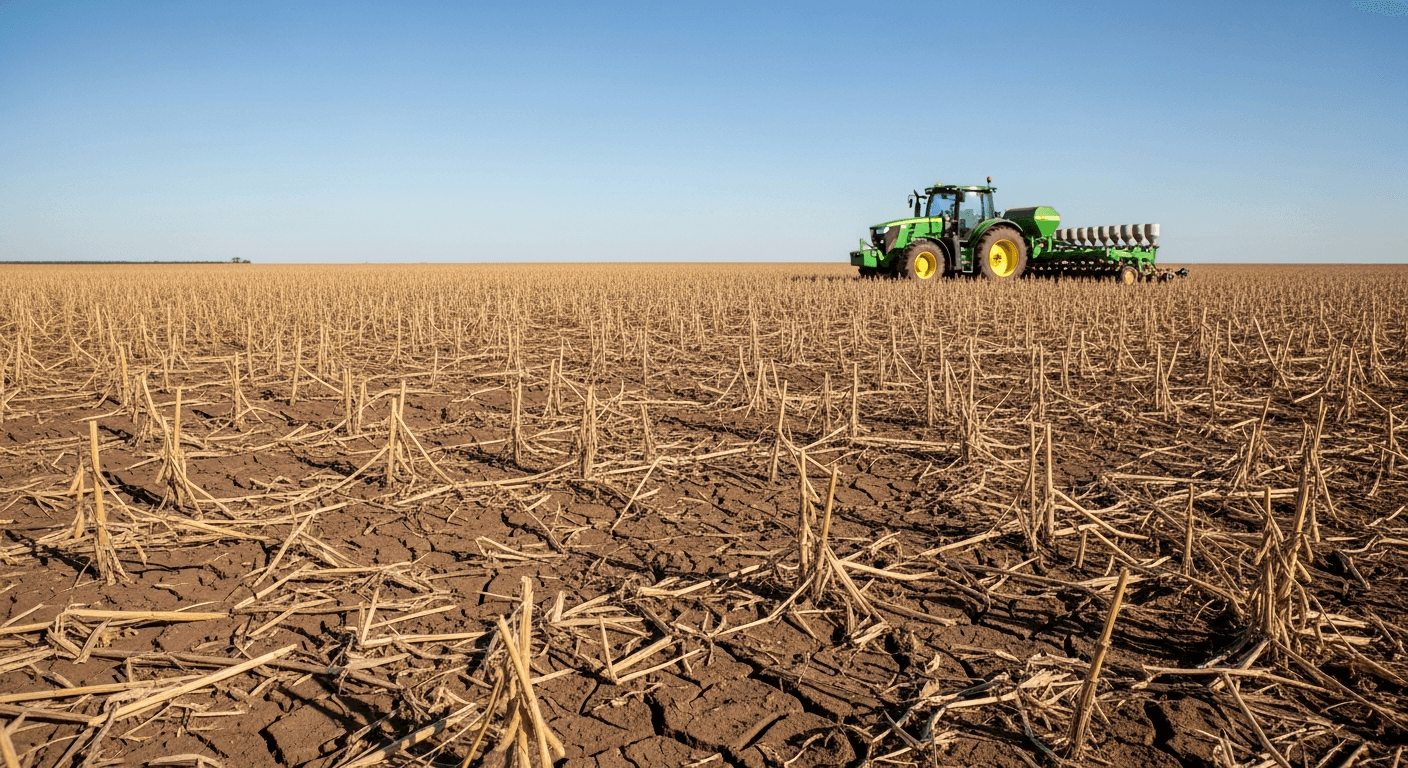
The essential soil moisture needed for the 2026/2027 soybean crop is at risk after key agricultural centers in Brazil’s Central-West recorded zero-to-near-zero rainfall over the past week, potentially delaying the start of the planting season set for September. Municipalities in the major producing states of Mato Grosso (MT) and Goiás (GO) are in the midst of a prolonged dry spell typical for this time of year, but the severity raises concern about the crucial soil moisture profile. Data indicates that Rio Verde (GO) and Luís Eduardo Magalhães (BA) saw 0.0mm of rain over the last seven days, while Sorriso (MT)—the self-proclaimed national capital of agribusiness—received a minimal 0.9mm over the same period, with all three areas recording seven consecutive dry days.
Although the main soybean crop is not currently in the ground—as most regions are in the mandatory "sanitary void" (vazio sanitário) to control Asian rust—the dryness impacts the critical ground conditions for when planting begins shortly after the sanitary void ends in early September. Extended dryness now means that the onset of the seasonal rains must be stronger and more consistent to fully recharge the soil for effective planting. If the seasonal rains are delayed, farmers will be forced to postpone planting, a move that carries a compounding risk for the high-value safrinha (second corn crop) that follows the soybean harvest, by pushing its planting window into a historically riskier period for drought or frost.
The dryness is especially pronounced in the Midwest, which is enduring "extreme dryness" and high temperatures, raising concerns for general crop stress and fire risks ahead of the planting season. While the key regions in the Central-West are struggling to recharge soil moisture, the situation is slightly better in the South, where Cascavel in Paraná (PR) recorded 18.7mm over the last week. The risk of delayed planting in the world’s largest soybean producer is a critical factor for global supply, yet U.S. soybean futures (CBOT) have not fully priced in this potential headwind, trading lower following an improving weather outlook for the U.S. crop. Investor positioning data shows that money managers remain heavily net-long on soybean contracts (Soybean COT net long at 113,860 contracts) and corn contracts (Corn COT net long at 186,650 contracts), making the market sensitive to any supportive weather-related news out of Brazil that might tighten the global supply picture.
For investors, the immediate focus shifts from the safrinha corn harvest—which is currently progressing without major issues—to the timing of the seasonal rains. The key data point to watch is the rainfall across Mato Grosso and Goiás in the final two weeks of August and the first two weeks of September. A delay in the typical rainfall schedule past mid-September would be the first tangible signal that the 2026/27 crop’s yield potential—and the resulting logistics timeline—is truly at risk. Any prolonged delay in planting could pressure soybean prices higher and potentially support the Brazilian real (BRL) as it signals future tighter supply of the country's most valuable agricultural export.