Why Your Global Ag Mutual Fund is Watching Brazil's Farm Debt Crisis
A critical $18 billion financial relief program for Brazilian farmers faces a November 11, 2026 congressional expiration, threatening supply chains.
Global investors holding diversified agriculture mutual funds or exchange-traded funds (ETFs) are increasingly exposed to the financial health of South American growers. When extreme weather disruptions hit harvests, the financial shockwaves ripple directly into the balance sheets of multinational grain traders and fertilizer suppliers listed on Wall Street.
In Brazil, the world’s largest exporter of soybeans and beef, a critical financial safety valve is about to close. An emergency debt relief program designed to help Brazilian farmers restructure up to 100 billion reais ($18.18 billion) in climate-related debt is facing an expiration deadline of November 11, 2026. Unless Congress votes to extend or modify the underlying legislation, known as Medida Provisória 1.376/2026, the subsidized credit lines will vanish, leaving thousands of producers exposed to default.
The provisional measure, signed by President Luiz Inácio Lula da Silva's administration on July 15, 2026, aimed to rescue family farms and medium-sized producers hit by consecutive crop failures between 2019 and 2025. However, bureaucratic bottlenecks and rigid bank requirements have severely limited its reach. Out of the estimated 100 billion reais in eligible distressed debt, only about 14.3 billion reais ($2.6 billion) had actually been renegotiated as of October 26, 2026, according to Central Bank data cited by agricultural organizations.
According to agricultural organizations, private and state-owned banks took weeks to establish operational guidelines after the National Monetary Council (CMN) issued necessary regulations on August 25, 2026. When the windows finally opened, farmers faced steep hurdles, including demands for a 15% down payment and complex technical audits to prove climate-induced losses.
The Political Battle in Brasília
The Agricultural Parliamentary Front (FPA)—the powerful cross-party rural lobby that controls a majority of votes in Brazil's Congress—is leading a last-minute push to save the program. Led by figures like federal deputy Pedro Lupion, the FPA is negotiating directly with Executive Secretary of the Ministry of Finance Dario Durigan and Senator Renan Calheiros, who heads the joint congressional committee reviewing the measure.
The rural lobby wants the federal government to ease the strict entry criteria, expand the credit limits, and extend the contracting window. Without these changes, agricultural advocates warn that a wave of defaults could freeze local credit markets just as planting for the next cycle begins.
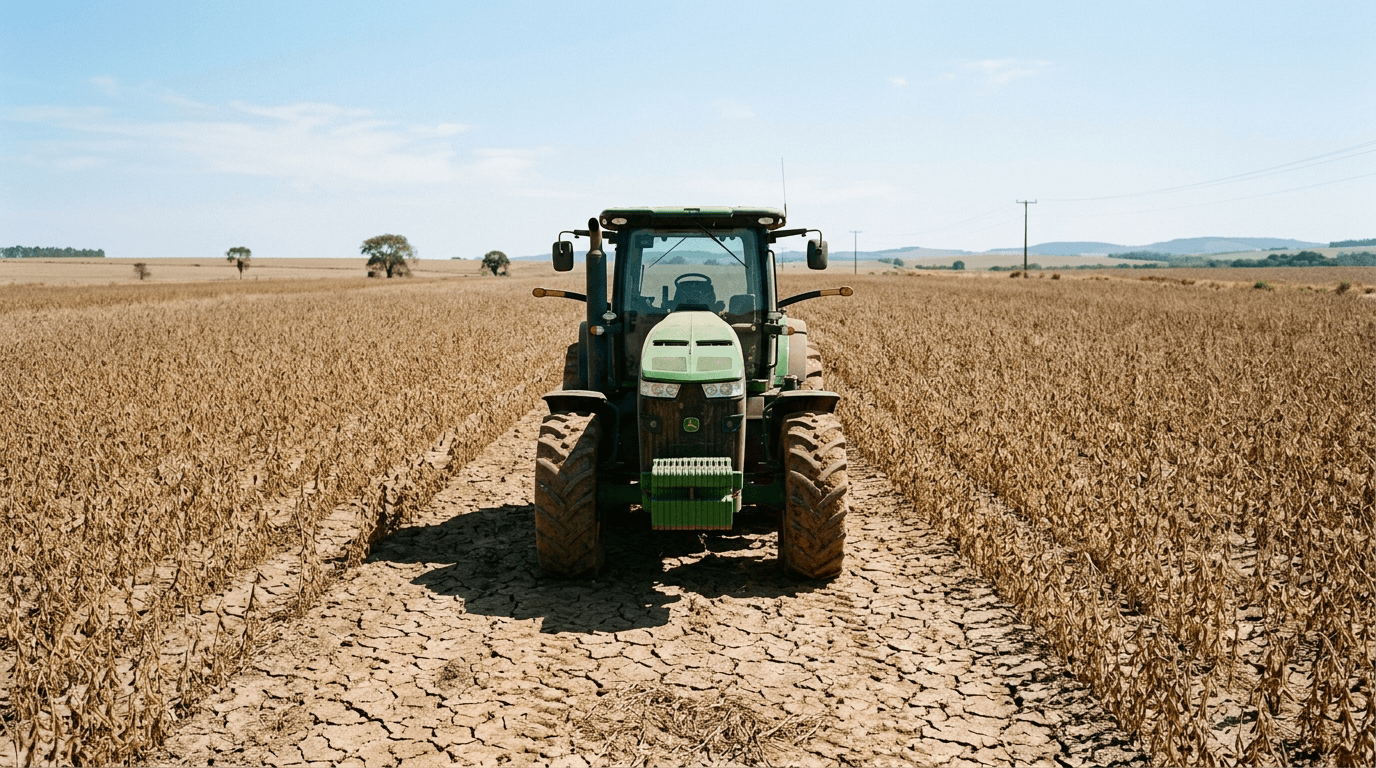
The political risk for global investors lies in how this credit crunch affects input purchases. When Brazilian farmers cannot restructure their old debts, local banks refuse to issue new loans for the purchase of seeds, machinery, and fertilizers. This directly impacts the sales volumes of major agricultural equipment and crop nutrition multinational companies.
In your brokerage app
For retail investors, this credit bottleneck directly touches major agricultural suppliers listed in New York. Companies like Mosaic Co., which supplies a significant share of Brazil's fertilizer imports, and Deere & Company, which relies on South American demand for its high-horsepower tractors, are highly sensitive to the purchasing power of Brazilian growers. Investors can track this exposure through broad sector funds like the VanEck Vectors Agribusiness ETF (MOO), which holds both global equipment manufacturers and international grain merchants.