
Strong El Niño Threatens Brazil's 2026/27 Grain Planting Calendar
A severe El Niño is delaying rains in Brazil's agricultural heartland, risking a domino effect that could compress the crucial second-corn crop window.
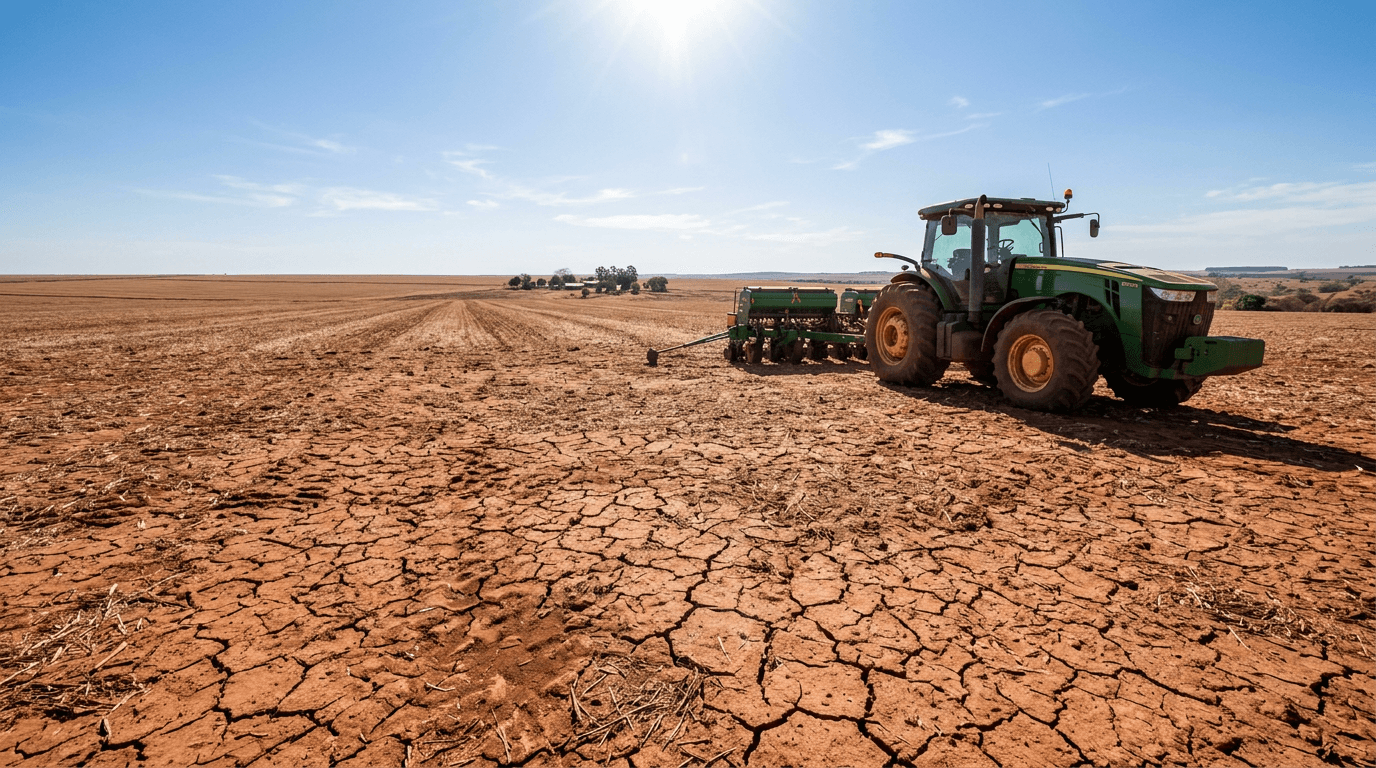
A historically powerful El Niño weather pattern is disrupting the start of Brazil’s 2026/27 grain planting season, threatening to trigger a domino effect across the world’s largest soybean and corn exporting corridors. Meteorological agencies, including the United Nations World Meteorological Organization (WMO) and Brazil’s National Institute of Meteorology (INMET), have confirmed a near 100% probability that the phenomenon will persist at strong to "very strong" intensity through the southern hemisphere's spring of 2026 and summer of 2026/27.
The immediate casualty of this climate anomaly is the planting calendar in Brazil's agricultural heartland. In the central-western state of Mato Grosso—the country's powerhouse producer—and the Matopiba frontier region, delayed and irregular rainfall is forcing farmers into a high-stakes gamble. Growers must choose between sowing soybeans in dangerously dry, hot soils, which risks poor crop establishment and costly replanting, or waiting for consistent rains.
This delay in soybean planting carries severe consequences for the subsequent crop cycle. In Brazil’s highly efficient double-cropping system, soybeans are harvested in early transit to make way for the safrinha (second-season) corn and cotton crops. If the soybean harvest is pushed back, the planting window for safrinha corn will compress, exposing the developing grain to the dry season's onset in early 2027 and raising the risk of significant yield losses. Already, Mato Grosso's Institute of Agricultural Economics (Imea) has projected a 7.5% drop in the state's second-crop corn harvest for the 2026/27 cycle due to these anticipated weather constraints.
Meanwhile, southern Brazil faces the opposite extreme. The strong polar jet stream fueled by El Niño is steering heavy, persistent storm systems across the states of Rio Grande do Sul and Paraná. While the high soil moisture benefits early-stage corn, excessive rainfall is waterlogging fields, disrupting the ongoing wheat harvest, and raising the risk of yield-damaging fungal diseases.
As the peak of the El Niño event approaches between October and December, Brazilian authorities and agricultural cooperatives are bracing for a highly volatile season. The contrasting realities of severe dry spells in the north-central regions and flooding in the south are set to test the resilience of the country's logistics and crop management systems.
What it touches
The delayed planting cycle directly exposes global agricultural commodities, specifically Chicago soybean and corn futures, to heightened volatility as traders monitor Brazilian crop progress. Major agribusiness operators and grain exporters with heavy infrastructure in South America, such as Bunge Global SA (NYSE: BG) and Archer-Daniels-Midland Co. (NYSE: ADM), face potential supply chain disruptions and shifting export volumes, while Brazilian logistics operators could see altered transport schedules to major ports.