
Persistent Dry Spell in Key Brazilian Soybean Belts Raises Soil Moisture Risk for Next Crop
Severe rainfall deficit in MT, GO, and BA soybean regions risks planting delays for 2026/27 crop, supporting futures prices.
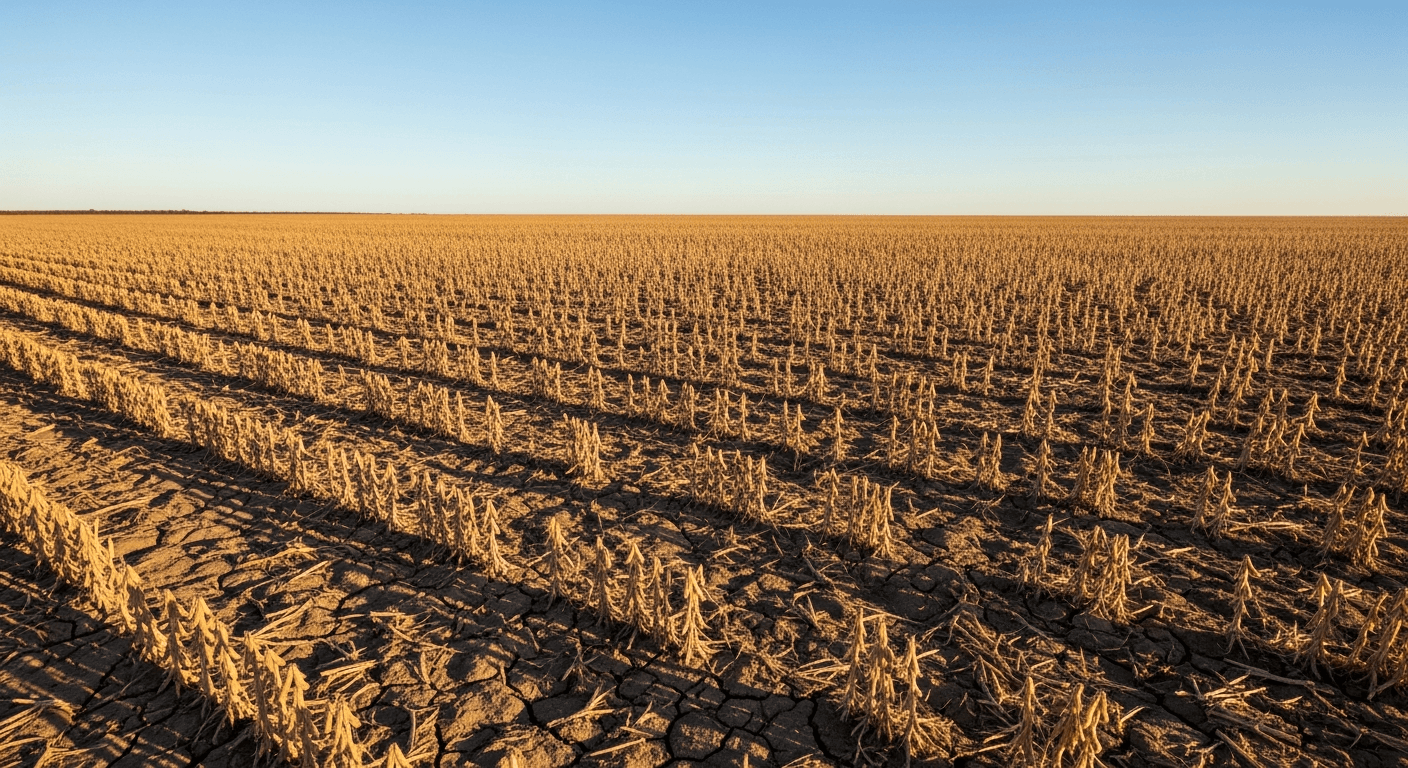
A week-long rainfall deficit across four major Brazilian soybean producing states has raised concerns over soil moisture levels ahead of the critical planting window, presenting an early supply-side risk to the 2026/2027 crop. In the largest producing regions, Luís Eduardo Magalhães in Bahia (BA) and Rio Verde in Goiás (GO) have registered zero precipitation over the last seven days, while Sorriso in Mato Grosso (MT) recorded a negligible 0.2mm, with all three locations experiencing seven consecutive dry days. This early pressure on the next harvest is providing fundamental support to CBOT soybean futures, with the November 2026 new-crop contract trading near $12.39 per bushel. The Brazilian Real is trading at approximately 5.0870 BRL per U.S. dollar, closely watched by exporters.
The immediate threat is not to the harvest itself, as July falls within the vazio sanitário (sanitary void) period where soybean cultivation is prohibited to control the Asian rust fungus, but to the necessary soil moisture replenishment for the planting season beginning in September and October. While the July winter months are seasonally dry in the Central-West and Northeast, a prolonged absence of rain now means a lower starting point for soil moisture reserves when the first planting windows open. This lack of recharge limits the pace of early planting, which can compress the window and force farmers to plant later, increasing the crop’s exposure to dry spells during the crucial pod-filling stage later in the cycle.
Specific rainfall data underscores the severity of the dry spell in the central and northeastern regions: Luís Eduardo Magalhães (BA) and Rio Verde (GO) recorded 0.0mm over the last week and have endured seven dry days. Even in Paraná (PR), the dry period is marked, with Cascavel recording only 10.6mm over the last seven days and five dry days. This contrasts with the conditions needed to build sufficient moisture for the official planting start in early September for states like Mato Grosso.
Speculators are already positioned for a potentially tighter supply. The latest Commitment of Traders (COT) report shows money managers maintaining a significant net long position in soybean futures, currently standing at 113,860 contracts (182,923 long versus 69,063 short). This heavy positioning indicates that the market is highly sensitive to any further negative weather news that could affect the Brazilian crop and global supply. Corn futures are also highly net long at 186,650 contracts, as a planting delay in soybeans could push second-crop safrinha corn planting later.
The immediate focus for investors should shift to long-range forecasts for early September, which marks the official start of the planting calendar in key states. The key metric to watch is the return of the seasonal rain front. If the current rainfall deficit persists, producers will be forced to delay planting past the ideal windows, increasing input costs and raising the probability of a yield downgrade for the 2026/2027 season. Any sustained delay to the start of the rainy season will likely translate into further upward pressure on CBOT soybean futures.