
Inpasa Secures Global SAF Certification, Boosting Brazil's Biofuel Edge
Latin America's largest corn ethanol producer, Inpasa, has secured ISCC CORSIA certification, positioning Brazil as a primary exporter of SAF feedstocks.
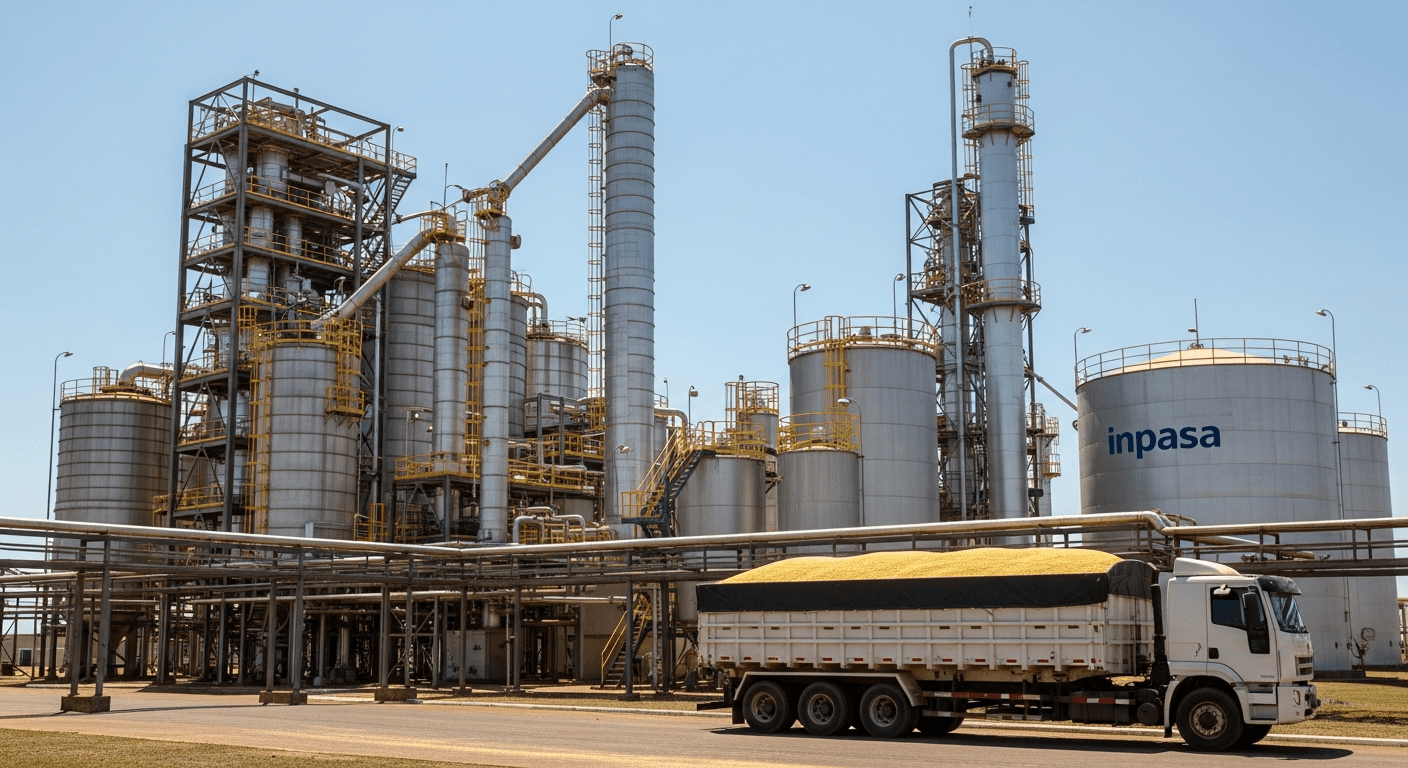
Inpasa, the largest grain ethanol producer in Latin America, has secured the prestigious ISCC CORSIA certification across all its production facilities. This international credential, recognized by the International Civil Aviation Organization (ICAO), officially qualifies the company to supply raw materials—specifically ethanol and Technical Corn Oil (TCO)—for global Sustainable Aviation Fuel (SAF) production. The milestone positions Brazil as a primary global exporter of low-carbon feedstocks at a time when the aviation sector faces strict decarbonization mandates.
The certification is highly significant due to Inpasa's massive industrial scale. The company currently produces approximately 16 million liters of ethanol daily, translating to 5.8 billion liters annually. This volume represents roughly 17% of Brazil's total national biofuel output. Additionally, Inpasa boasts a TCO production capacity of 305,000 tons per year, offering a vital secondary feedstock for SAF manufacturing pathways such as Alcohol-to-Jet (ATJ) and Hydroprocessed Esters and Fatty Acids (HEFA).
This supply-side breakthrough aligns with Brazil's domestic regulatory tailwinds. The country's "Combustível do Futuro" (Fuel of the Future) law mandates a gradual SAF blending requirement for airlines, starting at 1% in 2027 and rising to 10% by 2037. This legislation guarantees long-term domestic demand while local producers scale up to meet international export requirements.
The certification comes amid mixed weather conditions across Brazil's agricultural heartland, where second-crop corn serves as Inpasa's primary feedstock. Recent data shows dry conditions persisting in key agricultural hubs: Cascavel-PR recorded 0.0mm of rain over the last 7 days with 7 dry days, while Sorriso-MT registered 5.1mm of rain and 6 dry days. Rio Verde-GO saw 1.2mm of rain (6 dry days), and Luís Eduardo Magalhães-BA—where Inpasa plans to open a new biorefinery—recorded 1.3mm of rain with 7 dry days. Meanwhile, commodity market sentiment remains active, with CFTC Commitment of Traders (COT) data indicating a net-long position in corn of 478,153 long contracts versus 377,173 short contracts.
Inpasa's successful certification is expected to influence the broader Brazilian energy and agribusiness landscape. Major players in the sector, including Cosan (COSAN3), São Martinho (SMTO3), and Vibra Energia (VBBR3), are closely watching these regulatory and certification developments as the global aviation industry intensifies its transition toward sustainable energy alternatives.