
Google Backs Giant Brazil Rice Project to Cut Methane and Permanently Capture CO2
Google announced its largest-ever carbon removal purchase, funding a project in Brazil's rice bowl that uses two innovative methods to cut potent methane emissions and permanently sequester carbon.
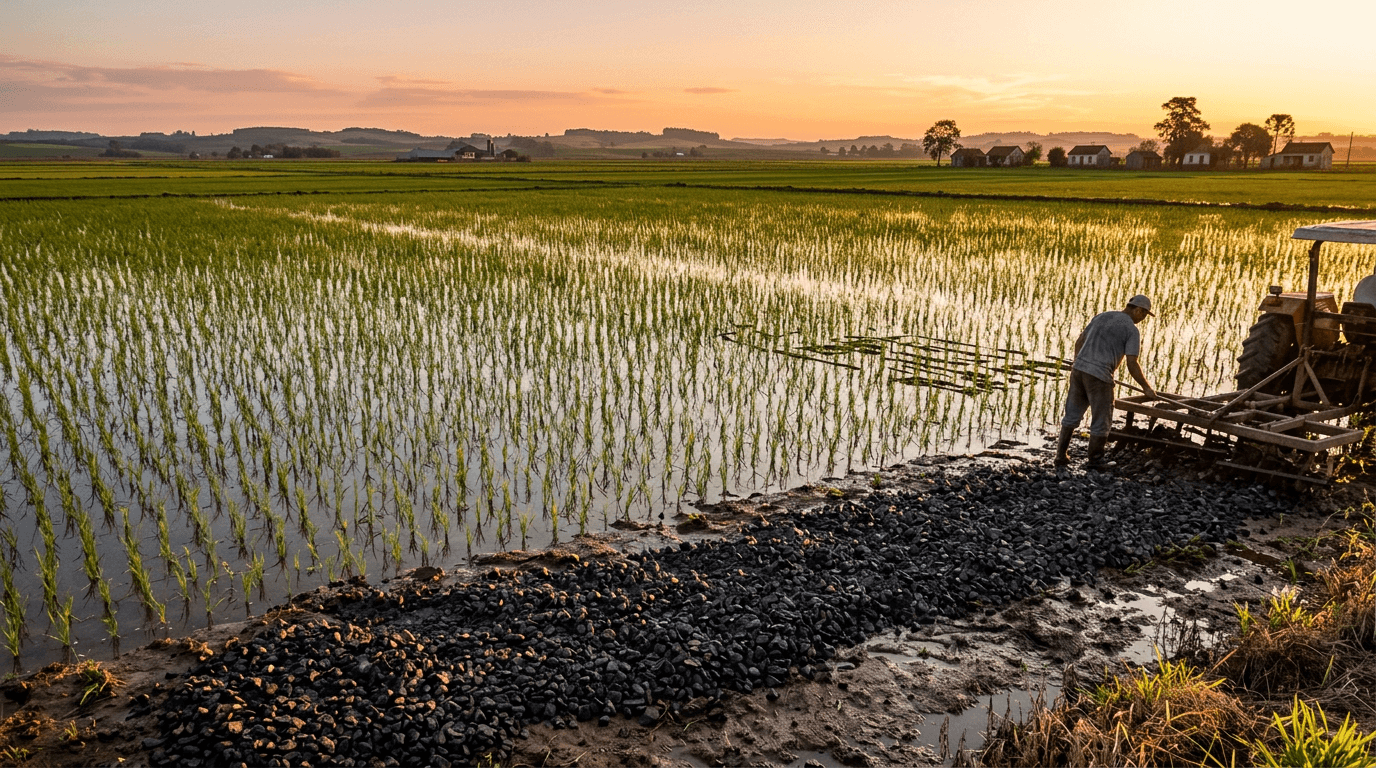
Google is making its largest-ever carbon removal purchase to date, funding a major climate technology project across more than 200,000 hectares of rice fields in southern Brazil that combines near-term methane reduction with long-term carbon removal. The technology giant announced the agreement with climate tech company Terradot to purchase credits targeting a combined 2 million metric tons of climate impact: 1 million metric tons of methane elimination by 2030, and 1 million metric tons of permanent carbon removal by 2040.
The initiative is designed to tackle a problem inherent to one of the world's most critical food staples: rice cultivation, which accounts for an estimated 10% to 12% of global methane emissions. This dual-action approach is the first publicly announced project of its scale to pair the reduction of a short-lived, powerful "superpollutant" like methane with a durable, long-term carbon dioxide removal solution within a single agricultural system.
The project uses two complementary techniques to achieve its goals. The first is Alternate Wetting and Drying (AWD), an irrigation practice that requires farmers to periodically drain flooded rice paddies. Traditional continuous flooding creates anaerobic conditions that allow methane-producing bacteria to thrive; by allowing the soil to dry intermittently, the system drastically reduces methane emissions by as much as 70% and conserves water. The second technique, Enhanced Rock Weathering (ERW), involves spreading naturally sourced, crushed volcanic rock across the fields. As the rock dissolves over time, it reacts with the atmosphere to permanently sequester carbon dioxide (CO2).
The work is concentrated in Rio Grande do Sul, the southernmost Brazilian state known as the country's "rice bowl" because it produces about 70% of Brazil's total rice output. The region is particularly suited for this climate tech model due to its high reliance on irrigated rice and the proximity of naturally sourced basalt quarries necessary for the ERW process. Beyond the climate impact, participating farmers are expected to see co-benefits, including lower costs from reduced water consumption due to the AWD technique and improved soil health from the crushed rock.
The partnership is positioned as a scalable blueprint for global agriculture. Terradot and Google have stated the model could be extended across Brazil’s entire 1.5 million hectares of rice fields and eventually replicated in other rice-growing regions worldwide. The agreement signals a critical step in using nature-based solutions to address climate change, moving beyond mere emissions avoidance to actively eliminating both near-term warming gases and long-lived CO2.