Dry spell in Brazil's southern soybean belt raises crop-stress risk
A sudden dry spell in Paraná's key agricultural hub of Cascavel is threatening early-planted crops, challenging Brazil's push for a record soybean harvest.
Global grain markets are closely watching South American weather patterns as a sudden dry spell in Brazil’s southern agricultural heartland threatens to stress newly planted crops. For retail investors holding positions in agricultural commodities or global food conglomerates, these localized weather shifts are the primary drivers of price volatility on the Chicago Board of Trade (CBOT), where soybean futures recently traded at 1193.75 cents per bushel.
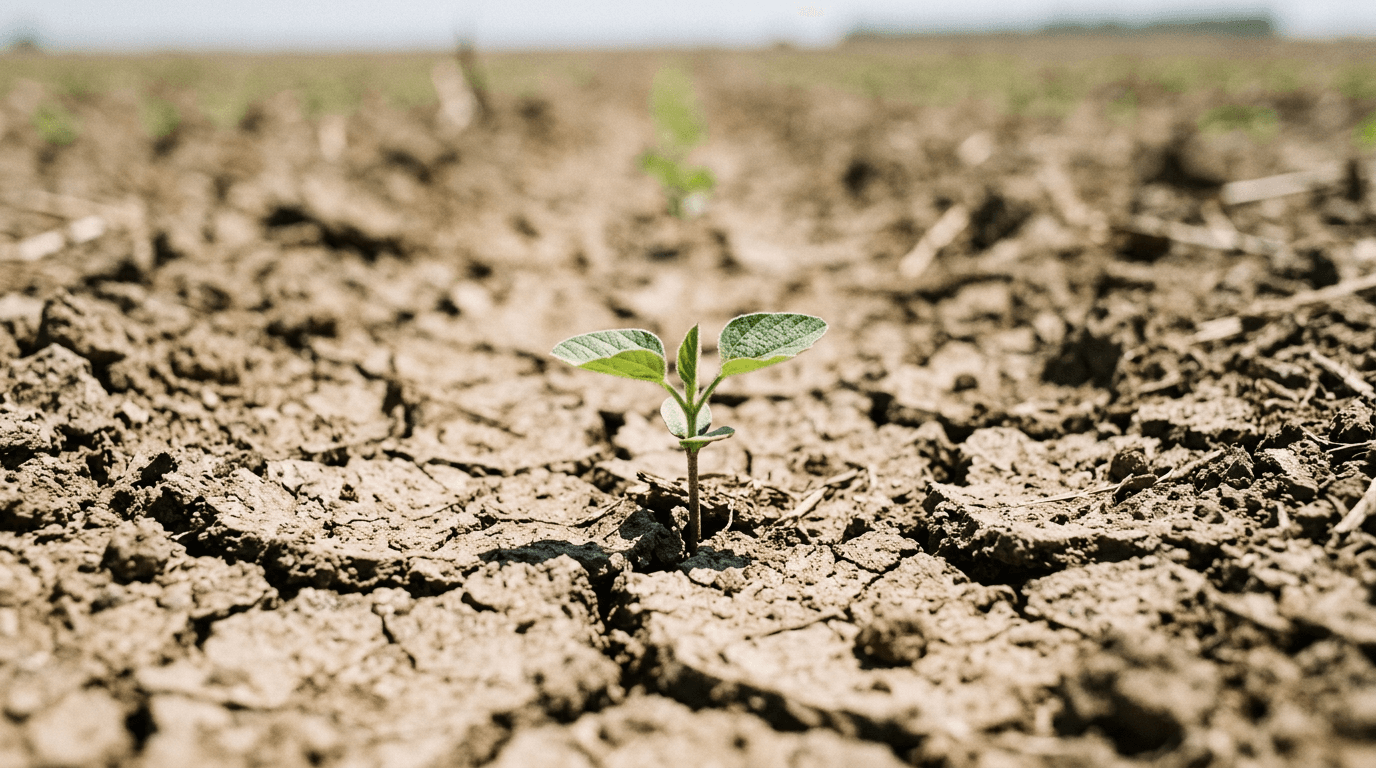
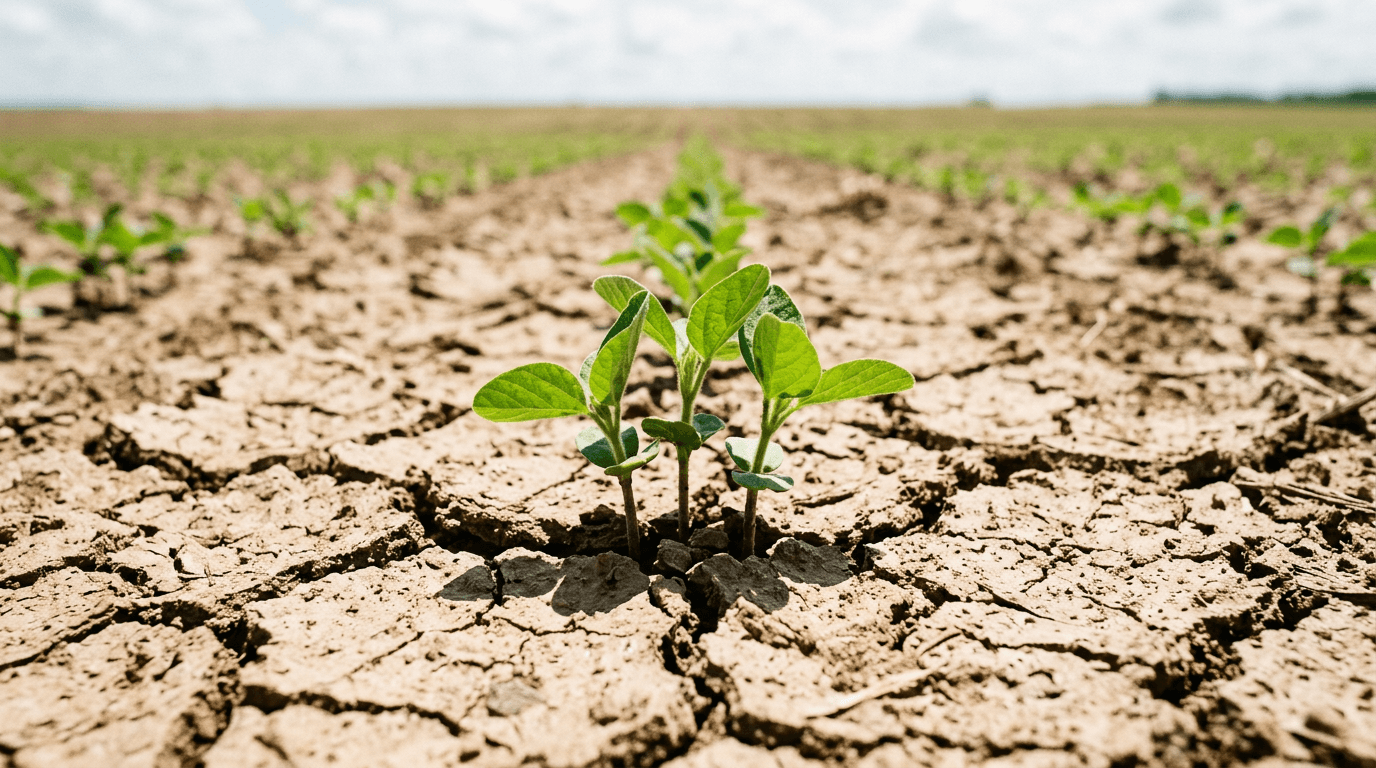
The immediate point of concern has shifted to Cascavel, a critical agricultural hub in the western portion of Paraná, a state that leads early-season planting. According to regional meteorological data, Cascavel registered five dry days and accumulated a meager 4.1 millimeters of rainfall over a recent seven-day period. This sudden lack of moisture is a stark contrast to previous weeks of abundant rainfall, threatening early-planted fields that are now highly vulnerable to water stress during their initial vegetative development.
This localized dryness complicates what had otherwise been a highly efficient start to the 2026/27 Brazil soybean planting season. Nationwide, Brazilian farmers have made rapid progress. Agribusiness consultancy AgRural reported that 53% of the projected national soybean area had been sown as of October 29, 2026, up significantly from 40% the previous week and ahead of the 47% pace recorded at the same point last year.
While central states like Mato Grosso have received just enough rain to keep soils workable, soil moisture remains below historical averages across much of the country's agricultural belt. If the dry spell in western Paraná persists, it could force localized replanting and compress the harvest window. This would delay the arrival of Brazil's early-harvested beans to global ports in January and February, potentially shifting export demand back to U.S. suppliers.
Despite these regional weather hiccups, official crop agencies still anticipate a massive harvest. The U.S. Department of Agriculture (USDA) maintained its projection for Brazil's 2026/27 soybean production at a record 186.0 million tonnes, while Brazil's national supply agency, CONAB, estimated the crop at 181.6 million tonnes. Whether the country reaches these historic figures will depend entirely on whether consistent rains return to southern hubs like Cascavel before the critical pod-filling stage in December.
In your brokerage app
For retail investors, the progress of the South American harvest directly influences major agribusiness equities. Archer-Daniels-Midland Company, listed in New York, and Bunge Global SA, also listed in New York, both rely heavily on the volume of Brazilian grain exports to fuel their global processing and logistics networks. Investors tracking these dynamics can monitor broad agribusiness exposure through the Teucrium Soybean ETF, which tracks CBOT soybean futures contracts.