
Dry August Threatens Timely Start of Brazil's Next Soybean Crop
Key agricultural hubs like Sorriso and Rio Verde registered zero rain in seven days, threatening soil moisture ahead of the critical planting window.
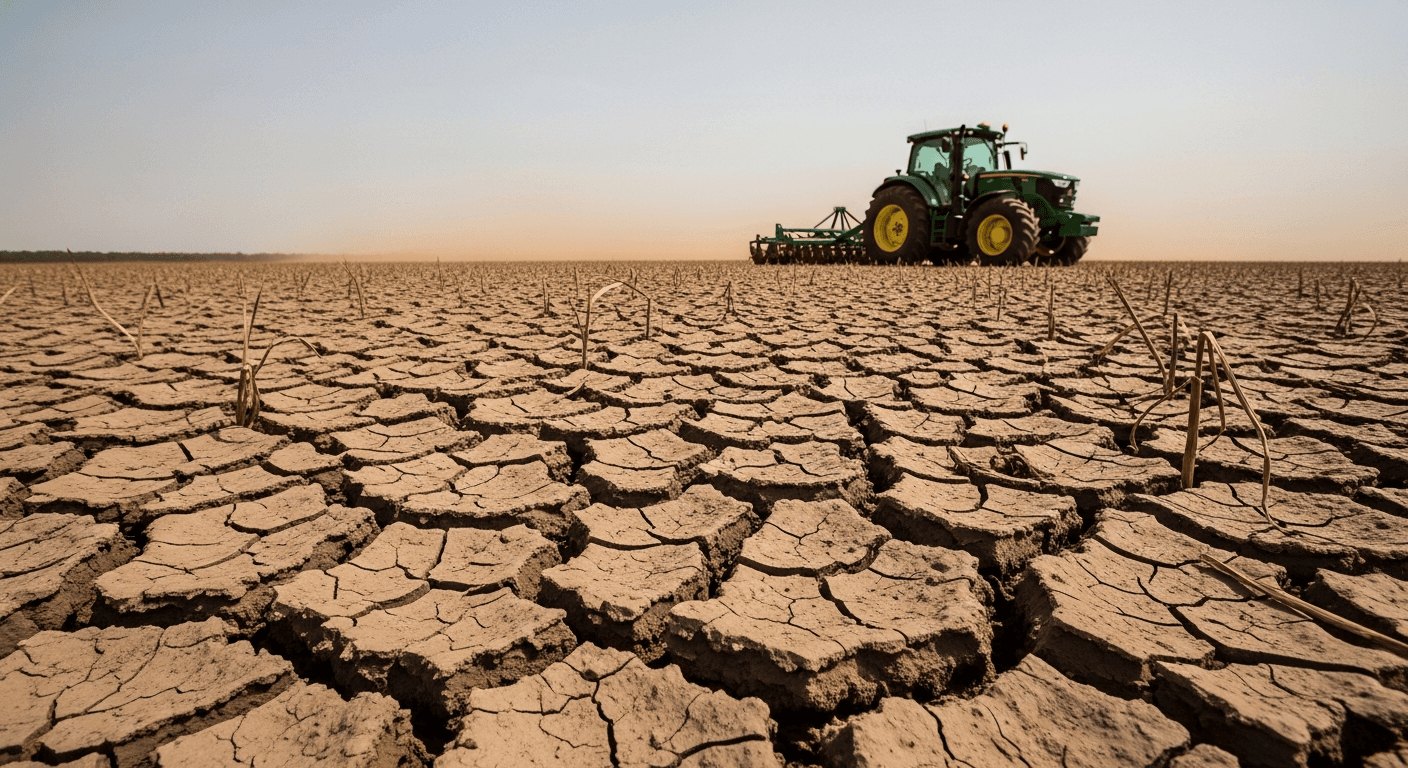
An unusual lack of pre-season rainfall across Brazil’s primary growing regions is raising significant concerns about the timely start of the 2026/27 soybean planting cycle, a risk that could tighten global oilseed supplies. The heart of the Brazilian soybean belt, which includes the country’s largest agricultural centers, registered a persistent dry spell over the past week, preventing the critical accumulation of subsoil moisture needed for the September planting season. For the past seven days, three major soybean hubs—Sorriso in Mato Grosso (MT), Rio Verde in Goiás (GO), and Luís Eduardo Magalhães in Bahia (BA)—have all recorded 0.0mm of precipitation, according to current data.
The impact of the dryness is concentrated in the vast Cerrado savanna region, which produces the bulk of the country’s crop. Sorriso, which is consistently Brazil’s single largest soybean-producing municipality and is known as the "National Agribusiness Capital," along with Rio Verde, one of the top producers in Goiás, typically rely on August showers to set the stage for planting to begin in late September or early October. In the Matopiba agricultural frontier, the dryness is particularly acute in Luís Eduardo Magalhães, a major agribusiness center in Western Bahia that is already prone to water scarcity. Only Cascavel in Paraná (PR), a key southern producing state, saw limited relief with 7.2mm of rain over the last week, alongside a five-day dry streak.
This August dry spell does not damage an existing crop, as the 2026/27 soybean season has not yet begun, but it threatens a critical delay. In Central Brazil, farmers often wait for a cumulative 50mm or more of rain to restore soil moisture before they put seeds in the ground to ensure successful germination. If the rains remain absent into late September, the planting window is compressed, which has a ripple effect on the second-season, or safrinha, corn crop. A late soybean harvest pushes back the planting of safrinha corn into a higher-risk, drier period of the year, potentially compromising the yield of Brazil’s largest corn crop and creating a double risk for global grain and oilseed markets.
The immediate outlook hinges entirely on the return of the seasonal rains. Producers and traders are now closely monitoring weather forecasts for September, which will be the first true test of the upcoming crop year. A delay of just a few weeks could lead to a drawn-out planting season that increases risk and volatility for the world’s top exporter of soybeans.
What it touches
The prospect of a delayed Brazilian planting start is supporting global commodity prices. As of today, Soybean futures in Chicago are trading at 1192.5 cents per bushel, an increase of 0.87%. The Brazilian Real is also experiencing pressure, with the USD/BRL cross-rate at 5.223, up 0.47%.