
Brazil Fertilizer Deliveries Plunge 22% as Geopolitical Risks Rise
A sharp drop in fertilizer deliveries and domestic production threatens Brazil's upcoming 2026/27 grain crops, risking global soy and corn supply disruptions.
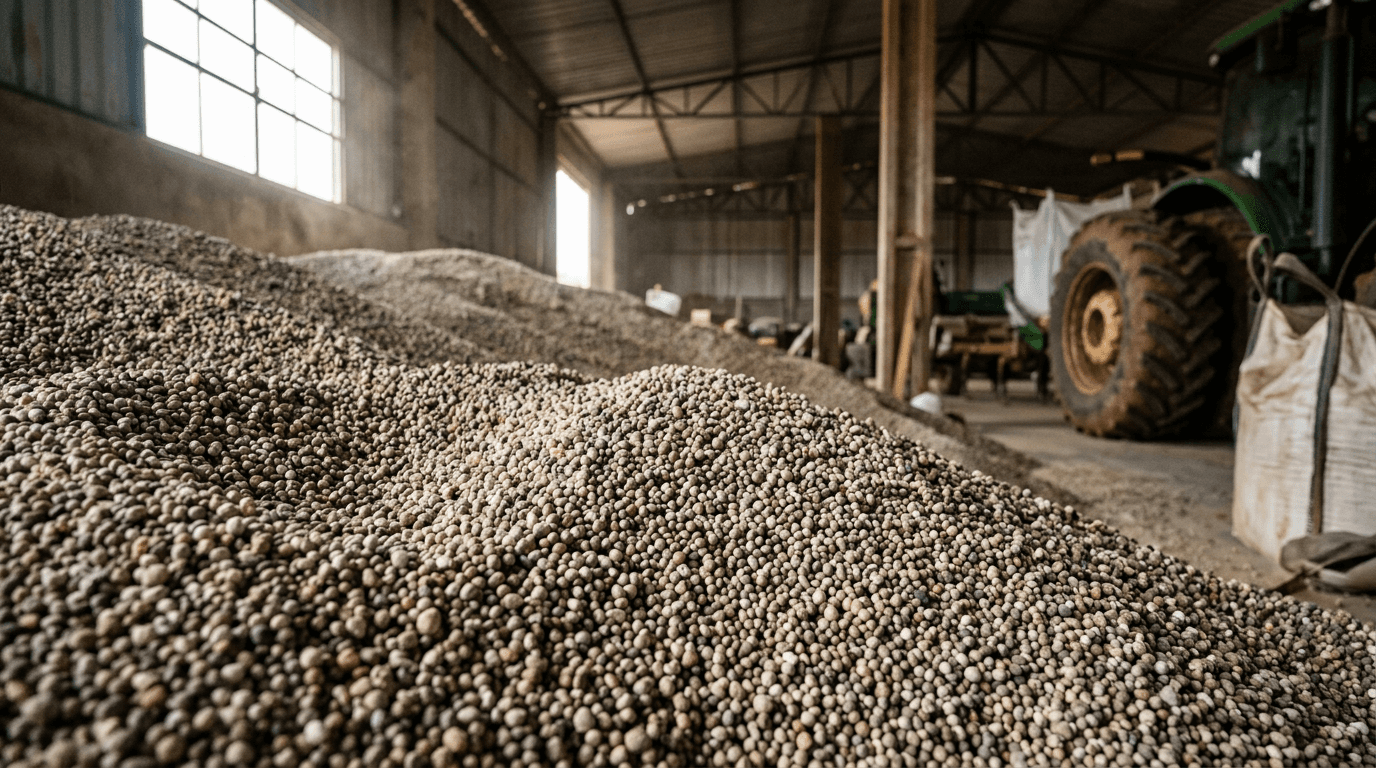
A sharp contraction in fertilizer deliveries and domestic production is threatening the yields of Brazil’s upcoming 2026/27 grain crops, raising the risk of global supply chain disruptions for critical commodities like soybeans and corn. According to data released on October 5, 2026, by the National Fertilizer Association (Anda), domestic fertilizer deliveries to Brazilian farmers fell 22.3% in July 2026 compared to July 2025, totaling 3.96 million tons.
The slowdown is heavily tied to geopolitical escalations in the Middle East, particularly involving Iran, which have chilled new import deals and driven up international prices. Brazil is highly dependent on foreign nutrients to sustain its massive agricultural output, importing roughly 85% of its fertilizer needs. The geopolitical friction has slowed the pace of imports and left local farmers hesitant to close deals, with cumulative deliveries from January to July dropping 8.8% year-on-year to 22.98 million tons.
Adding to the supply pressure, Brazil's domestic production of intermediate fertilizers also dropped 19.9% in July 2026 to 517,000 tons. Local manufacturers have been hampered by rising global prices for sulfur, a critical input for producing phosphate-based fertilizers. For the first seven months of 2026, domestic intermediate production fell 19.7% to 3.34 million tons.
The timing of this supply squeeze is critical. July and August typically represent the peak window for nutrient deliveries as farmers prepare to plant the massive 2026/27 soybean crop. Major agricultural states are already feeling the pinch. Mato Grosso, the country's agricultural powerhouse, led national deliveries with 5.83 million tons through July, followed by Paraná and Goiás. However, with a significant portion of the required nutrients still unbooked, agricultural analysts warn that delayed or reduced applications could drag down soybean yields by as much as 7%.
Nitrogen-based fertilizers are also a growing concern. Imports of nitrogen contained in urea, ammonium sulfate, and ammonium nitrate fell approximately 20% in the first eight months of the year compared to 2025. This deficit could directly impact the "safrinha" second-corn crop, which is planted immediately after the soybean harvest and relies heavily on nitrogen applications. While there is no immediate widespread shortage, the thin margin of safety in national inventories means any further logistical or geopolitical disruptions could quickly translate to lower crop yields.
What it touches
The supply squeeze in the world's largest soy exporter directly exposes global agribusiness firms and fertilizer giants. Major international producers, including Mosaic Co. (NYSE: MOS) and Nutrien Ltd. (NYSE: NTR), are highly exposed to the purchasing power and volume demands of the Brazilian market, where high input costs and tighter credit are forcing farmers to scale back purchases.
Latest articles
Politics
Brazil's Senate vote may matter more than the presidential race: Bolsonaro's PL won 19 of 54 seats
Published
Markets
139 million customers. Zero branches. Listed in New York. Americans haven't noticed
Published
Markets
$10,000 in Petrobras a year ago is $20,300 today. In the S&P 500: $11,700
Published