
139 million customers. Zero branches. Listed in New York. Americans haven't noticed
A bank with no branches and 139 million customers trades on the NYSE, and most US investors have never heard of it. Its first quarter above $1 billion in net income, the public payment rail underneath it, and where the growth is not.
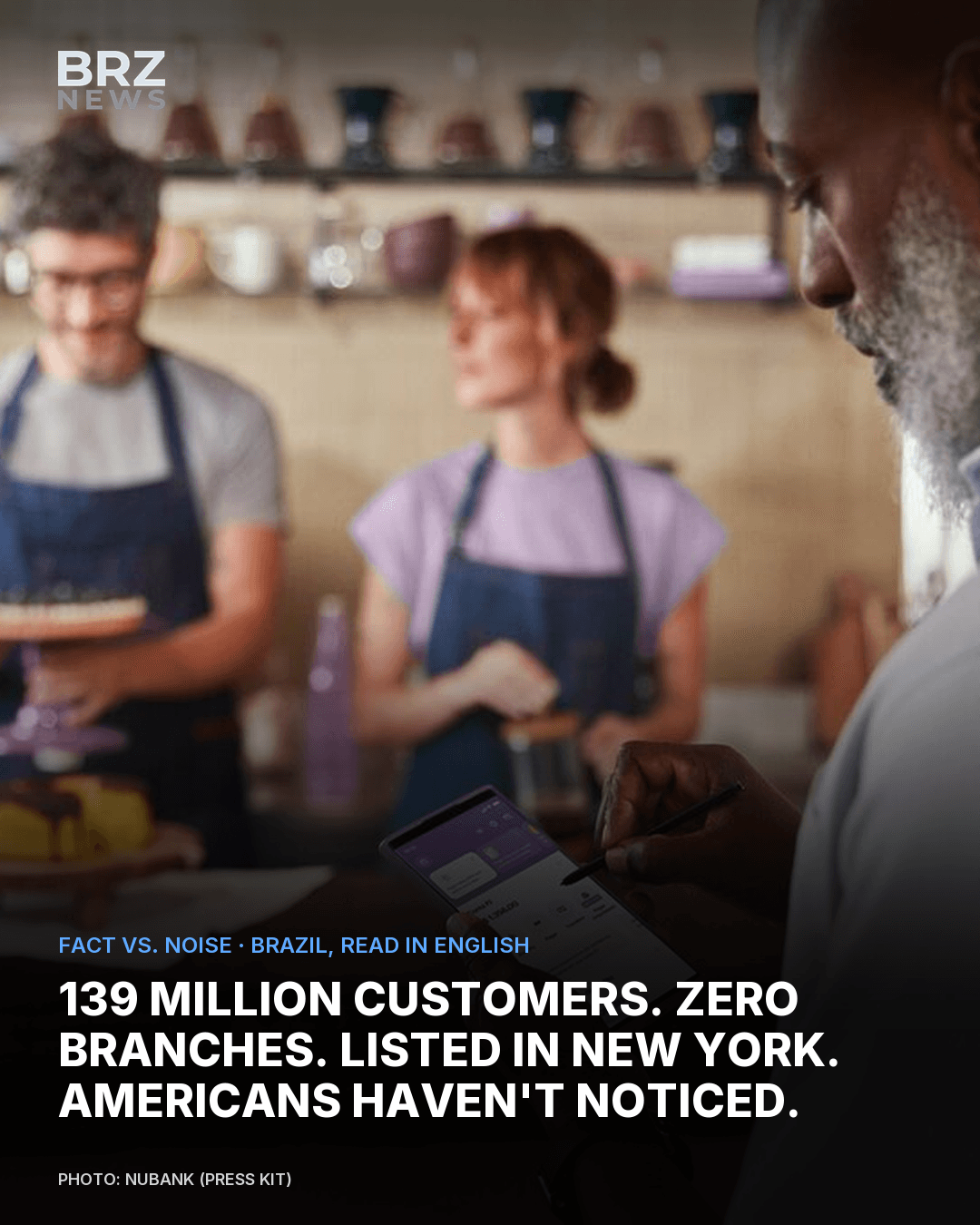
Nu Holdings, the Brazilian digital bank listed on the New York Stock Exchange, reached 139 million customers at the end of June 2026, about 118 million of them in Brazil, a country of 215 million people. It added roughly 4 million customers in a single quarter, according to the company's filing of August 13, 2026.
The quarter was also a first for profit. Gross revenue was $5.9 billion, up 39% from a year earlier, and net income was $1.06 billion, the first time the company earned more than $1 billion in a quarter. Nu has no branches. It has about 16 million customers in Mexico and more than 5 million in Colombia.
The rail underneath it is public. Pix, the instant-payment system run by the Central Bank of Brazil, cleared 8.11 billion transfers in August 2026, the first month above 8 billion and a record since the system launched in November 2020. About 175 million people use it, and it is free for individuals. That infrastructure is what lets a bank with no branches serve more than half of Brazil's population.
Fact vs. noise. The noise is that emerging-market fintech is a story for day-traders. The fact is in the filings: a quarterly profit above $1 billion, revenue growing at 39%, and a customer base larger than the population of Mexico. Only 3% of Brazilian adults are unbanked today, down from 16.3 million people in 2021, according to a Febraban survey; the growth now comes from share of wallet, not from first accounts.
Same country, different results. Nu, PagSeguro (NYSE: PAGS) and StoneCo (Nasdaq: STNE) all trade in the United States, and their twelve months do not match. In dollars, to the October 5 close, Nu is down about 0.8%, StoneCo 22% and Inter 26% (Yahoo Finance, adjusted closes). In the second quarter, PagSeguro's recurring net income rose 2% to R$576 million on payment volume up 3%; StoneCo's adjusted net income fell 2.6% to R$583 million, with 4.8 million active merchants. Growth in Brazilian fintech is real and unevenly distributed.
What is next. Brazil's policy rate stands at 13.75% after four consecutive cuts; the next Copom decision is on November 4. Funding costs move fintech margins directly. Drex, the central bank's digital real, stays a restricted pilot for banks in 2026, with no public use planned this year.
Sources: Nu Holdings (SEC Form 6-K, August 13, 2026); PagSeguro Digital and StoneCo second-quarter 2026 releases; Central Bank of Brazil (Pix statistics; Copom); Febraban; Yahoo Finance. Informational content. Not investment advice.