Brazil Cattle Prices Touch Historic R$ 380 on Severe Supply Squeeze
A critical shortage of slaughter-ready cattle has pushed Brazilian beef prices to nominal record highs, squeezing margins for major meatpackers.
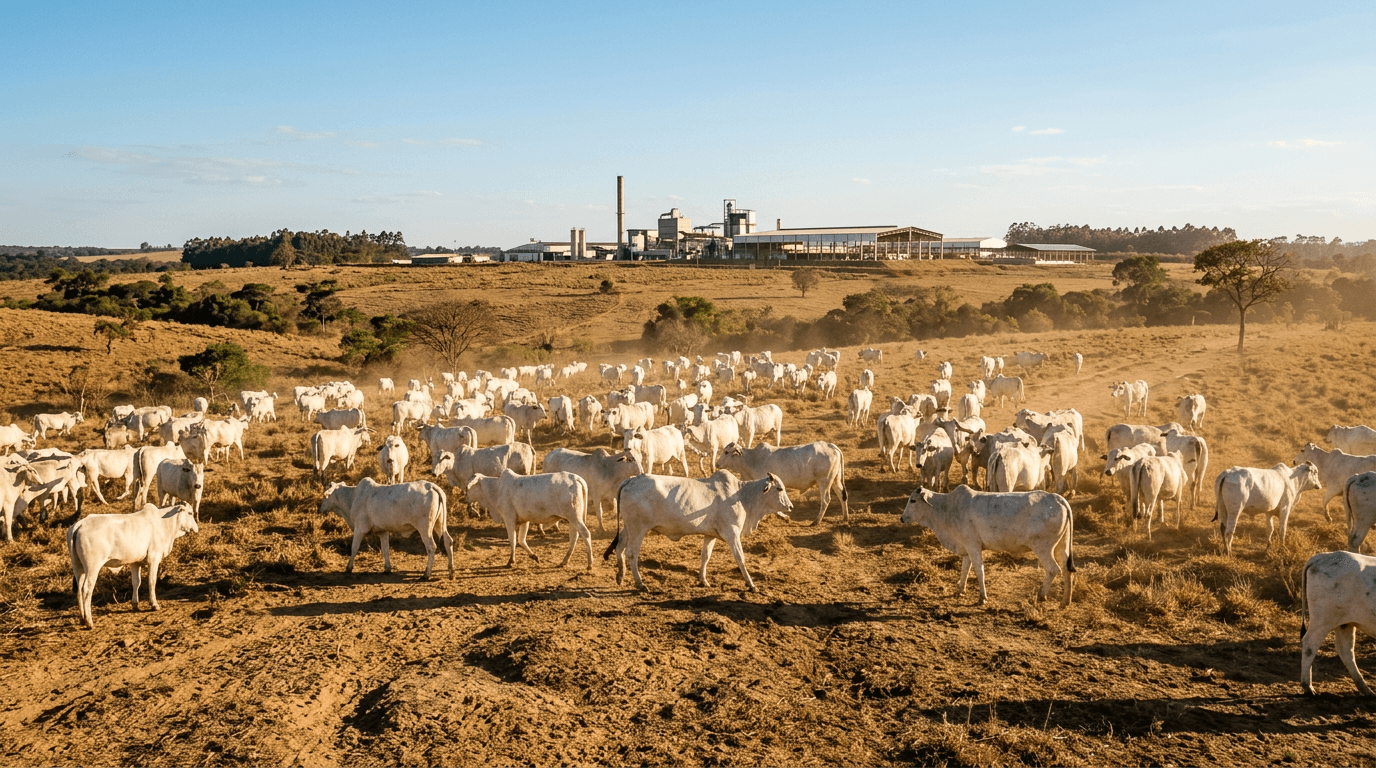
A critical shortage of slaughter-ready cattle has pushed physical prices in Brazil to a historic nominal high of R$ 380 per arroba (a traditional 15-kilogram unit of measurement) in the key state of São Paulo. The rapid price spike in October 2026 comes as local meatpackers (frigoríficos) struggle to secure enough animals to keep production lines running, raising concerns over tightening profit margins for some of the world’s largest protein exporters.
The primary driver of the price surge is a sharp contraction in the domestic cattle cycle. Following years of heavy female slaughter that temporarily flooded the market, the availability of calves and finished cattle has dropped significantly. According to data from the Center for Advanced Studies on Applied Economics (Cepea), the benchmark São Paulo index reached a daily nominal record of R$ 376.30 per arroba on October 8, 2026, with spot market deals in strategic regions easily crossing the R$ 380 threshold.
This supply squeeze has left meatpackers operating on razor-thin scheduling margins. Slaughter schedules, which represent how many days of processing a plant has secured in advance, have compressed to just five to seven days. To keep their facilities open and fulfill international commitments, industrial buyers have been forced to continually raise their bids, fueling a feedback loop of rising prices.
The upward momentum is expected to persist well into the coming months. On the B3 financial exchange in São Paulo, future contracts for late 2026 and early 2027 are already trading above R$ 390 per arroba, with some contracts flirting with the R$ 400 milestone. While ranchers are welcoming the relief after a prolonged downturn, the sudden escalation in raw material costs presents a challenging environment for meatpackers that cannot easily pass the full cost increase onto domestic consumers or highly competitive export markets.
What it touches
The severe livestock shortage directly impacts the operating margins of Brazil's major publicly traded meatpackers, including JBS (JBSS3), Minerva (BEEF3), and Marfrig (MRFG3). While diversified giants like JBS can offset domestic margin pressures through their extensive poultry, pork, and international operations, export-heavy beef specialists like Minerva are more directly exposed to the rising cost of Brazilian cattle.