

Chicago Soybean Futures Rise on Divergent Brazil Crop Weather
Chicago soybean futures rose 0.75% to close at 1,243 cents per bushel on November 25, 2026, as divergent weather conditions split Brazil's main growing regions.
Key takeaways
- Chicago soybean futures rose 0.75% to close at 1,243 cents per bushel on November 25, 2026, per Trading Economics
- Brazil's national soybean planting reached 66.8% completion, according to a weekly Conab report on November 18, 2026
- In Paraná, soybean planting reached 96% by November 24, 2026, despite persistent waterlogging, per Deral
- Large speculators held 227,439 long soybean contracts as of November 17, 2026, per the CFTC
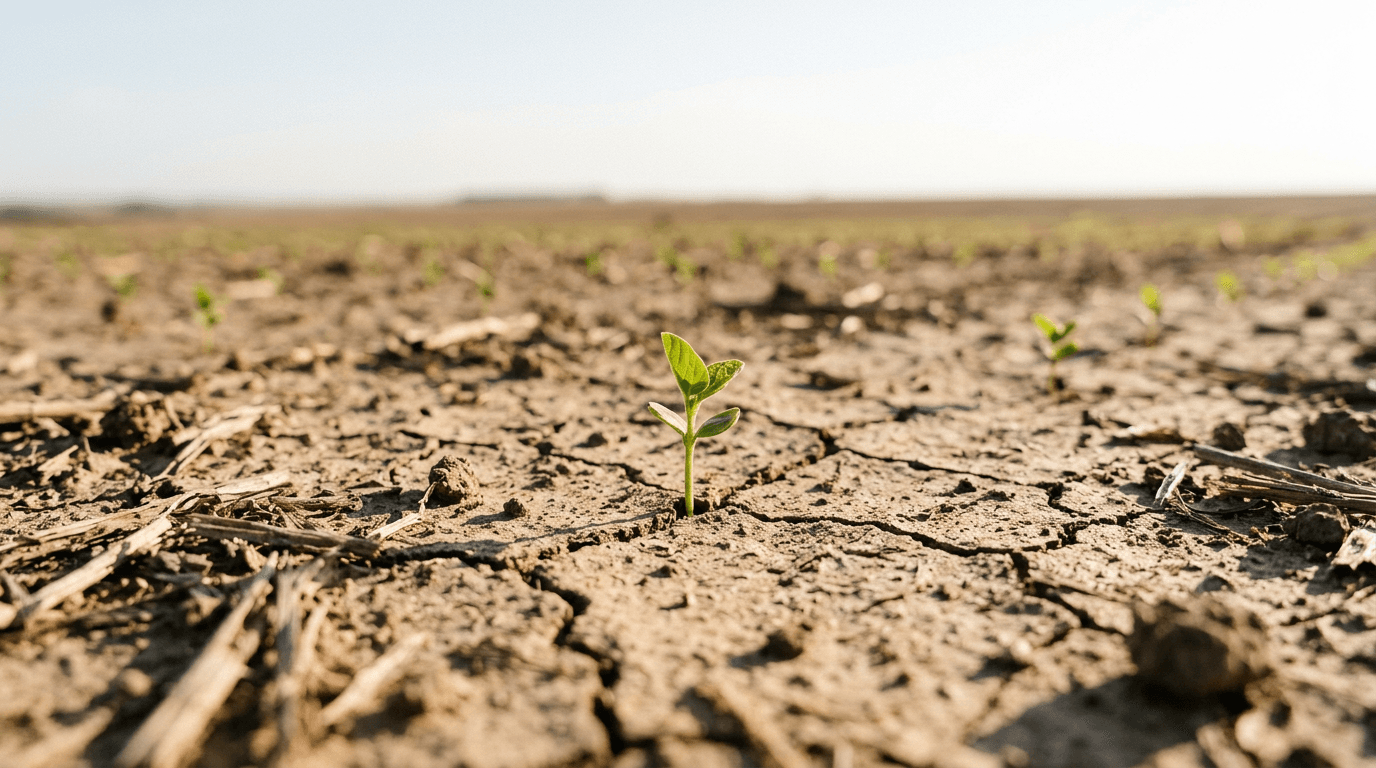
Chicago soybean futures closed up 0.75% at 1,243 cents per bushel on November 25, 2026, according to benchmark commodity pricing tracked by Trading Economics, as global grain traders assessed divergent weather risks across Brazil's key agricultural regions. While dry weather in northeastern pockets of the country continues to stress emerging plants, excessive rainfall and severe waterlogging have plagued southern croplands. This geographical divide has injected volatility into national harvest projections as the 2026/27 crop season reaches critical early vegetative stages.
The primary dry risk is concentrated in the Matopiba agricultural frontier, particularly around the major farming hub of Luís Eduardo Magalhães in western Bahia. According to an agronomic update from CropGPT, western Bahia has experienced below-average rainfall for two to three consecutive months, leaving early-planted fields in early vegetative development under drier-than-ideal conditions. This stands in sharp contrast to the center-west heartland; soil moisture levels in Mato Grosso, Brazil's leading soybean-producing state, rose sharply above historical averages in mid-November, favoring rapid crop establishment according to regional satellite data from EarthDaily Agro.
Meanwhile, growers in southern Brazil face the opposite challenge, where persistent rain has oversaturated soils. Brazil's national supply company, Conab, reported that national soybean planting had reached 66.8% completion in its weekly crop-conditions update on November 18, 2026, as reported by Global Agriculture. In Paraná, the state’s Department of Rural Economy (Deral) reported that soybean planting had reached 96% of the projected area by November 24, 2026, according to Revista Cultivar. Deral warned that waterlogged soils and water accumulation continue to restrict fieldwork in northwest and southwest regions, causing plants to yellow and threatening yield potential.
Speculative investors in Chicago have maintained substantial exposure to these South American crop developments. According to the U.S. Commodity Futures Trading Commission Commitment of Traders report for the week ending November 17, 2026, large speculators carried a strong net-long position of 145,816 contracts, holding 227,439 long contracts compared to 81,623 short contracts, as compiled by COT Summary for Traders. Any prolonged dryness in Bahia or further weather-related yield downgrades in Paraná could trigger additional buying among managed money funds.
In Brazil's domestic cash markets, physical soybean transactions experienced downward pressure alongside a strengthening local currency. The USD/BRL exchange rate fell 1.39% to trade at 5.8249 reais per dollar on November 25, 2026, as tracked by Trading Economics. According to the Center for Advanced Studies on Applied Economics (CEPEA) indices reported by Brasil61, domestic physical soybean prices in the interior of Paraná fell 0.54% to R$ 162.90 per 60-kilogram bag on November 24, 2026, while prices at the export hub of Paranaguá port fell 0.30% to R$ 170.23 per bag, ending a nominal 13-day consecutive price rally.
In your brokerage app
For retail investors tracking international commodities, these localized weather anomalies directly affect the performance of agricultural exchange-traded products like the Teucrium Soybean Fund (NYSE Arca: SOYB). They also impact New York-listed multinational agribusiness giants with extensive logistics networks in Brazil, such as Bunge Global SA (NYSE: BG) and Archer-Daniels-Midland Company (NYSE: ADM). Because Brazil is the world’s leading exporter of the oilseed, changes in crop yields across Bahia or Paraná can quickly shift global supply chains and affect the sourcing costs and profit margins of these grain-handling firms.
Latest articles
 Soybean Speculators Hold 145,816 Net Longs as US Harvest Hits 96%Speculative net-long positions in Chicago Board of Trade soybean futures stood at 145,816 contracts as of November 17, 2026, amid a wrapping US harvest.
 Petrobras Sets December 31 for Extraordinary ADR Dividend PaymentPetrobras filed a SEC 6-K detailing an extraordinary dividend of R$15.60 billion, with New York ADR holders scheduled to receive payments starting December 31.
 Slowing Inflation Preview Relieves Brazil Real and Bond YieldsBrazil's mid-month inflation rose 0.22% in November 2026, coming in below expectations and helping stabilize the real against the dollar.