
Brazil Cattle Prices Rebound Past R$ 337 on Tight Supply
Brazil's Cepea/Esalq boi gordo index recovered to R$ 337.10 per arroba as shorter slaughter schedules squeeze meatpacker margins and boost B3 futures.
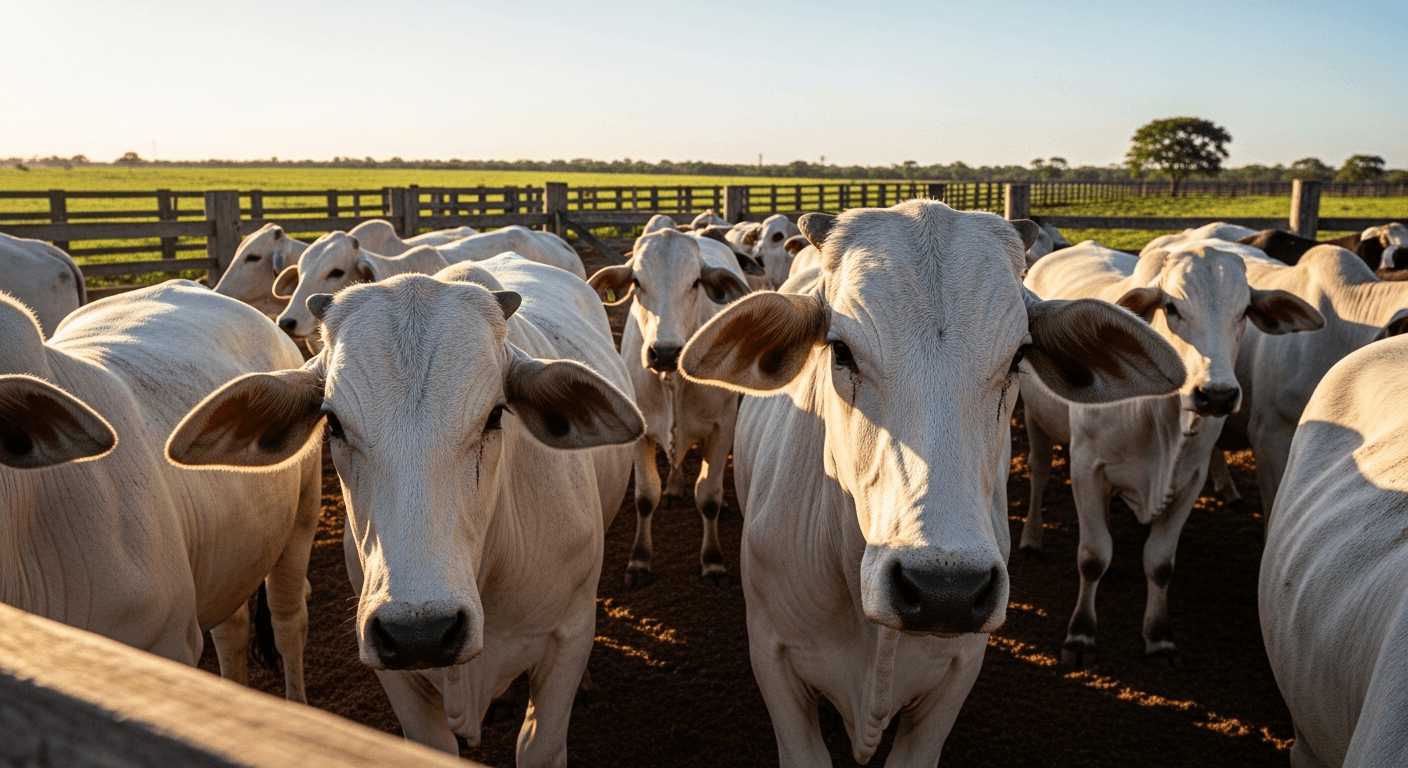
A sharp reduction in slaughter schedules has triggered a rapid turnaround in the Brazilian physical cattle market, driving the benchmark Cepea/Esalq boi gordo index back up to R$ 337.10 per arroba on July 21, 2026. The rebound effectively reverses early-July losses, which had temporarily dragged prices down to R$ 328.10. This sudden tightening of finished cattle availability has squeezed immediate supply, forcing meatpackers to pay higher premiums to secure inventory.
According to industry data, national average slaughter schedules have shortened to just 6.66 days, indicating a highly restricted supply of slaughter-ready animals. This supply crunch is heavily reflected in the B3 futures market, where contracts continue to show strong upward momentum. The October 2026 contract is currently trading at R$ 363.45 per arroba, signaling that market participants expect the tight supply conditions to persist well into the second half of the year.
For global investors tracking the Brazil stock market today, this bullish turn in the physical cattle market presents a dual-edged sword. While rising cattle prices bolster the outlook for ranchers, they signal immediate margin pressure for major Brazilian meatpacking giants. Shares of key sector players on the B3, such as JBS (JBSS3), Minerva (BEEF3), and Marfrig (MRFG3), are being closely watched as rising raw material costs threaten to compress domestic processing margins.
The supply-side constraints are further exacerbated by severe dry spells in key agricultural regions. Live weather monitoring shows that crucial production hubs like Sorriso-MT, Rio Verde-GO, and Luís Eduardo Magalhães-BA have recorded 0.0mm of rain over the last seven days, marking a full week of dry weather. This lack of pasture moisture is expected to limit weight gain in grass-fed herds, keeping the flow of finished cattle to slaughterhouses highly restricted in the near term.