
Brazil Agribusiness Set to Overtake US After Record $87B H1
Brazil's agricultural exports rose 6% to a record $87 billion in H1 2026, positioning the nation to permanently eclipse the US as the top global exporter.
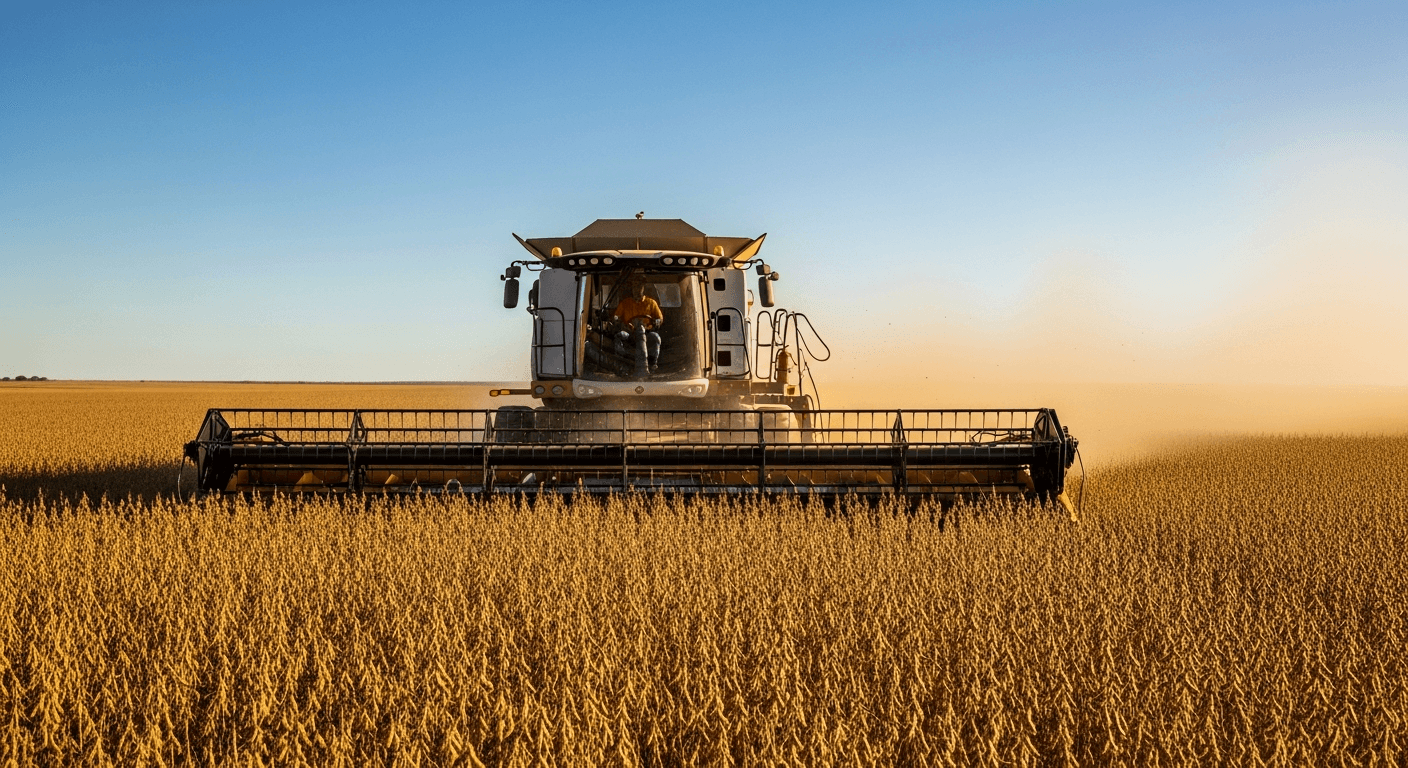
Brazil is on track to permanently surpass the United States as the world's leading agricultural exporter in 2026, following a historic performance in the first half of the year. According to data from Brazil's Ministry of Agriculture, the nation's agricultural exports grew 6% year-on-year to hit a record $87 billion in the first half of 2026. This surge narrows the historical gap with the U.S., which exported $171 billion in agricultural goods in 2025—leading Brazil’s $169 billion by a mere $2 billion margin, down from a $56 billion gap in 2021.
The structural shift is heavily driven by deep trade ties with China, which remains the largest buyer of Brazil agribusiness products. In the first half of 2026, Chinese purchases accounted for 35.1% of Brazil's total agricultural export revenue, amounting to $30.5 billion. This trade flow has been accelerated by long-term shifts in Chinese demand away from U.S. commodities following tariff disputes dating back to 2018. Key export drivers for Brazil during this record-breaking half included soybeans, beef, poultry, and cotton, with the country even overtaking the U.S. as the leading global cotton exporter.
For global investors tracking the Brazil stock market today, this agricultural dominance continues to underpin the broader macroeconomic landscape. The strength of the export sector provides critical support for the Brazilian real forecast (USD BRL) and heavily influences major B3 stocks linked to logistics, infrastructure, and food processing. Despite global commodity price pressures, the sheer volume of Brazilian shipments has kept the sector highly profitable, bolstering the outlook for the benchmark Ibovespa today and the broader Brazil ETF (EWZ).
This export boom comes despite localized weather challenges across Brazil's agricultural heartland. In key farming regions, recent weather data shows extremely dry conditions: Sorriso in Mato Grosso, Luís Eduardo Magalhães in Bahia, and Rio Verde in Goiás all registered 0.0mm of rain and 7 dry days over the last week. Conversely, Cascavel in Paraná received 35.9mm of rain with only 4 dry days. In the financial derivative markets, Commitment of Traders (COT) data shows active positioning, with soybean contracts holding 20,018 longs against 1,139 shorts, corn at 482,223 longs to 350,760 shorts, and coffee at 53,913 longs to 26,086 shorts.