
Brazil Agribusiness: Dry Spell in Soybean Belt Stirs Market
A severe dry spell across Brazil's key soybean belt is raising crop-stress risks, threatening soil moisture ahead of the next planting cycle.
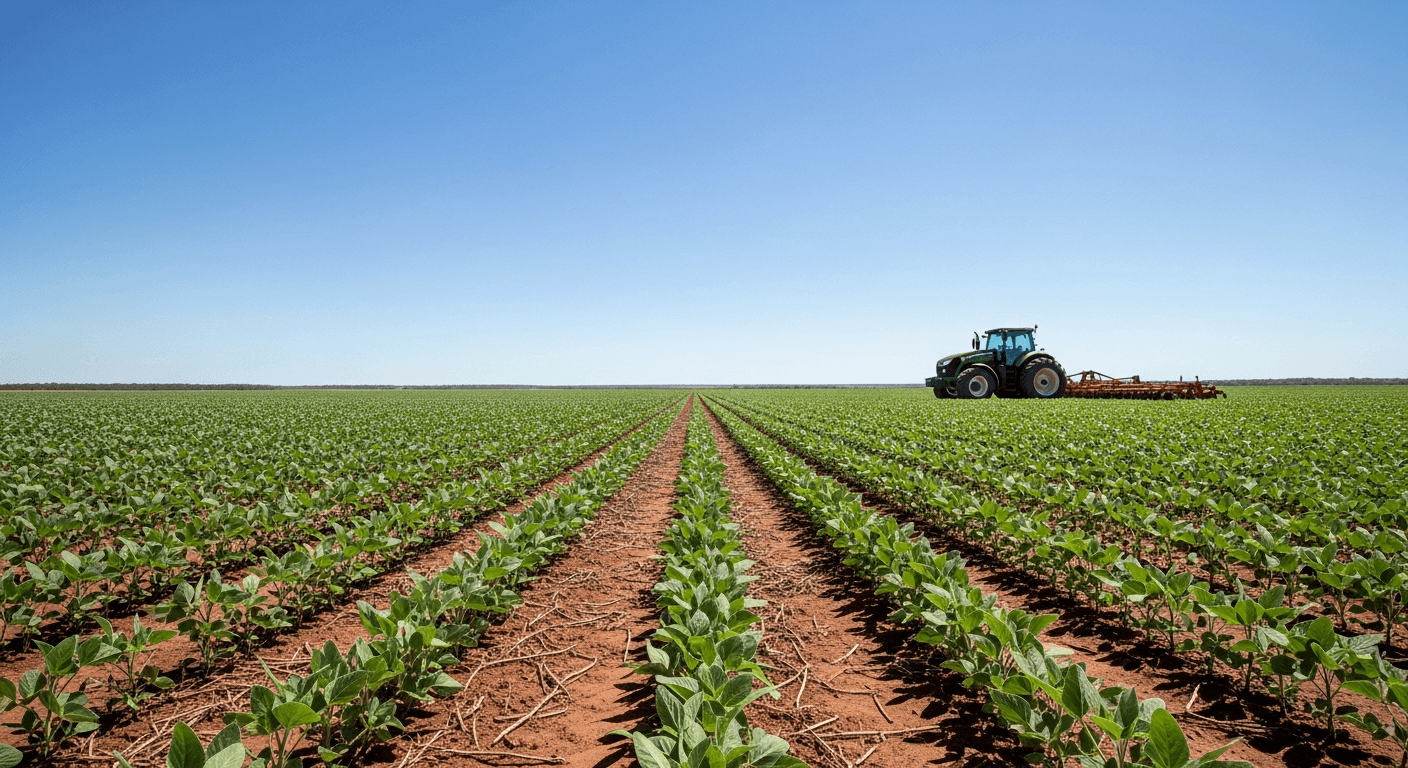
A persistent dry spell across Brazil’s major agricultural frontier is raising crop-stress concerns and threatening soil moisture levels ahead of the upcoming planting season. In the heart of the country's soybean belt, key production hubs are experiencing prolonged dryness. As of July 24, 2026, Sorriso in Mato Grosso and Luís Eduardo Magalhães in Bahia both recorded 7 consecutive dry days with 0.0 mm of rainfall. Meanwhile, Rio Verde in Goiás registered 7 dry days with a negligible 0.7 mm of precipitation. In contrast, southern regions like Cascavel in Paraná remain well-hydrated, recording 35.9 mm of rain over the last week with only 4 dry days.
This dry weather in the central and northeastern regions comes at a critical time for global investors monitoring Brazil agribusiness. Although the record-breaking 2025/26 harvest is virtually complete, severe winter dryness can deplete the deep soil moisture required for early-cycle planting, which typically begins in September. If dry conditions persist, planting delays could compress the window for the subsequent safrinha corn crop, potentially tightening global grain supplies and triggering volatility in agricultural commodities.
Market positioning reflects a cautious but active engagement in agricultural futures. The latest Commitment of Traders (COT) report shows soybean speculative positions at 20,018 long contracts versus 1,139 short contracts. In other agricultural markets, corn positions stand at 482,223 longs and 350,760 shorts, while coffee holds 53,913 longs and 26,086 shorts.
On the macroeconomic front, the USD BRL exchange rate fell 0.36% to trade at 5.08 Brazilian Reais per US Dollar on July 24, 2026, supported by strong carry-trade interest driven by high domestic interest rates. For global investors looking to invest in Brazil or trading the EWZ (the MSCI Brazil ETF), the interplay between regional weather anomalies, currency fluctuations, and commodity prices remains a vital barometer for South American portfolio allocations.