
Brazil Agribusiness: Dry Spell in Soybean Belt Raises Crop Stress
A persistent dry spell in key Brazilian soy-producing regions like Sorriso and Rio Verde is raising crop-stress risks and drawing investor attention.
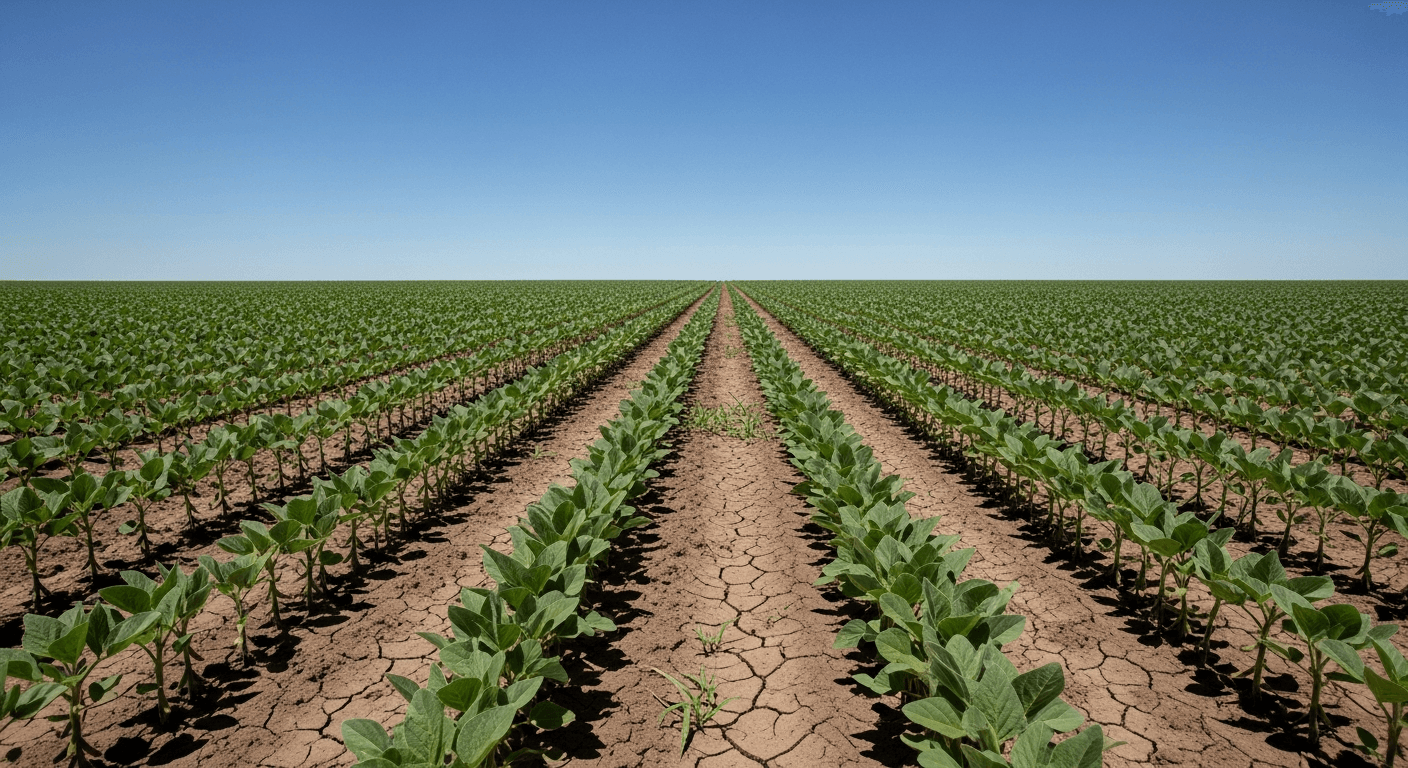
A prolonged dry spell across Brazil’s primary soybean belt is raising crop-stress risks, potentially tightening global oilseed supplies. According to the latest regional weather data, key agricultural hubs have recorded zero precipitation over the last week. Sorriso in Mato Grosso, Rio Verde in Goiás, and Luís Eduardo Magalhães in Bahia have each registered seven consecutive dry days with 0.0mm of rainfall. In contrast, southern regions like Cascavel in Paraná show healthier moisture levels, with 66.1mm of rain over the last seven days and only four dry days.
This localized water stress is drawing close attention from commodity traders and those who invest in Brazil. While southern fields remain relatively damp, the lack of moisture in the central and northeastern savannas could cap yield potential if dry conditions persist. Market participants are monitoring these weather anomalies as they weigh the outlook for global soybean prices and the broader Brazil agribusiness sector.
The weather-driven supply risks come amid active positioning in the derivatives markets. Current Commitments of Traders (COT) data shows soybean speculative positions standing at 20,018 longs versus 1,139 shorts. Meanwhile, COT figures for other major Brazilian export crops show corn at 482,223 longs to 350,760 shorts, and coffee at 539,13 longs to 26,086 shorts.
For international investors tracking the Brazilian real forecast and the USD BRL exchange rate, agricultural productivity remains a critical driver of the country's trade balance. Fluctuations in crop yields directly influence export revenues, impacting the performance of major B3 stocks and the broader MSCI Brazil ETF (EWZ). Global markets will continue to monitor whether rain returns to the central belt to alleviate early crop stress.