
US Lawmakers Accuse Trump Administration of Interfering in Brazilian Election
Thirty-one Democratic US lawmakers criticized the Trump administration for a "multifaceted campaign" to destabilize Brazil's elections just days before the first round vote.
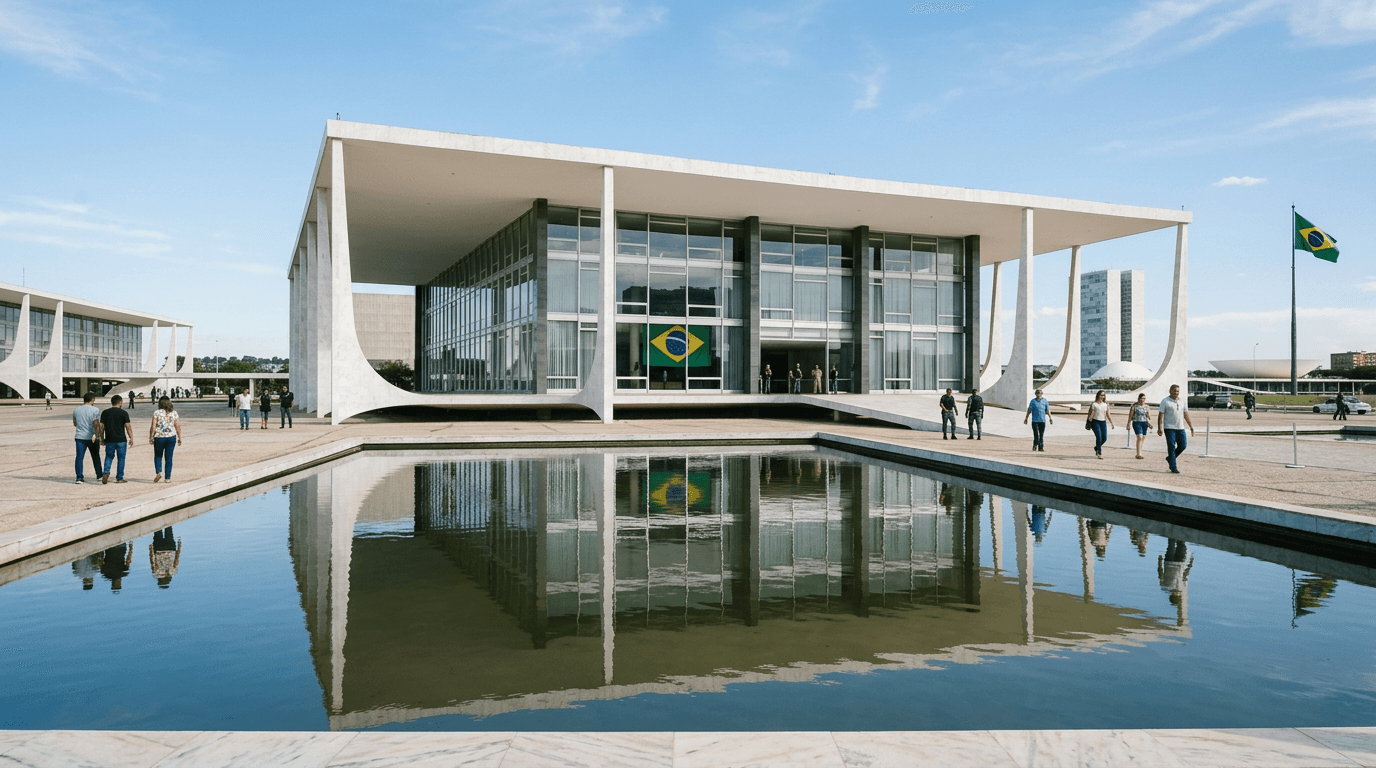
A group of 31 Democratic members of the US Congress sent a letter to Secretary of State Marco Rubio today, sharply criticizing the Trump administration for what they called a "multifaceted campaign of interference and destabilization" in the ongoing Brazilian election. The move injects extreme geopolitical tension into the final days of the campaign, which culminates with the first-round presidential vote scheduled for October 4.
The letter, whose signatories include Senators Bernie Sanders and Representative Alexandria Ocasio-Cortez, demands a commitment from the State Department to respect the final certified election results and requests a response by the looming deadline of September 30. The lawmakers argue that the US actions risk weakening Brazil’s democratic institutions and undermining confidence in the electoral process in Latin America's largest country.
The letter cites three specific, high-stakes actions as evidence of the administration's alleged campaign: the imposition of sanctions against judges of the Supremo Tribunal Federal (STF), new tariffs on Brazilian goods, and the controversial designation of Brazil’s two largest organized criminal groups, PCC and CV, as Foreign Terrorist Organizations (FTOs).
Targeting the STF is viewed in Brasília as a direct attack on the country's constitutional foundation. The STF is Brazil’s highest court, serving as the ultimate arbiter of constitutional law and the country’s electoral process. Its 11 justices are responsible for safeguarding the rule of law and trying criminal offenses committed by high-ranking political officials, making the court central to the stability of Brazil's democracy.
Furthermore, the FTO designation of the Primeiro Comando da Capital (PCC) and Comando Vermelho (CV) in May 2026 drew immediate pushback from the Brazilian government, which opposed the move. While the groups are formidable criminal organizations involved in international drug trafficking, the FTO label expands the reach of US sanctions and creates significant compliance and legal risk for international banks and companies operating in Brazil, far beyond normal law enforcement cooperation.
The US lawmakers' request for a response by September 30 puts the pressure squarely on the US State Department just four days before the first-round vote. The challenge from within the US Congress underlines the deep political division in Washington over the current administration's policy toward Brasília and confirms a high political risk premium in the final stretch of the election.
What it touches
The ongoing dispute and the cited actions—tariffs and sanctions against key judicial figures and state institutions—directly elevate the geopolitical risk premium associated with Brazil. This tension impacts US-Brazil trade relations, and contributes to volatility in the local currency, the real (BRL), against the US dollar, as well as the Ibovespa stock index.
Related coverage
Politics
Lula and Bolsonaro Offer Dueling Plans to Avert Brazil’s Fiscal Crisis
Published
Politics · PRO
Shared Private Jet Links Bolsonaro, Supreme Court Justice to Investigate Banker Daniel Vorcaro
Published
Politics
Brazil’s Labour Court Rules Correios Strike Not Abusive, Mandates Return to Work With Pay Compensation
Published