
Supreme Court’s Internal Crisis Pushes Brazil Election to Judicial Crossroads
A public jurisdictional clash between Brazil’s top courts raises institutional risk in the final week before the general election.
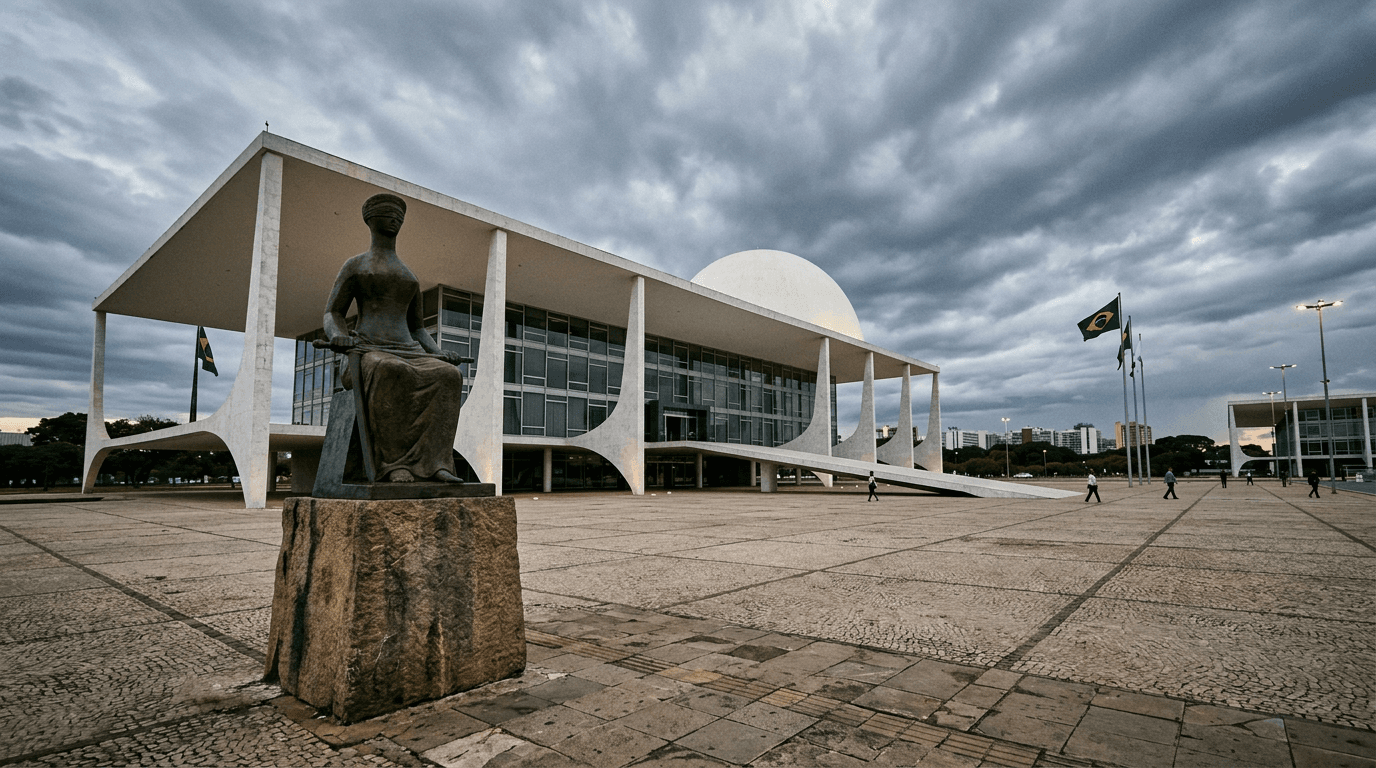
Brazil’s top judicial branch is facing an unprecedented internal crisis days before the general election on October 4, as a public jurisdictional clash between the Supreme Federal Court (STF) and the Superior Electoral Court (TSE) increases political uncertainty and institutional risk. The friction centers on the STF’s willingness to act as a final court of review over electoral matters, transforming its own internal conflicts into immediate political flashpoints that are now being weaponized by opposing campaigns.
The conflict has crystallized around Justice Kassio Nunes Marques, who sits on the STF and currently presides over the TSE, the body responsible for managing and adjudicating the election. The judicial tension became evident when Justice Nunes Marques recused himself from a high-profile STF investigation involving his colleague, Justice Alexandre de Moraes, citing his need to ensure the TSE remained "absolutely equidistant" from the case’s political consequences in the final stretch of the election campaign. His statement, while a specific action, highlighted what has been described by some as an "undue overlap of competence" between the two courts, forcing the head of the electoral process to step away from a major decision to protect the TSE's perceived impartiality.
The STF’s current instability stems from an explosive internal feud between Justices Moraes and André Mendonça, fueled by the fallout from the massive Banco Master financial scandal. This crisis is bleeding directly into the electoral sphere, which is regulated by the TSE, whose rulings on issues like social media content, the use of deep fakes, and candidate eligibility can be appealed to the STF. This pathway means the Supreme Court’s internal turmoil—including an impeachment request filed against the sitting TSE President, Justice Nunes Marques, last week—is constantly available for political leverage by campaigns.
Both the pro- and anti-government campaigns have seized on the judicial instability. Flávio Bolsonaro, a leading candidate and the son of the former president, has publicly called for Justice Moraes’s removal from the court, seeking to turn the judicial dispute into a central issue of the final electoral week. The political strategy has shifted from debating policy to questioning the institutional integrity of the judiciary itself. For foreign observers, the crisis underscores the outsized and often precarious role Brazil’s Supreme Court plays in setting the country’s political and democratic boundaries. The immediate consequence is a visible weakening of the institutional firewall that is intended to safeguard the neutrality of the election process.
The integrity of the October 4 election will now be determined under the shadow of this institutional clash. What is watched next is not merely the ballot count, but how the STF handles the inevitable appeals from the TSE following the vote. Any close result that results in a second-round runoff on October 25 will further prolong the period of heightened political and judicial stress.
What it touches
The visible deterioration in judicial stability and the clash between the STF and TSE directly raises the political and institutional risk premium associated with Brazil. As a systemic risk event, it weighs broadly on sovereign assets, including the long-term outlook for the Brazilian real (BRL) and the valuation of benchmark local-currency bonds.
Related coverage
Politics
Lula Rejects 'Colonial Logic' at UN, Demands Value-Added Processing for Brazil's Critical Minerals
Published
Politics · PRO
Brazil’s AGU Sues 17 Betting Companies for R$1 Billion Over Public Health Costs
Published
Politics
Lula’s Party Asks Brazil’s Supreme Court to Probe US Conservative Network Rockbridge Over Foreign Campaign Funding
Published