
STF President Fachin Seeks to Avert Institutional Crisis as Justices Clash on Election Eve
Brazil's Supreme Court faces internal conflict as two justices issue conflicting electoral rulings, threatening stability before the election.
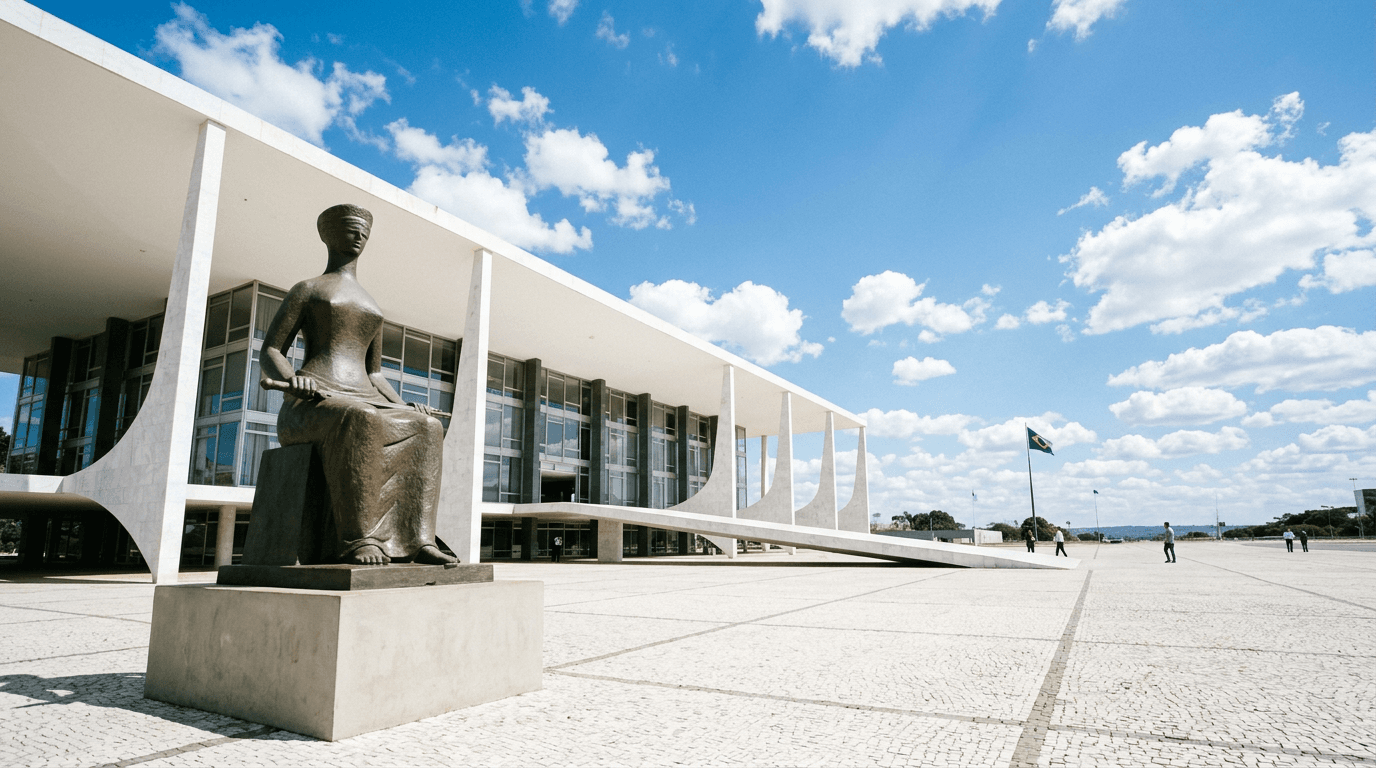
The President of Brazil's Supreme Federal Court (STF), Justice Edson Fachin, met on Monday with other justices to contain a deepening internal conflict that is threatening the stability and perceived integrity of the country’s electoral process just days before a major national election. The extraordinary meeting comes after a public and conflicting exchange of rulings between two STF ministers, Flávio Dino and André Mendonça, over a politically charged electoral controversy, a clash that has heightened fears of a looming institutional crisis within Brazil’s top courts.
The immediate conflict revolves around an electoral decision involving a senator and a social media post. Justice Mendonça, who had been appointed to the STF by former President Jair Bolsonaro, ordered the removal of a post by a comedian that satirically linked Senator Flávio Bolsonaro, the former president’s son, to a controversy involving Nossa Senhora Aparecida (Our Lady of Aparecida), the country’s patron saint. Subsequently, Justice Dino, a former Governor and former Minister of Justice, blocked Mendonça’s order, arguing that the removal constituted censorship and infringed upon the right to freedom of expression and the ability of voters to question candidates.
The dispute has exposed a significant rift within the STF and, crucially, between the STF and the Superior Electoral Court (TSE), which is responsible for administering the upcoming Brazil election. Fachin convened the meeting with justices who hold seats on both the Supreme Court and the TSE, including Mendonça, Kassio Nunes Marques (the President of the TSE), and Dias Toffoli. The underlying concern is that individual STF ministers are issuing contradictory decisions on electoral matters, undermining the authority of the TSE and its process for combating disinformation and regulating the political debate. This jurisdictional overlap risks contaminating the final days of the campaign and creating grounds for challenging election results, escalating the institutional tension between the courts.
This is not the first instance of friction; recent weeks have seen other institutional clashes, including a public divergence between Justices Gilmar Mendes and Mendonça over an electoral law related to the Bolsa Família welfare program, and questions over the TSE’s use of its misinformation combat sector in a previous investigation. The escalating judicial interference is particularly destabilizing because the STF and the TSE serve as the final arbiters of rule of law in Brazil, especially concerning democratic processes. With the first round of the election imminent, a resolution from the meeting is urgently needed to establish clear boundaries and re-affirm the independence of the electoral justice system, a critical measure for preserving institutional stability.
What it touches
The open conflict between Brazil’s highest court and its top electoral court has direct implications for the country's perceived stability and judicial certainty. Disputes that raise questions about the integrity of the democratic process and the Rule of Law often translate into a higher perceived country risk premium, as investor confidence relies heavily on predictable and stable institutions, particularly in periods surrounding a national Brazil Election.
Related coverage
Politics · PRO
Final Quaest Poll Shows Lula Pulls Ahead in First Round of Brazil Election, Runoff Remains Tied
Published
Politics
Judicial Clash Over Election Censorship Exposes Rift in Brazil’s Supreme Courts
Published
Politics
Flávio Bolsonaro Pledges Return of Privatization Program in Sharp Policy Reversal
Published