
Moro's Strong Paraná Gubernatorial Lead Signals Stability for Privatized Copel (CPLE6)
Senator Sergio Moro's 21-point lead in the Paraná governor race reduces political risk for the state, ensuring continuity for its largest former SOE, Copel.
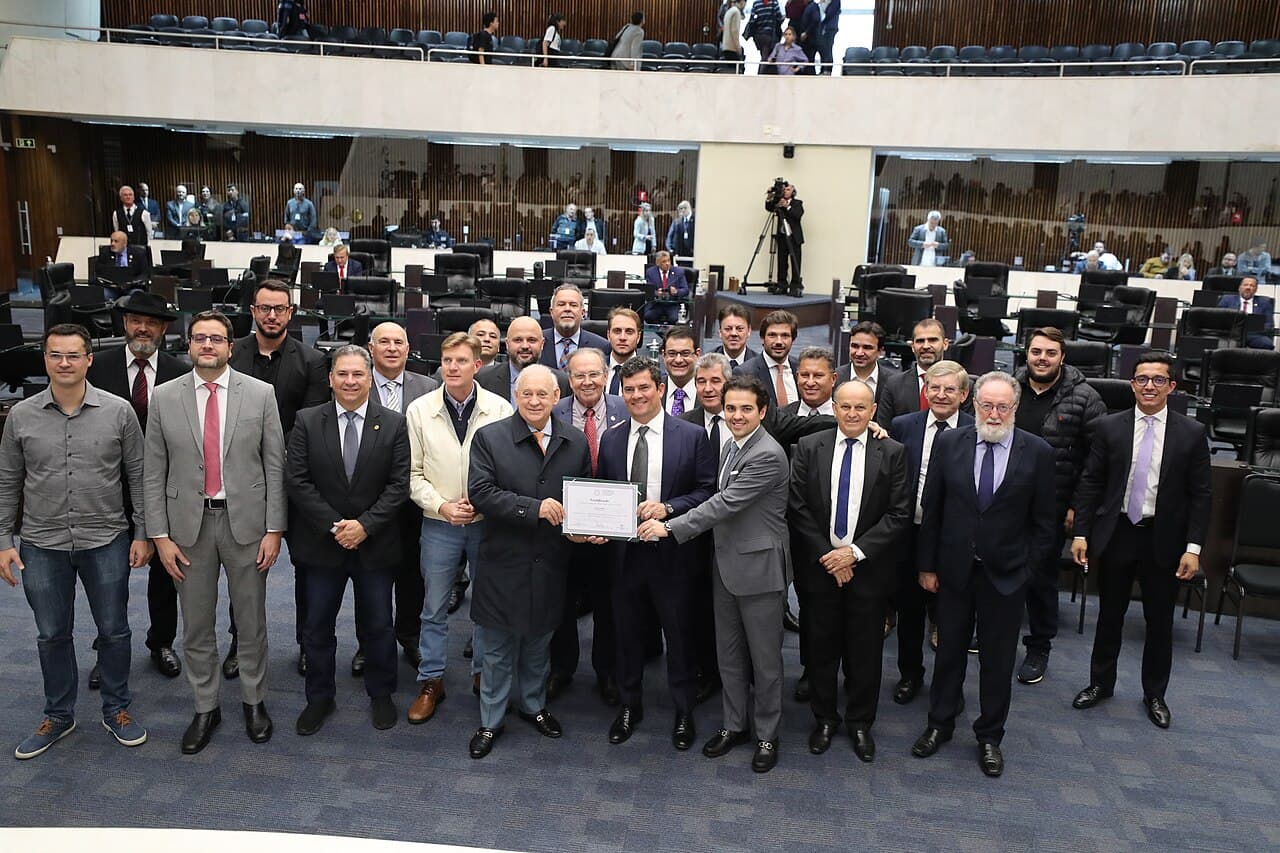
Senator Sergio Moro (PL) holds a commanding 21-point lead in the race for Paraná State Governor in the 2026 election, a strong indication that the state’s pro-market political direction will be locked in for the next four years, significantly reducing the political risk premium on state-linked assets such as the power utility Copel, which trades as CPLE6 on the B3. A Genial/Quaest poll released Monday shows Moro with 39% of the voting intentions in the first round, well ahead of the second-place candidate, state deputy Requião Filho (PDT), who registered 18% of the vote. Moro also leads all second-round simulations, suggesting a stable political horizon for Brazil’s fifth-largest state by GDP.
The poll numbers give the market a clear view that an administration aligned with the state’s recent history of fiscal conservatism and private sector emphasis is the most likely outcome. This outlook provides a key buffer of stability for investors, especially compared to the uncertainty that might accompany a shift to a more state-interventionist administration under Requião Filho, whose family's political history often reflects a more populist, state-centric approach. The reduction of political uncertainty in a major state like Paraná provides a small but notable structural tailwind for the broader Brazilian market, represented by the Ibovespa, which closed Friday at 174,041.95 points.
For Companhia Paranaense de Energia (CPLE6), the implications are particularly salient, though nuanced: Copel is no longer a state-controlled enterprise, having undergone a major capitalization and privatization process in 2023 that shifted its structure to a dispersed capital model, similar to that of Eletrobrás. The State of Paraná is still a major shareholder, but it surrendered voting control during the process. The strong lead by a pro-market candidate like Moro virtually eliminates the risk of regulatory aggression or attempts to re-nationalize or politically interfere with the company's management—a risk that analysts often price in when a utility's former state owner retains a large non-controlling stake.
The key mechanism for the positive market reaction is therefore not the approval of a future privatization, but rather the political assurance of non-reversal and continued favorable governance for the utility post-privatization. While the Genial/Quaest poll provides a high-confidence signal, the survey also indicated that a significant portion of voters, 64%, still consider their vote changeable until the election. Investors will therefore continue to monitor subsequent polls from Quaest and others in the coming months, particularly watching for any tightening of the spread or change in the second-round scenarios, before the outcome of the October vote is fully priced into Paraná's state assets.
Related coverage
Politics · PRO
Brazil Supreme Court Moves to Impose Binding Fiscal Discipline on All Government Spending
Published
Politics · PRO
Brazil’s PPSA Schedules First Auction to Break Petrobras Gas Monopoly, Targeting 50% Price Cut for Industry
Published
Politics · PRO
Brazil’s Election Defined by Stark Fiscal Divide Over High Debt and 13.75% Interest Rate
Published