
Lula Challenges UN Security Council’s ‘Immobility’ in Fiery UNGA Address
Brazilian President Luiz Inácio Lula da Silva used his opening address at the 79th UN General Assembly to demand urgent reform of the UN Security Council, calling the permanent members’ veto power a "flaw.
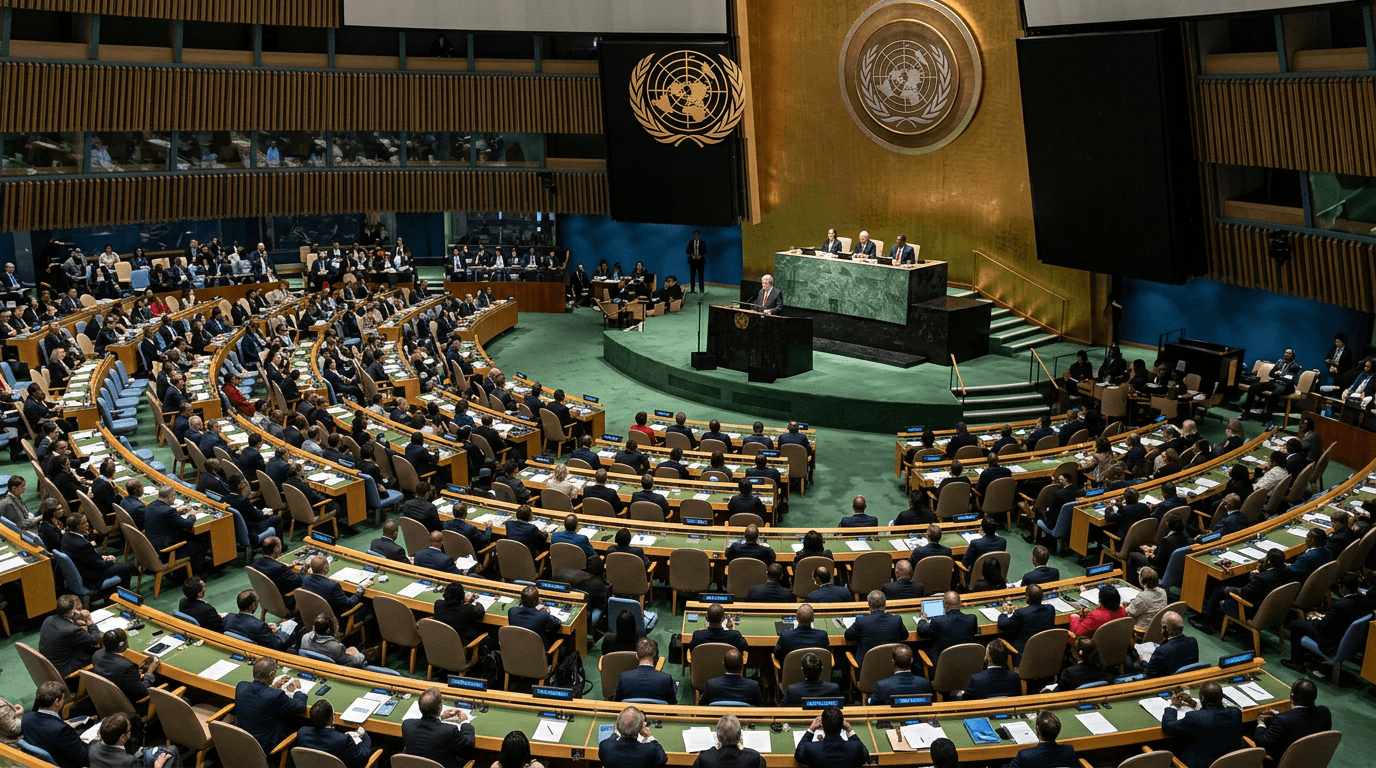
Brazilian President Luiz Inácio Lula da Silva delivered a sharp rebuke to the current global governance structure on Tuesday, using his opening address at the 79th UN General Assembly (UNGA) to call for urgent reform of the UN Security Council (UNSC). The President stated that the world is being “held hostage by the inaction of the Security Council for failing to fulfill its role,” arguing that the body’s credibility is at an all-time low amidst intensifying global conflicts.
President Lula’s critique centered on the veto power held by the five permanent members—the United States, Russia, China, France, and the United Kingdom. He labeled this power a flaw present at the UN’s inception in 1945, referring to this exclusive right as the "original sin" of the UN Charter, claiming it “conferred the great powers the privilege of insensitivity.”
The speech, which by tradition is the first delivered by a head of state at the UNGA, sets the tone for Brazil foreign policy by framing the country as a leader of the Global South pushing for a more balanced international order. The President, a staunch advocate for multilateralism, is channeling Brazil’s long-standing diplomatic push for a permanent seat on the Council.
He explicitly argued for expanding the UNSC to include permanent representation for currently underrepresented regions, specifically mentioning Africa, Asia-Pacific, and Latin America and the Caribbean. Brazil has been a leading voice in this effort as part of the G4 nations, a group that includes Germany, India, and Japan, which mutually support each other's bids for permanent seats.
On the sidelines of the UNGA, the G4 foreign ministers met to reinforce their position. They noted that the UNSC's current structure, established eight decades ago, no longer reflects contemporary geopolitical realities and is a source of global instability. This diplomatic push underscores Brazil's ambition to move from a regional power to a global one, aligning itself with major developing nations to demand a voice commensurate with its economic and political size.
The effort to achieve UN Security Council reform has been ongoing for years, with the G4 criticizing the current Intergovernmental Negotiations process as "largely ineffective" after 18 years of talks. By calling out the current structure so forcefully, Lula da Silva is signaling that Brazil and its allies are prepared to escalate their demands for text-based negotiations to move beyond what they see as stalling tactics. The debate over who holds decision-making power at the UN remains the central test for any potential shift in global governance.
Related coverage
Politics
Loneliness and Exhaustion Driving Political Abstention in Brazil, Threatening Democratic Stability
Published
Politics
Systemic Violence Against Women Threatens Quality of Brazilian Democracy
Published
Politics
Illegal Gold Mining Ravages Amazon Protected Areas Despite Crackdowns, Endangering Indigenous Peoples
Published