
Lula-Alcolumbre Détente Ends Legislative Gridlock in Brazil Senate
Political estrangement between President Lula and Senate President Davi Alcolumbre ends, unblocking key government agenda items.
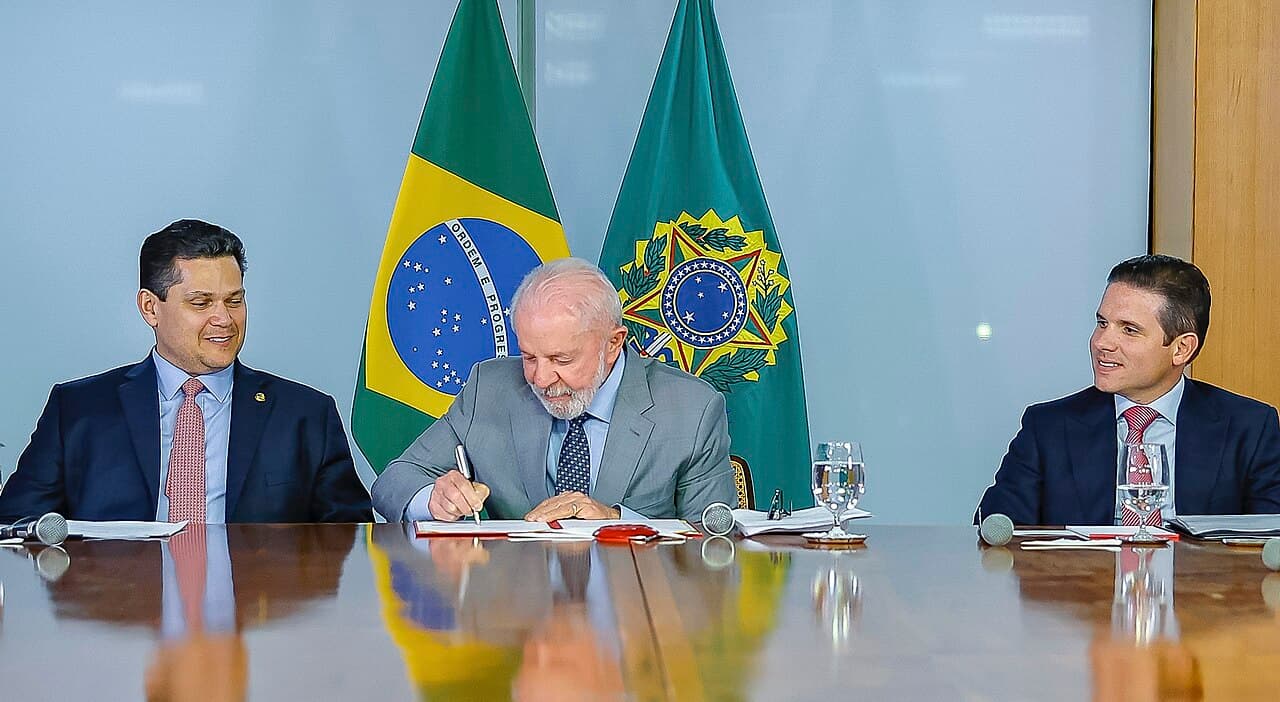
President Luiz Inácio Lula da Silva and Senate President Davi Alcolumbre have formally ended a three-month political estrangement, immediately unblocking the government's legislative agenda in the upper house of Brazil's National Congress. Following a series of recent meetings, Senator Alcolumbre (União Brasil-AP) announced he would be forwarding three priority government bills—two of which are Constitutional Amendment Proposals (PECs)—to the relevant Senate commissions for debate, signaling an end to the gridlock that had stalled the Executive's major policy initiatives. The détente not only clears the path for key policy but also marks a significant political rapprochement ahead of the 2026 presidential election, with Lula actively courting the powerful centrist senator.
The political freeze began in April after the Senate, under Alcolumbre’s leadership, rejected a high-profile Lula nominee to the Supreme Court (STF), a rare institutional defeat for the Executive branch. The renewed dialogue has now yielded concrete legislative action. The bills being advanced are the Public Security PEC, the National Policy for Critical and Strategic Minerals, and a significant labor-related PEC aimed at eliminating the 6-by-1 work scale, a high-priority measure for the governing Workers’ Party (PT). As President of the Senate, Alcolumbre controls the institution’s legislative calendar, making his personal disposition towards the administration the most powerful bottleneck—or accelerant—for the government’s policy platform.
The renewed working relationship comes with a clear political component. The move is viewed in Brasília as a trade: legislative cooperation now in exchange for political support in the 2026 presidential race. Alcolumbre, a powerful figure from the Northern state of Amapá and a member of the centrist União Brasil party, commands significant influence, particularly within the bloc of centrist lawmakers known as the Centrão. The extent of the political alignment was showcased on August 17, when Lula and Alcolumbre held their first public joint agenda in Amapá, visiting an oil exploration rig in the Equatorial Margin, where they exchanged public praise.
The immediate next step for the government will be to monitor the passage of the priority bills through the Senate commissions, where the pace and text of the legislation can still be slowed or altered. More broadly, the political focus shifts to the formalization of Alcolumbre’s public support, which Lula is counting on to solidify his political alliances and secure a broader coalition for the upcoming election. The advance of these agenda items suggests the Executive-Legislative relationship has entered a more stable phase, reducing the risk of further legislative vetoes against the administration.
What it touches The unblocking of the government's legislative agenda reduces overall policy uncertainty in Brazil. Specifically, the accelerated movement of the National Policy for Critical and Strategic Minerals directly impacts the mining and natural resource sectors, offering a potential path for long-term regulatory certainty in the exploitation of resources like rare earths and other high-value minerals.
Related coverage
Politics · PRO
Brazil Supreme Court Moves to Impose Binding Fiscal Discipline on All Government Spending
Published
Politics · PRO
Brazil’s PPSA Schedules First Auction to Break Petrobras Gas Monopoly, Targeting 50% Price Cut for Industry
Published
Politics · PRO
Brazil’s Election Defined by Stark Fiscal Divide Over High Debt and 13.75% Interest Rate
Published