
Judicial Clash Over Election Censorship Exposes Rift in Brazil’s Supreme Courts
STF Minister Flávio Dino overturned a TSE censorship order against a humorist's post in a high-stakes free speech fight before Brazil’s election.
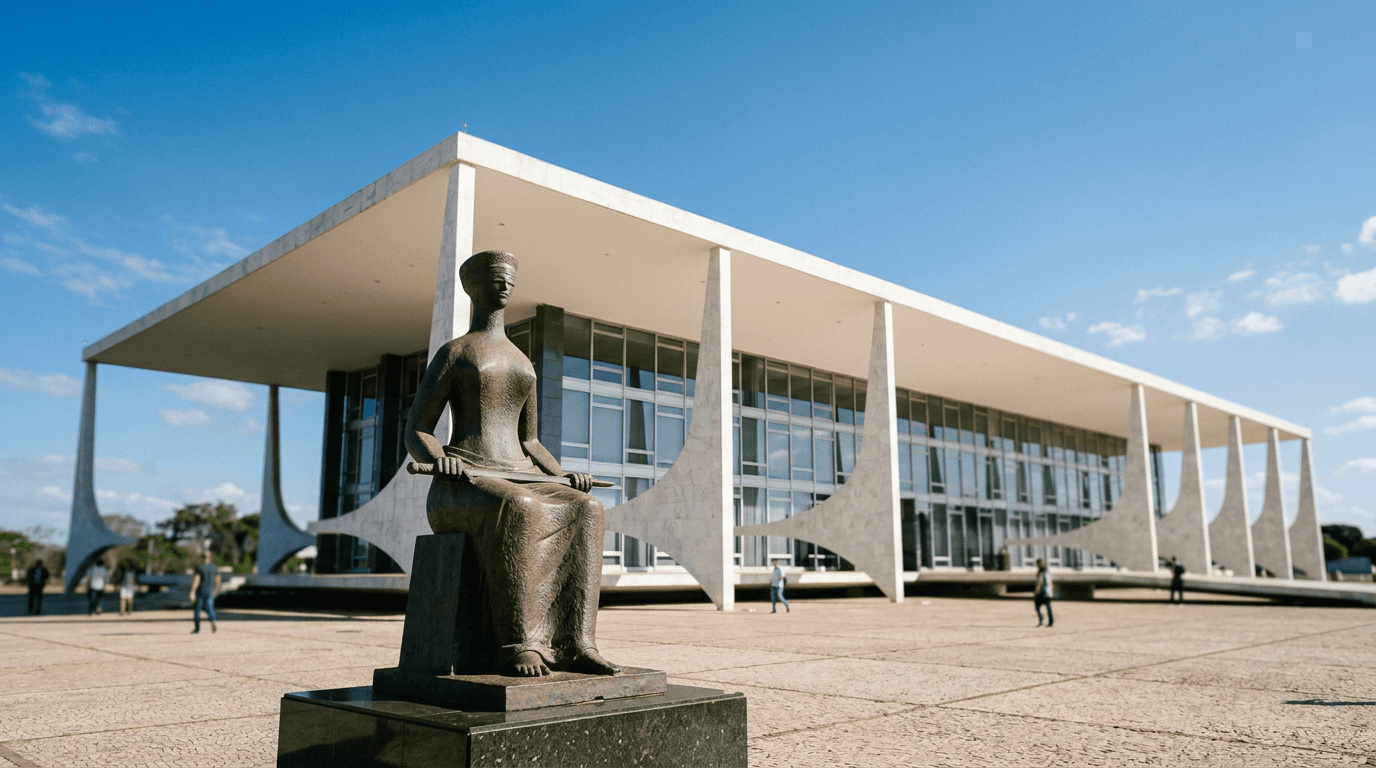
The final week of Brazil’s national election campaign has triggered a direct and public institutional conflict, pitting two of the country’s highest courts against one another in a dispute over electoral censorship and free speech. On Sunday, Supreme Federal Court (STF) Minister Flávio Dino overturned a prior decision by Superior Electoral Court (TSE) Minister André Mendonça, which had mandated the removal of a political humorist’s social media post related to presidential candidate Flávio Bolsonaro and the Catholic figure Nossa Senhora Aparecida, the Patroness of Brazil. Dino’s ruling reinstated the post, arguing that the removal order was an unconstitutional act of censorship "lacking motivation and proportionality," and a threat to free expression.
The dispute began when Flávio Bolsonaro’s campaign successfully argued to the TSE that a wave of social media posts constituted "fake news" intended to damage his candidacy. The false claims, which circulated widely, alleged that conservative religious groups backing the candidate intended to revoke the title of Nossa Senhora Aparecida as the country's patroness, a deeply inflammatory religious and political assertion. TSE Minister André Mendonça, a justice who also sits on the STF, ordered the removal of over 1,100 such posts, including one by humorist Antonio Tabet that referenced a "milician family" attacking the saint.
In reversing the order, Minister Dino, who was appointed by President Lula, argued that the phrase "milician family" could not be definitively attributed to the presidential candidate without overreach and that the TSE order improperly restricted public and religious debate. The TSE’s mandate is to regulate electoral propaganda and combat disinformation, but the STF—Brazil’s final court of constitutional review—has repeatedly stressed that the fight against fake news cannot supersede core constitutional guarantees like free expression. The TSE, for its part, draws three of its seven members from the STF, an institutional overlap meant to ensure judicial alignment that, in this instance, has failed, exposing a profound rift in the country’s high-level judicial branch just days before voters head to the polls.
The decision by Minister Dino drew immediate and strong criticism from Flávio Bolsonaro’s defense team, which accused the STF minister of a “constitutional usurpation of competence” by interfering in the TSE’s jurisdiction over electoral matters. Bolsonaro’s legal team has appealed the ruling to the full STF, arguing that the matter should be returned to the entire electoral court or the Supreme Court’s full bench for a final ruling. The appeal ensures the conflict will persist at the highest judicial levels until the election concludes, underscoring the intense judicial involvement and politicization of censorship during Brazil’s 2026 election cycle.
Related coverage
Politics
STF President Fachin Seeks to Avert Institutional Crisis as Justices Clash on Election Eve
Published
Politics · PRO
Final Quaest Poll Shows Lula Pulls Ahead in First Round of Brazil Election, Runoff Remains Tied
Published
Politics
Flávio Bolsonaro Pledges Return of Privatization Program in Sharp Policy Reversal
Published