
Internal Clashes and 'War of Decisions' at Brazil's Supreme Court Stoke Legal Uncertainty
Brazil's Supreme Federal Court is mired in unprecedented internal conflicts, with justices overruling each other, exposing a 'ministrocracia' that undermines legal certainty for businesses.
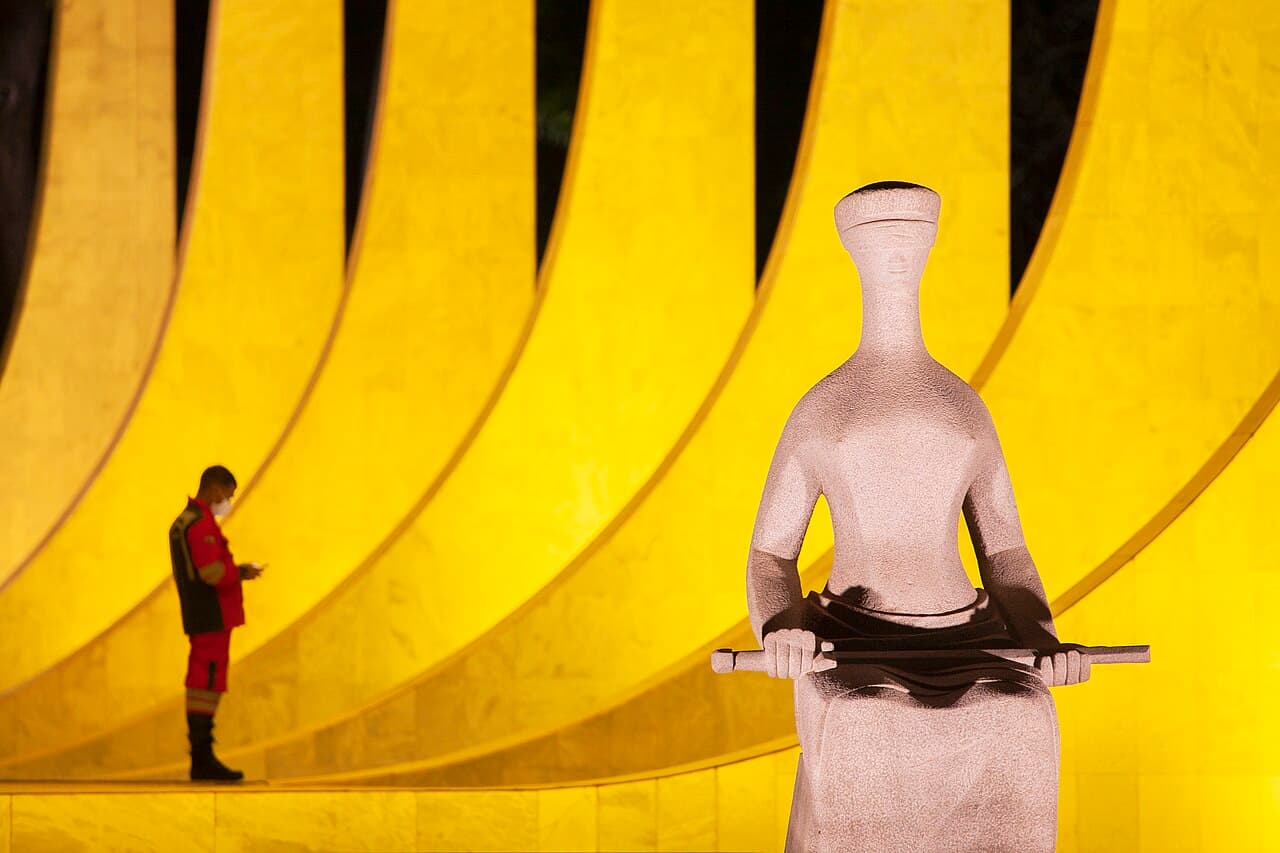
An open "war of decisions" among justices of Brazil's Supreme Federal Court (STF) has exposed a deep institutional rift, creating what analysts are calling a "procedural free-for-all" that significantly undermines legal certainty for businesses and foreign investors in Brazil. The conflict, which pits jurists appointed by opposing political factions against each other, has forced the court’s Chief Justice to intervene and suspend decisions made by two rival members to halt the institutional damage.
The crisis came to a head when Justice André Mendonça, a jurist appointed by former President Jair Bolsonaro, and Justice Flávio Dino, a recent appointee of President Luiz Inácio Lula da Silva, issued opposing rulings in September. The disputes involve investigations into high-ranking Federal Police officials and a separate internal fight regarding the Banco Master financial scandal, which has seen accusations of misconduct traded between Mendonça and Justice Alexandre de Moraes.
For a foreign audience, this open display of friction at the highest court signals the rise of "ministrocracia"—a term used by Brazilian scholars to describe a court where the decisions of powerful individual justices (ministers) often displace collegial deliberation. This concentration of authority fragments institutional stability and is seen as the main driver of increased regulatory and legal risk, particularly for those investing or operating in Brazil. The public clashes are not limited to one-off rulings; they reflect a broader battle over the judiciary’s role, where justices have often been accused of judicial overreach by stepping into political and legislative territory.
The lack of institutional alignment is particularly concerning for the business environment, where clear and predictable legal rulings are essential. Investors now face a heightened risk that major regulatory or business decisions could be overturned by a single, individualized ruling from a justice. Experts warn that the institutional instability generated by the STF's internal conflicts is pushing up the country's risk premium.
The resolution of the internal investigations and potential proceedings against the involved justices will be the central issue to watch as the country heads into the October general elections. With the Supreme Court having cemented itself as a powerful political arbiter in recent years, any further instability in the lead-up to the vote risks amplifying political polarization and further eroding confidence in the integrity of Brazil's democratic institutions.
What it touches
The mounting legal uncertainty affects any foreign company with significant exposure to Brazil's regulatory environment, particularly those involved in large-scale infrastructure, banking, or tech. The volatility in judicial and regulatory outcomes increases the risk profile of traded assets, demanding that investors factor in a greater political and legal premium when valuing Brazilian equities.
Related coverage
Politics
Oxford Economics Outlines Two Contending Economic Futures for Brazil's Next Government
Published
Politics · PRO
Brazil Federal Audit Court Flags 30 Fiscal Risks in Lula Government’s 2026 Management
Published
Politics · PRO
Flávio Bolsonaro’s Fiscal Team Pitches R$1.1 Trillion Saving Plan by Decoupling Benefits from Minimum Wage
Published