
Illegal Gold Mining Ravages Amazon Protected Areas Despite Crackdowns, Endangering Indigenous Peoples
New data shows illegal gold mining cleared thousands of hectares of protected rainforest in the Amazon’s Xingu region through 2025, poisoning rivers and threatening Indigenous health.
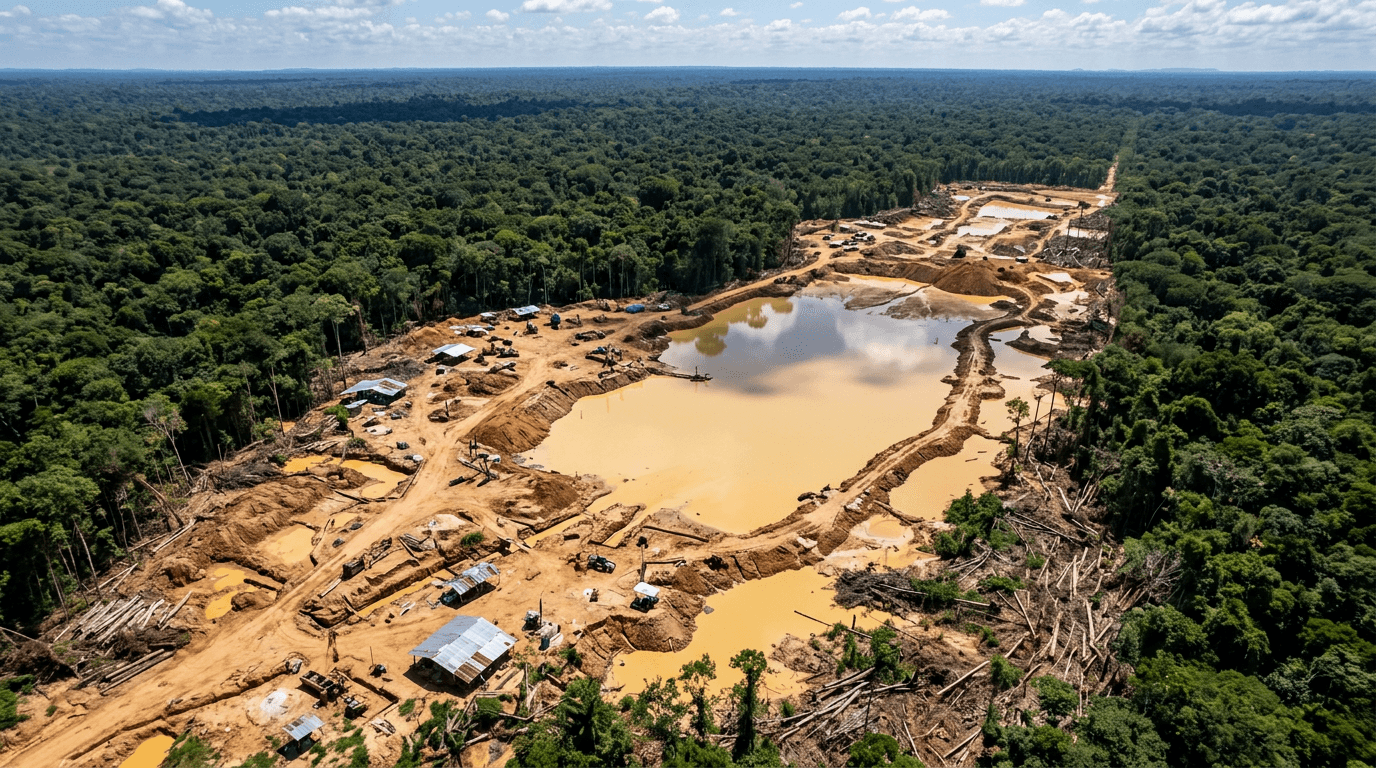
Illegal gold mining has continued its relentless destruction of the Brazilian Amazon, clearing thousands of hectares of protected rainforest and fueling a crisis of mercury poisoning that is directly threatening Indigenous communities. This activity persists despite recent high-profile government crackdowns, according to new analysis from non-governmental organizations.
The most severe environmental impact is concentrated in the Xingu River basin, a critical corridor of protected areas in the states of Pará and Mato Grosso. Monitoring data shows the Kayapó Indigenous Territory—one of the Amazon’s largest—has a cumulative total of approximately 7,940 hectares of rainforest destroyed by illegal gold mines as of September 2025.
The encroachment has also intensified in conservation units, which are strictly protected under Brazilian law. At the Altamira National Forest, for instance, illegal mining accumulated 832 hectares of deforestation between 2016 and September 2025, with an acceleration of clear-cutting noted throughout 2025. This expansion of mining deep into protected areas suggests the criminal networks funding the operations are highly organized and persistent.
The human cost of this illegal activity is immediate and devastating. Gold mining relies on mercury to separate the metal from ore, a process that releases the toxic element into rivers, where it transforms into methylmercury and contaminates the food chain. Reports confirm that Indigenous groups, who rely on the rivers for fish, have suffered widespread mercury contamination, leading to severe neurological and developmental health problems. This echoes the health crisis previously documented among the Yanomami people and underscores the lasting toxic legacy of these invasions.
The persistence of illegal mining is fundamentally driven by high global gold prices, which provide a strong financial incentive, and by deep-seated problems with Brazil’s mineral export controls. Investigations show that gold mined illegally from Indigenous lands and conservation units is often laundered into formal supply chains, giving the illicit metal the appearance of legality as it moves into global markets. This creates a significant ESG (Environmental, Social, and Governance) liability for the commodity and the international firms that purchase it.
For the government of President Luiz Inácio Lula da Silva, which has pledged to end deforestation, the continued advance of garimpo (small-scale, often illegal, mining) presents a major challenge. While authorities have conducted isolated raids to remove miners and destroy equipment, the data shows these actions have not been sufficient to contain the spread of the activity, pointing to the need for more structural reforms to dismantle the financial and logistical networks that sustain the criminal enterprise.
What it touches
The persistent laundering of illegal gold into formal supply chains creates material risk for firms in the global metals and jewelry sectors that require transparent sourcing for their Environmental, Social, and Governance compliance. Furthermore, the extensive environmental damage to the Amazon, the world's largest rainforest, affects global climate targets and trade relations linked to environmental compliance.