
Brazil Supreme Court seizes Flávio Bolsonaro's passport in betting probe
Justice Alexandre de Moraes ordered Senator Flávio Bolsonaro to surrender his passport amid a money laundering inquiry linked to online sports betting.
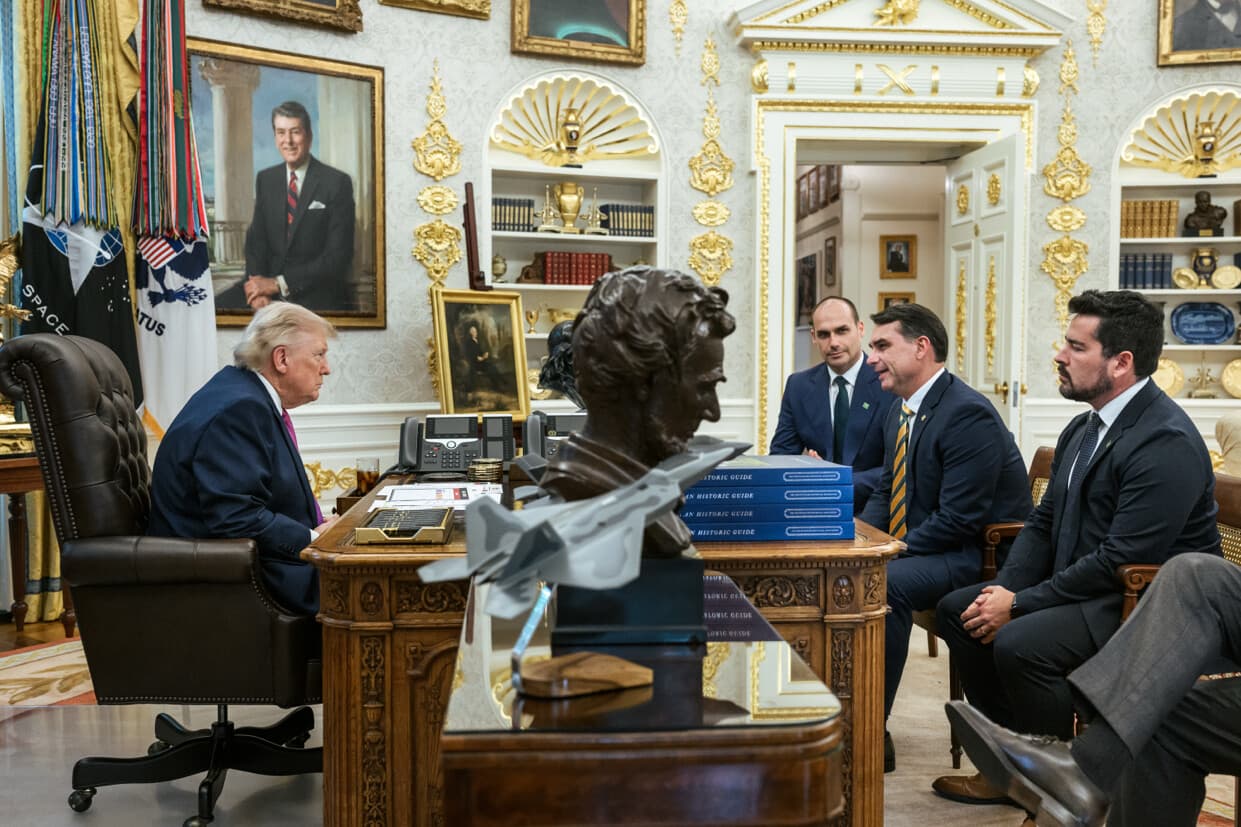
Brazil’s Supreme Court has ordered federal police to seize the diplomatic and regular passports of Senator Flávio Bolsonaro, the eldest son of former President Jair Bolsonaro. On October 26, 2026, Supreme Court Justice Alexandre de Moraes issued the judicial order, which bans the senator from leaving the country and prohibits him from contacting his close associate and lawyer, Willer Tomaz.
The enforcement action stems from a high-profile criminal inquiry probing corruption, currency evasion, and money laundering tied to online sports betting platforms, locally known as "bets". Police investigators are examining whether Senator Bolsonaro held an undisclosed, indirect stake in Best Bet, an online gaming platform licensed by the Rio de Janeiro state lottery. Federal authorities have focused on financial records identifying the senator as a "master user" on a bank account belonging to Alcazar Holdings, a Madeira-based offshore entity controlled by Tomaz. Senator Bolsonaro has denied any wrongdoing, stating he never maintained a shared bank account with Tomaz or his firms.
The legal crackdown comes amid a broader regulatory offensive against Brazil's rapidly growing sports betting market. On October 23, 2026, Justice Moraes ordered the freezing of up to 6 billion reais ($1.09 billion) in assets belonging to Tomaz, who is currently in the United States. According to a technical report from the Ministry of Finance disclosed on October 21, 2026, Tomaz was flagged after placing 6.6 billion reais ($1.2 billion) in wagers between 2025 and 2026, primarily through the international gaming platform Blaze. Tomaz's defense has contested the allegations, arguing that his transactions were the result of a severe gambling addiction rather than money laundering.
For international observers, the targeting of a prominent federal lawmaker highlights the volatile legal and regulatory environment surrounding Brazil's gambling sector. President Luiz Inácio Lula da Silva's administration has aggressively tightened oversight of the industry, implementing strict licensing requirements and utilizing the Supreme Court to target platforms suspected of facilitating capital flight or laundering illicit funds. While the government's regulatory framework aims to formalize the market, the involvement of top political figures in criminal probes introduces unpredictable compliance and operational hazards for foreign operators and payment gateways.
Regulatory Scrutiny and Transaction Flows
The intensifying regulatory scrutiny over Brazilian sports betting directly impacts the broader financial technology ecosystem that handles high-volume digital transactions in the region. Local payment processors operating in Brazil manage digital transaction flows that are subject to local compliance mandates and central bank regulations.
As federal authorities escalate their anti-money laundering (AML) protocols, payment gateways and financial intermediaries handling transactions for online betting platforms face heightened operational scrutiny. The Brazilian Central Bank and federal police have increased coordination to monitor large-scale capital flows, requiring payment processors to enforce stricter know-your-customer (KYC) rules and report suspicious transactions instantly. These systemic compliance adjustments are expected to raise operational costs for financial technology firms facilitating transactions in Latin America's largest economy.