Defeated Candidate Flávio Bolsonaro Resurfaces at Mar-a-Lago
Brazilian Senator Flávio Bolsonaro, who recently lost the presidential runoff, appeared at a CPAC event in Florida after fleeing a Supreme Court passport order.

Global investors holding emerging market debt or Latin American equities are facing a familiar source of volatility as Brazilian political friction spills directly into the United States. The runner-up of Brazil’s recent presidential election has reemerged in Florida, signaling a prolonged period of political noise that could complicate the fiscal and legislative outlook for Latin America's largest economy.
Brazilian Senator Flávio Bolsonaro made his first public appearance since fleeing his home country, addressing a Conservative Political Action Conference (CPAC) gala dinner at Donald Trump's Mar-a-Lago estate in Palm Beach, Florida, on November 5, 2026. Speaking to attendees, the 45-year-old politician claimed the October election was fraudulent, called himself the "leader of Brazil," and vowed to continue fighting from abroad. His appearance comes just days after he lost the October 25, 2026, presidential runoff to left-wing incumbent Luiz Inácio Lula da Silva by a margin of over 4 million votes, according to official electoral results.
The senator's sudden departure from Brazil has triggered a diplomatic and legal standoff. Flávio Bolsonaro fled Brazil on October 27, 2026, traveling through Argentina and Ecuador to reach Miami. His escape occurred immediately after Alexandre de Moraes, a justice of Brazil's Supreme Federal Court (STF), ordered him to surrender his passport. The restriction was part of an ongoing federal police investigation into money laundering and corruption allegations. Because his parliamentary mandate as a senator ends early next year, he faces the imminent loss of his legislative immunity, which would expose him to direct criminal prosecution in Brazil.
Institutional Strains and Fiscal Outlook
For international observers, the primary concern is how this "opposition in exile" will affect Brazil's domestic policy stability. The elder Bolsonaro's political movement still commands a significant block of seats in the Brazilian Congress. With the defeated candidate rallying international support and questioning the legitimacy of the electoral system from U.S. soil, domestic legislative negotiations are expected to become highly polarized.
This political gridlock threatens the Lula administration's ability to pass critical structural reforms and adhere to the country's strict fiscal framework. If the government is forced to compromise on spending controls to secure votes from a hostile, highly politicized Congress, it could trigger a widening fiscal deficit, put upward pressure on local interest rates, and weaken the Brazilian real.
Furthermore, the public nature of Flávio Bolsonaro's stay in Florida—authorized under a temporary humanitarian parole program while his allies seek a permanent green card—could strain diplomatic relations between Brasília and Washington.
In your brokerage app
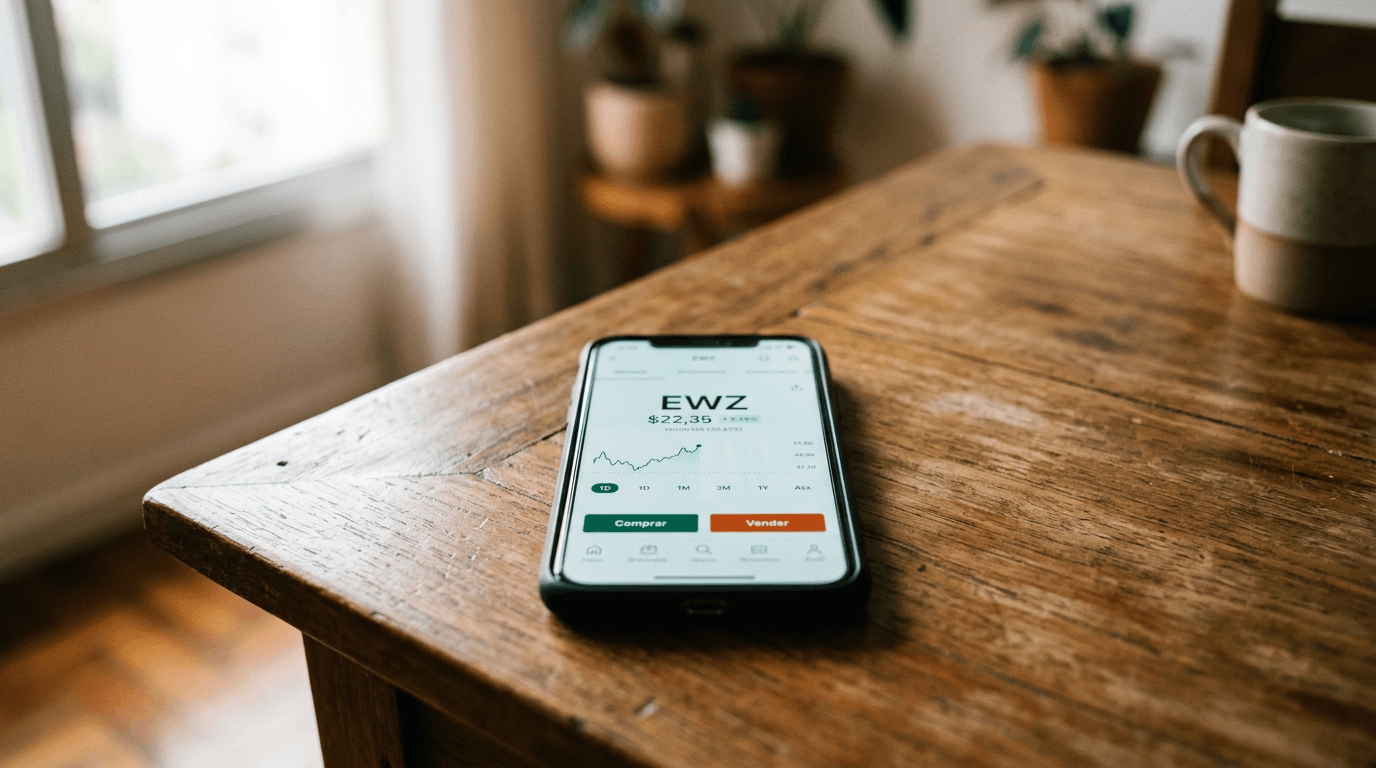
Political instability in Brazil directly influences the performance of broad Latin American exchange-traded funds. Investors holding the iShares MSCI Brazil ETF, which tracks large and mid-sized Brazilian companies listed in New York, should monitor how this political noise impacts sovereign risk premiums and the exchange rate. State-controlled entities within the fund are historically the most sensitive to shifts in federal political tension.