
Brazil Supreme Court Disapproval Hits Record High Amid Judicial-Political Crisis
Public distrust in Brazil’s Supreme Court reaches a record 48% after the sprawling Banco Master scandal.
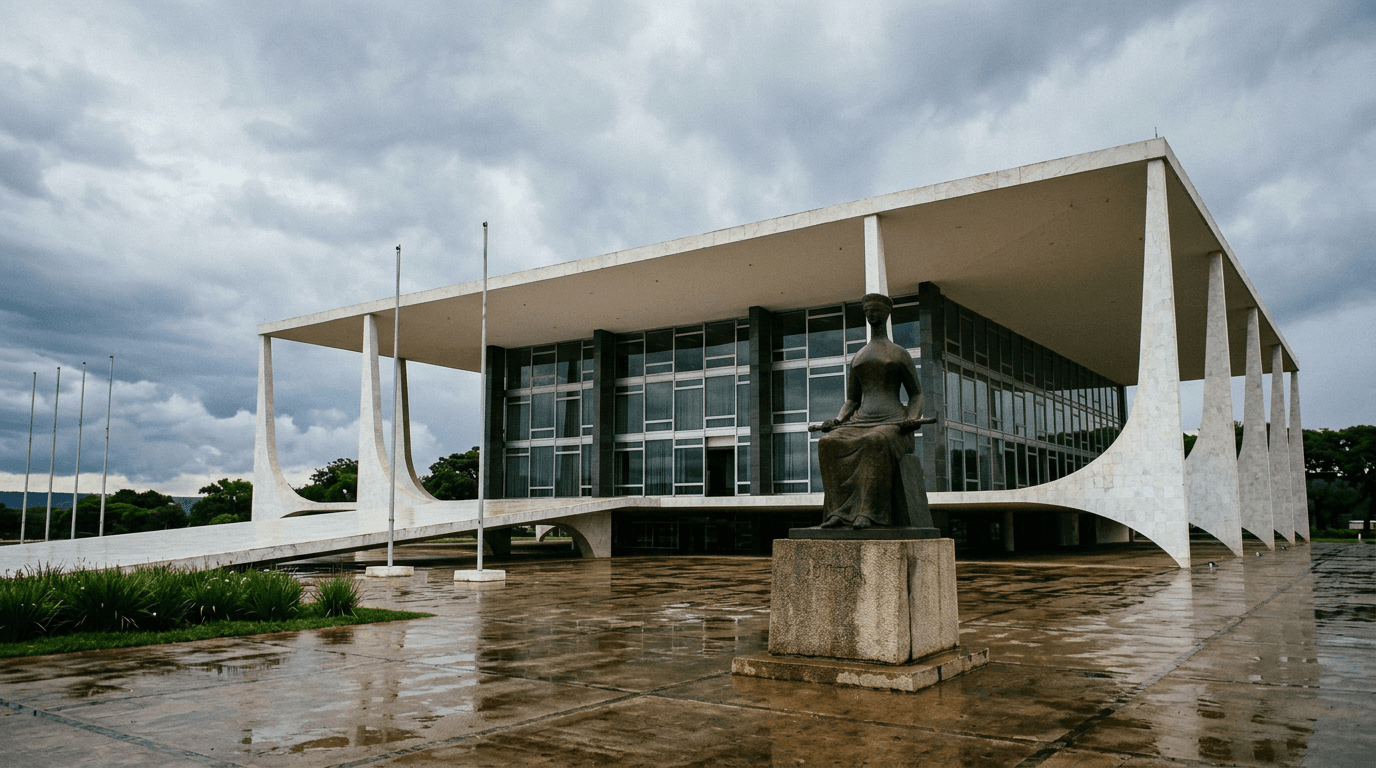
Public distrust in Brazil's Supreme Federal Court (STF) has reached a record high, with a new Datafolha poll showing 48% of Brazilians do not trust the nation’s highest constitutional body. The figure, the highest recorded since Datafolha began tracking the metric in 2012, confirms a growing institutional crisis centered on the sprawling “Banco Master” financial fraud investigation, which has implicated senior members of the judiciary. The collapse in confidence comes as the court is engulfed in a public feud between its own members and faces a political storm months before a crucial general election.
The crisis stems from the investigation into the collapse of Banco Master, a mid-sized lender shut down in 2025 following what officials have called the largest bank fraud in Brazil’s history. The political fallout intensified with the revelation of alleged improper communication between Justice Alexandre de Moraes and the arrested former bank head, Daniel Vorcaro. Police evidence includes metadata suggesting Justice Moraes himself edited a contract worth up to R$131 million ($25 million) signed between Banco Master and the law firm of his wife, Viviane Barci de Moraes, raising serious questions about judicial ethics and conflicts of interest within the court.
The case has been immediately weaponized by Brazil’s political class. President Luiz Inácio Lula da Silva publicly called for the “complete lifting of the confidentiality in the investigations,” describing the matter as the “biggest financial crime in the history of Brazil” and demanding full transparency from the judiciary. Meanwhile, the Supreme Court’s plunging approval rate is highly polarized: 69% of voters for opposition presidential candidate Flávio Bolsonaro disapprove of the STF’s performance, compared to just 24% of President Lula’s supporters, reflecting a deep political fissure over the court’s role.
The STF, which acts as the final arbiter of the constitution, has become a key flashpoint in Brazilian politics, often stepping in to adjudicate disputes between the Executive and Legislative branches. The internal battle over the Banco Master case has pitted Justice Moraes against Justice André Mendonça, the original case rapporteur, who was accused by colleagues of selectively leaking information. With Chief Justice Luiz Edson Fachin stepping in to unseal portions of the massive file, the institutional stability of the court is under unprecedented scrutiny. The judicial crisis sets a troubled backdrop for the upcoming election, where the next president will inherit the power to appoint at least four new justices, making the future direction and composition of the Brazil Supreme Court a defining issue for candidates.