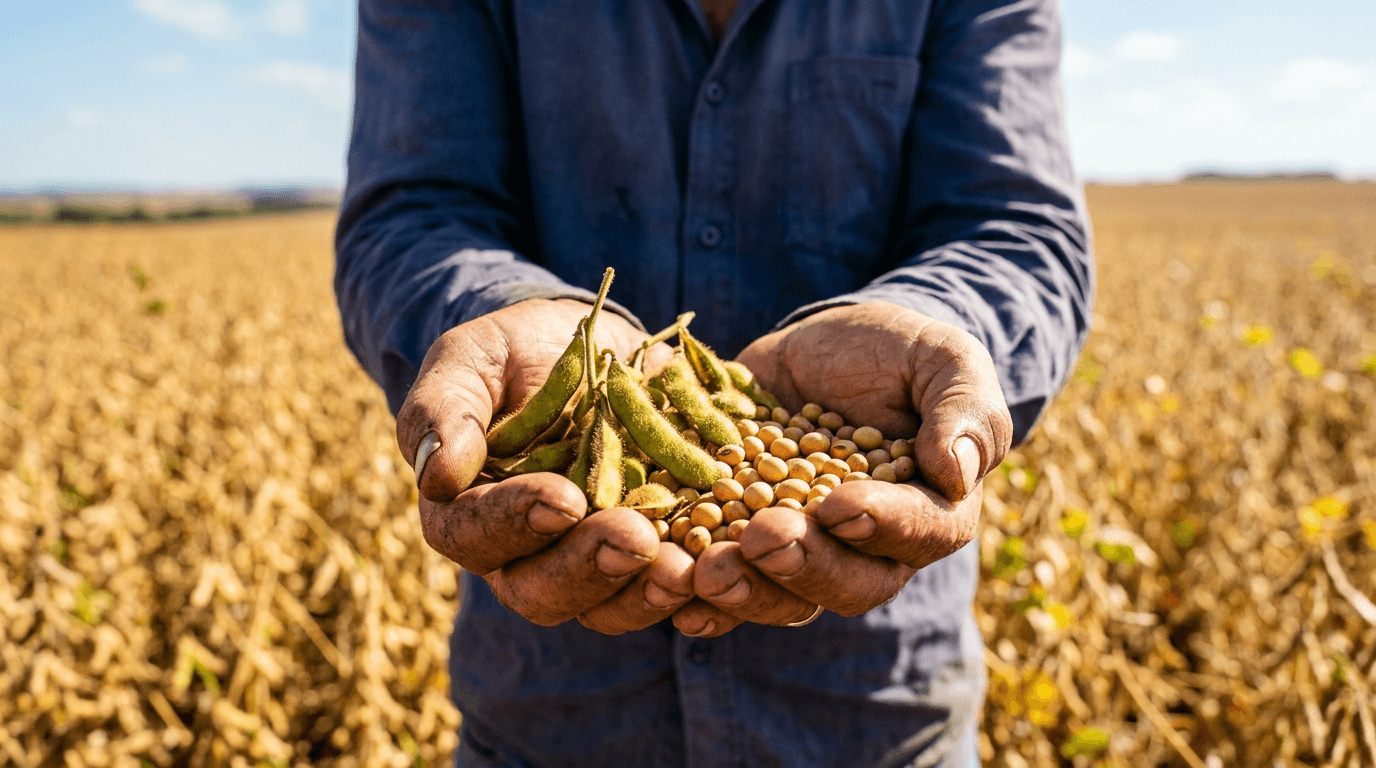
Why Wall Street spec bets on soybeans are tied to Brazil fields
CFTC data shows large speculators held a net-long soybean position of 163,618 contracts on November 3, 2026, as rapid planting in Brazil caps price rallies.

Global commodity portfolios are feeling the weight of a massive South American supply engine as the autumn harvest wraps up in the United States. For retail investors holding broad agricultural funds or global food-processing equities, weekly positioning data reveals how the world's largest money managers are quietly adjusting their exposure to the grain complex.
According to the weekly Commitments of Traders report released by the U.S. Commodity Futures Trading Commission (CFTC), non-commercial speculators held 239,253 long contracts compared to 75,635 short contracts for Chicago Board of Trade (CBOT) soybeans (contract 005602) as of the November 3, 2026 observation date. This resulted in a net-long position of 163,618 contracts. Total open interest across the market stood at 959,576 contracts.
While these numbers reflect paper-market sentiment on a U.S. exchange, the fundamental driver of this speculative positioning lies thousands of miles south in Brazil. As the world's largest exporter of soybeans, Brazil's planting progress directly dictates the risk premium embedded in Chicago futures. The state-run National Supply Company (Conab) and the Ministry of Agriculture and Livestock (MAPA) monitor these developments closely, and early reports of favorable rainfall in key agricultural states like Mato Grosso have eased concerns of a supply deficit.
Planting speed limits price upside
The bullish sentiment in Chicago is facing a reality check from South American fields, where the physical supply chain is moving at a rapid clip. In Brazil, farmers have capitalized on favorable weather to accelerate their crop cycle. Data from local agricultural consultancies on November 2, 2026, showed that Brazil's soybean planting had reached 53% of the projected area, running well ahead of the 47% pace recorded during the same period last year.
This rapid planting progress acts as a natural cap on global price rallies. When Brazilian farmers plant early, it minimizes the risk of weather disruptions during the critical pod-filling stages and ensures a timely harvest starting in January. For global buyers, particularly in China, a swift Brazilian harvest provides a reliable alternative to U.S. exports.
For retail investors, weekly positioning updates like the CFTC report serve as a crucial sentiment gauge rather than a direct price forecast. While a net-long position indicates that institutional money keeps a positive bias, market analysts note that it leaves the complex vulnerable to technical selling if weather conditions in Brazil remain favorable and point toward another record-breaking harvest.
In your brokerage app
For retail investors, this global agricultural tug-of-war is directly visible through major multinational grain processors and landowners. Adecoagro S.A., which owns and operates vast farmland assets across South America, is listed in New York and is a major holding in broad agricultural funds like the iShares MSCI Brazil ETF, exposing investors directly to South American harvest dynamics.