Why Chicago soybean bets hang on Brazil's planting progress
CFTC data shows speculators holding a net-long position in CBOT soybeans as of November 3, 2026, as South American weather dictates global supply risk.
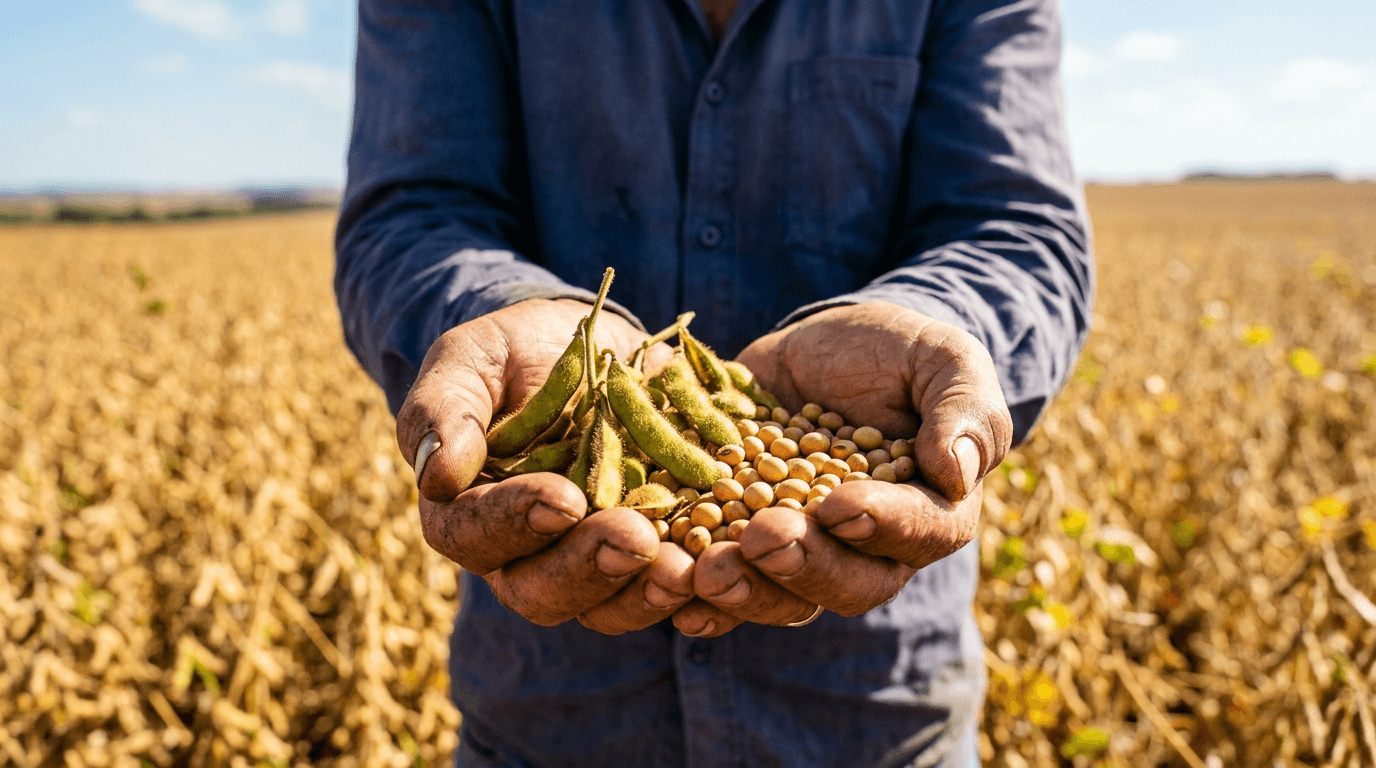
Large institutional speculators are holding a net-long position in Chicago soybean futures, according to the latest regulatory data. For retail investors tracking global agricultural commodities, these weekly positioning figures offer a rare look into how the world’s largest money managers are balancing their portfolios. Rather than serving as a direct price forecast, the data provides a baseline of market sentiment at a time when global supply chains are shifting.
According to the U.S. Commodity Futures Trading Commission (CFTC), non-commercial traders held 239,253 long contracts against 75,635 short contracts for Chicago Board of Trade (CBOT) soybeans (contract 005602) as of the November 3, 2026 observation date. This resulted in a net-long position of 163,618 contracts. Total open interest across the market stood at 959,576 contracts.
While these figures reflect trading activity on a U.S. exchange, the underlying driver of this market increasingly points to South America. As the world’s largest exporter of soybeans, Brazil’s planting progress and domestic agricultural policies dictate the risk premium embedded in Chicago futures. The nation’s Center-West farming heartland is currently in the middle of its planting season, making weather patterns in states like Mato Grosso a primary focus for the macro funds holding these contracts.
The South American Supply Engine
In Brazil, agricultural policy is heavily influenced by the Ministry of Agriculture and Livestock (MAPA) and the state-run National Supply Company (Conab), which monitor crop yields and coordinate rural credit. Because Brazilian farmers have expanded acreage significantly over the past decade, any disruption to their planting schedule—such as delayed rains or excessive heat—directly impacts global export projections and triggers volatility in Chicago.
For global investors, this means that domestic U.S. supply dynamics, such as the harvest estimates regularly published by private firms and the USDA, only tell half the story. The massive net-long position held by speculators on November 3, 2026, reflects a market that remains highly sensitive to how smoothly South American supply can reach global ports in the coming months.
In your brokerage app
For investors tracking South American agribusiness, Adecoagro S.A. is listed on the New York Stock Exchange under the ticker AGRO. The company operates extensive farming, sugar, and ethanol operations across Brazil, Argentina, and Uruguay. Additionally, JBS N.V., listed in New York, provides exposure to the global protein and agricultural processing supply chain. While these equities are subject to broader equity market trends, their underlying valuations remain deeply tied to the South American harvest cycle.