
Why US commodity traders are keeping a close eye on Brazil's weather
The latest CFTC report shows large speculators holding a massive net-long position in Chicago soybeans, leaving them highly exposed to South American crop conditions.
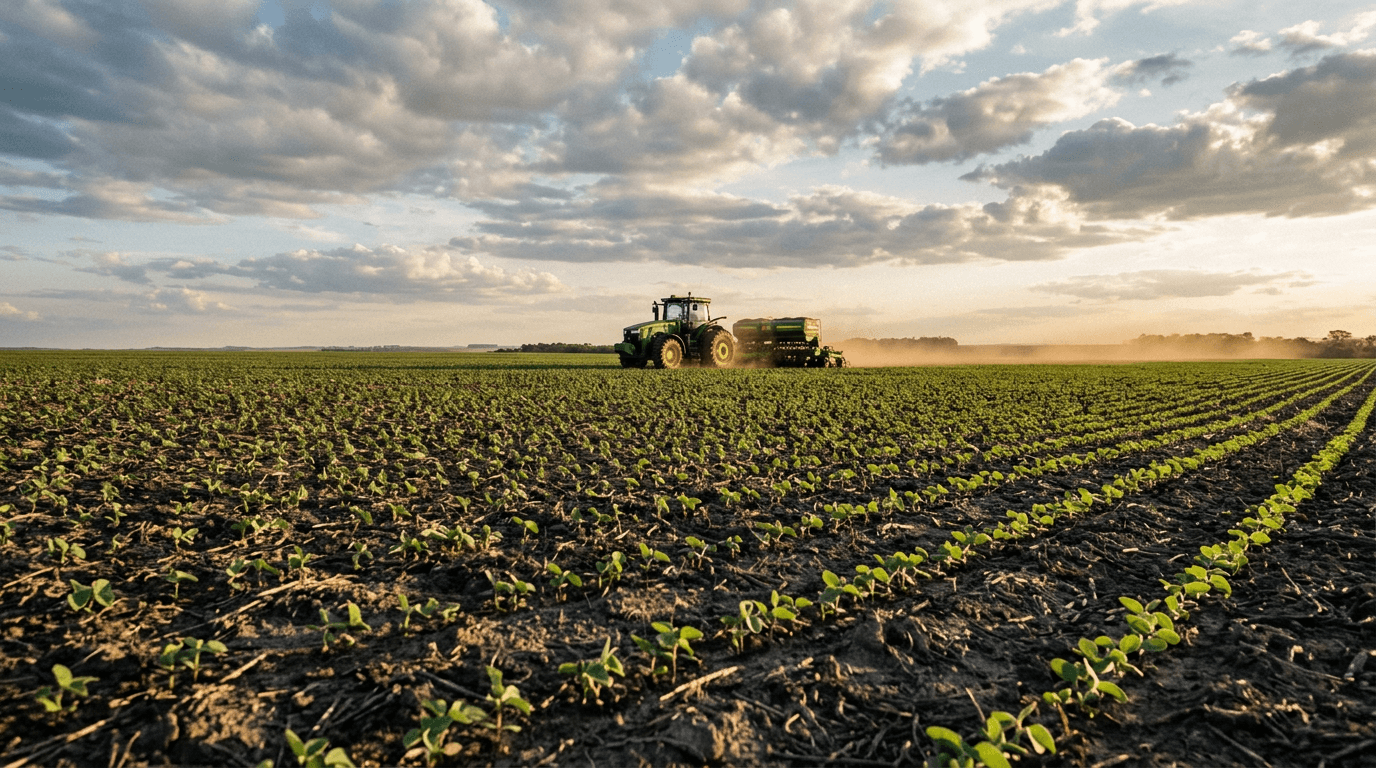
American retail investors holding diversified commodity funds or agricultural equities are facing a highly sensitive market transition as the South American planting season gets underway. According to the weekly Commitments of Traders report released by the U.S. Commodity Futures Trading Commission (CFTC), large non-commercial speculators maintained a heavily concentrated bullish stance on Chicago Board of Trade soybean futures.
The data, captured for the weekly observation date of October 13, 2026, shows that non-commercial traders held 356,266 long contracts compared to 85,167 short contracts, resulting in a substantial net-long position of 271,099 contracts. Total open interest in the benchmark contract stood at 1,072,235 contracts. This heavy positioning by financial funds highlights how much speculative money is currently riding on the global soybean supply remaining tight.
This concentrated positioning directly connects to Brazil, the world's largest exporter of soybeans. Because financial funds have built up such a large net-long position, any sudden shift in Brazil's weather outlook can trigger rapid liquidations and volatile price swings in Chicago. Brazil's National Supply Company (Conab), the government agency that tracks agricultural production, and local meteorological services are now the primary focus for global agricultural desks as Brazilian farmers plant their 2026/2027 crop.
For global investors, the risk cuts both ways. Persistent dry spells in key Brazilian producing states like Mato Grosso would validate the net-long positions of large speculators, supporting global prices. Conversely, if regular rains return to South America and point toward a record-breaking Brazilian harvest, speculative funds may rush to unwind their long positions, driving down the price of the underlying commodity. This dynamic represents a classic example of how political and environmental developments in South America directly dictate the risk profile of US-listed agricultural assets.
In your brokerage app
For retail investors looking to track this exposure, Adecoagro S.A., a major agricultural and farmland company with extensive operations in South America, is listed in New York. Additionally, diversified commodity exchange-traded funds, such as the Invesco DB Agriculture Fund, hold direct exposure to Chicago Board of Trade soybean futures and are heavily influenced by these weekly positioning shifts and South American weather patterns.