
A Wild 2,409% Power Price Spike Shows Green Energy Portfolio Risks
A sudden drop in wind power and late-afternoon demand surge in Brazil sent spot electricity prices skyrocketing, revealing the hidden volatility in global renewable energy assets.
If you hold green energy funds or utility stocks in your brokerage account, you are likely accustomed to the steady promise of the global transition to renewables. However, a dramatic weather event in South America has exposed the hidden, structural volatility that can overnight upend the economics of clean energy portfolios.
On October 15, 2026, Brazil’s short-term spot electricity price, known locally as the PLD, surged by an astonishing 2,409% in a single day. The price of a megawatt-hour (MWh) of electricity skyrocketed from its regulatory floor of R$ 57.31 (approximately $10) in the morning to R$ 1,437 (about $253) during the peak late-afternoon hours, according to data from the Chamber of Electric Energy Commercialization (CCEE).
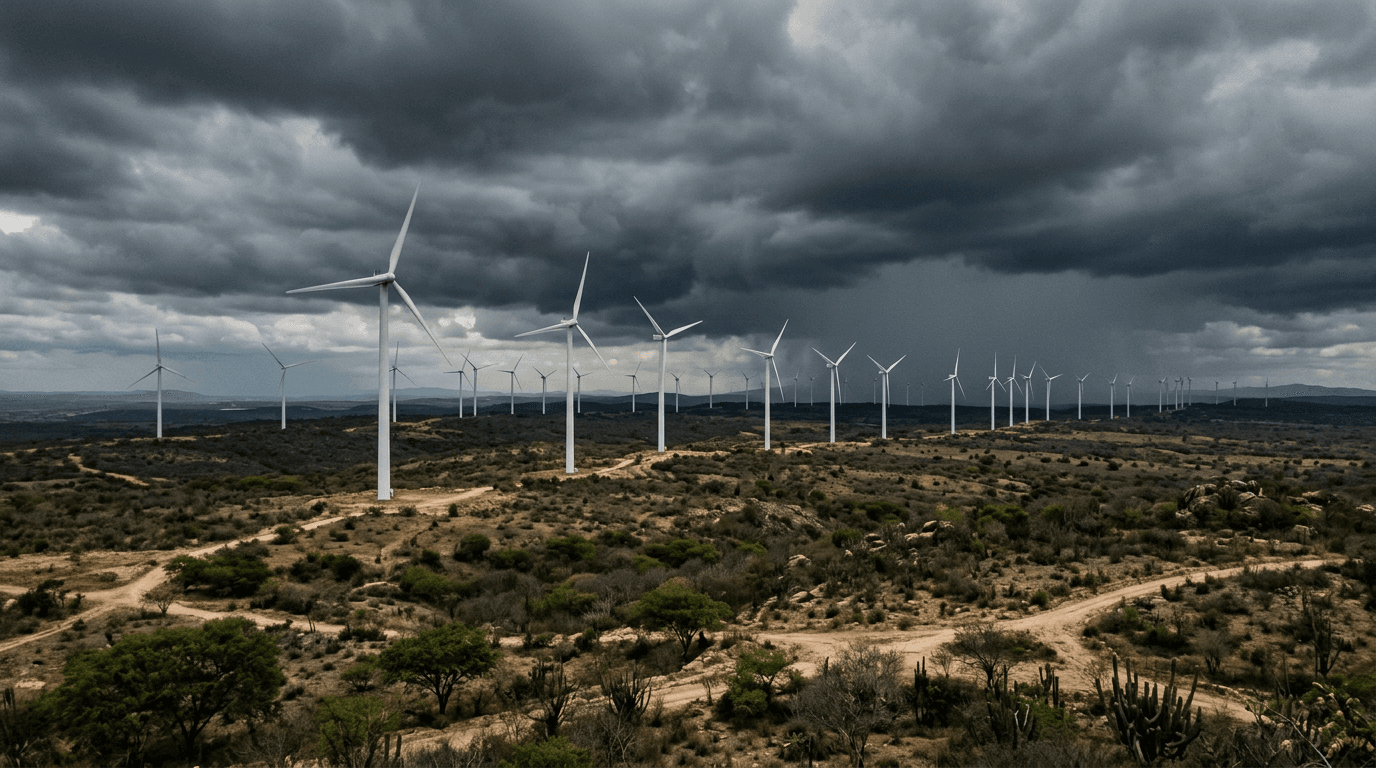
The sudden "short-circuit" in prices was triggered by a cold front sweeping through Brazil's Northeast, a region that serves as the country's primary hub for wind power. The weather shift caused a sudden 3-gigawatt (GW) drop in wind generation. This supply shock coincided precisely with a 3-GW spike in late-afternoon demand as consumers turned on appliances, leaving grid operators with a massive 6-GW deficit to cover in real time.
To prevent blackouts, the National Grid Operator (ONS) had to rapidly activate expensive, fossil-fueled thermal backup plants. This emergency intervention drove the Marginal Cost of Operation (CMO) above R$ 1,500/MWh. While Brazil's long-term energy contracts remain anchored by its massive hydroelectric reservoirs, this single-day spot market explosion left energy traders and commercializers scrambling to absorb heavy short-term losses.
This extreme volatility highlights a growing global challenge for green energy. As grids become more reliant on intermittent wind and solar power, they remain highly vulnerable to sudden weather shifts unless backed by massive battery storage or costly fossil-fuel generation. For international investors, the episode is a stark reminder that the transition to green energy comes with operational bottlenecks that can silently erode the margins of utility companies and renewable energy developers.
In your brokerage app
If you hold global utility or clean energy exchange-traded funds, you likely have exposure to the companies navigating this volatile transition. For example, Centrais Elétricas Brasileiras S.A., commonly known as Eletrobras, is the largest utility in Brazil and is listed in New York. Its performance is a major driver in broad emerging market utility funds, such as the iShares MSCI Brazil ETF, which exposes investors directly to the regulatory and climatic swings of the Brazilian power grid.